Written By | Health News Agencies
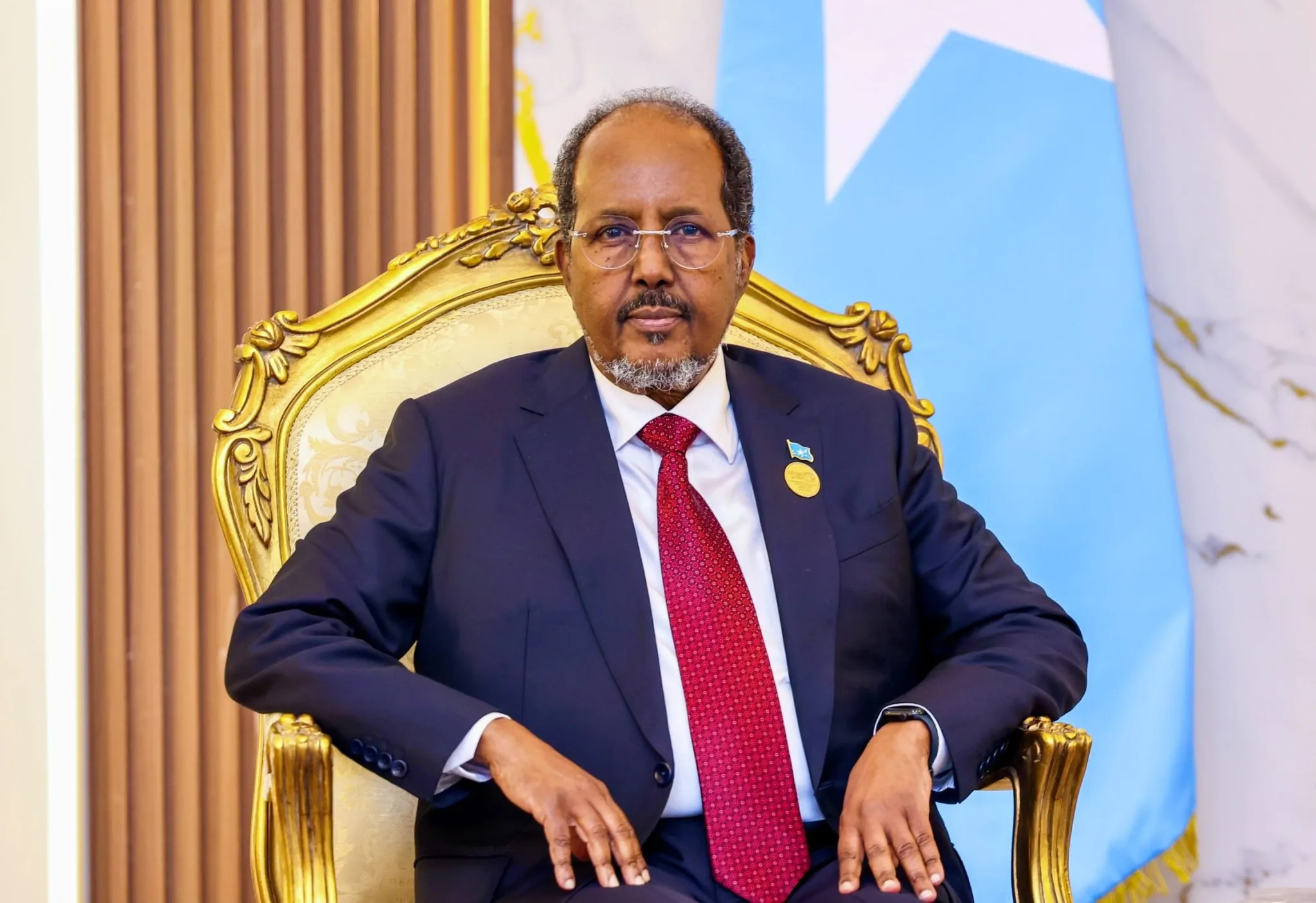
According to the judgment, as reported by the Somali Guardian and the Kormeeraha Magazine, parliament's mandate expired on April 14, 2026, and the president's on May 15, 2026.
MOGADISHU, Somalia
A week after Somalia's Supreme Court ruled that President Hassan Sheikh Mohamud's term expired in May and ordered new elections within 90 days, the country is locked in its most serious constitutional confrontation in years. The judges who issued the ruling have taken refuge at the home of a former president, troops have occupied the court complex, the government's chief legal officer has declared the judgment void, and the presidency is pressing ahead with a national consultative forum that opposition leaders view as a tactic to run out the clock.
The stakes reach well beyond Mogadishu's political elite. The standoff is unfolding as the African Union's peacekeeping mission shrinks, as donors pull back funding, as Uganda prepares to withdraw its troops and as al-Shabaab, the al-Qaida-linked insurgency, still controls large parts of the country. How the dispute is resolved over the next several weeks will determine whether Somalia's long, fragile transition toward a functioning federal state survives intact or fractures along clan and regional lines.
The ruling and the raid
On Thursday, Nov. 5, a five-judge panel of the Supreme Court's constitutional division, presided over by Justice Salah Sheikh Ibrahim Dhiblawe, ruled unanimously that constitutional amendments passed by parliament in March 2026 could not lawfully extend the terms of sitting officeholders. The amendments had lengthened presidential and parliamentary terms from four years to five, giving the current institutions an extra year.
According to the judgment, as reported by the Somali Guardian and the Kormeeraha Magazine, parliament's mandate expired on April 14, 2026, and the president's on May 15, 2026. The court declared actions taken after those dates unconstitutional, found that parliament had ratified the amendments after its own mandate lapsed, and described the extensions as "unlawful and constitutionally untenable." It ruled that Mohamud's government could act only in a caretaker capacity, limited to maintaining administrative continuity, and could not make major policy decisions.
The court then set two deadlines. Political stakeholders were given 30 days to reach a consensus on an electoral framework, and the country was ordered to hold elections within 90 days. Counted from the date of the ruling, those deadlines fall on Dec. 5, 2026, and Feb. 3, 2027, respectively.
The case was filed on Oct. 11 by former President Sharif Sheikh Ahmed, now a leading opposition figure. The court dismissed part of his petition on standing grounds but ruled in his favor on the term extensions, according to Kormeeraha.
The ruling came after a dramatic preemptive move by the presidency. On Wednesday, Nov. 4, the president's office announced on Facebook that it was dismissing Chief Justice Bashe Yusuf Ahmed and appointing Ibrahim Idle Suleiman, a former presidential legal adviser, in his place, citing concerns, according to AFP, about "an efficient and fair judiciary." The court responded by declaring the dismissal null and void, saying the president had not followed the constitutional procedure for removing a chief justice and accusing the presidency of trying to "obstruct the administration of justice." Under Articles 135 and 138 of the provisional constitution, Kormeeraha reported, removing a chief justice requires a proposal from the Supreme Judicial Council and a two-thirds vote in parliament.
Within hours of the judgment, security forces moved on the court. The Somali Guardian reported that troops in more than 30 military pickup vehicles stormed the Supreme Court premises and forced the chief justice out of the complex. AFP said it could not independently verify opposition claims about the operation, but noted that images in Somali media appeared to show military forces in the court compound.
The chief justice and the five judges who ruled then sought refuge at Sharif Sheikh Ahmed's residence in Mogadishu. Speaking to journalists on Saturday, Nov. 7, Bashe said, "I do not feel safe in the capital of the Somali nation," and added, "My security is threatened by the president whose term the court ruled had expired," according to the Somali Guardian. The outlet reported that authorities had withdrawn the judges' security details. In a video published by Al Jazeera on Nov. 10, Bashe repeated his account that security forces had seized the court.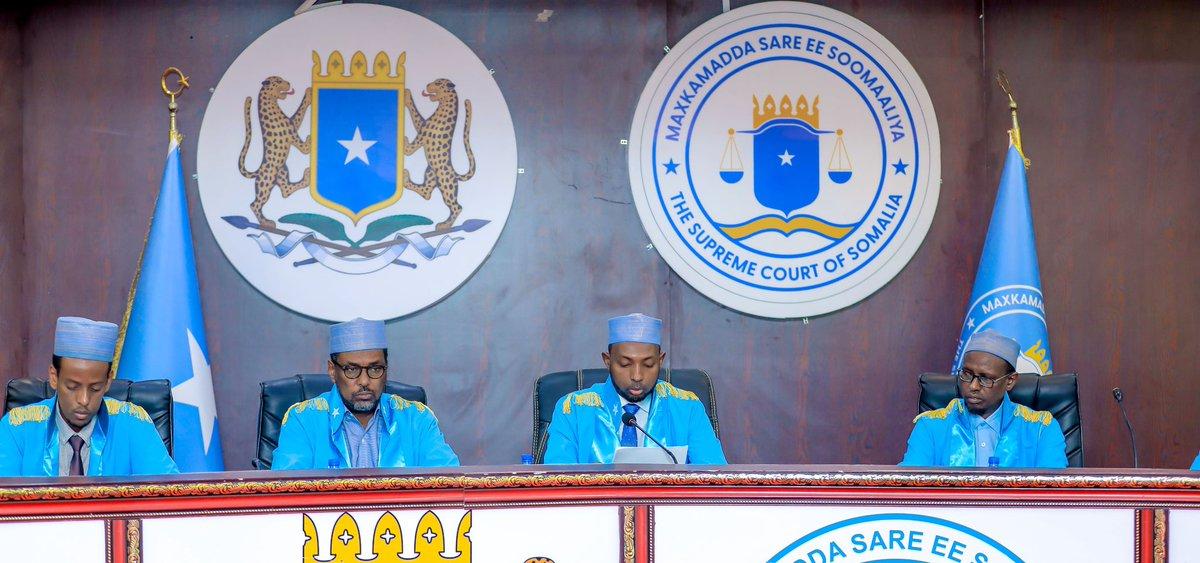
The government's counterargument
Villa Somalia, the presidential palace, has not accepted the judgment. On Nov. 6, the Office of the Attorney General issued a legal opinion stating that the ruling had "no legal effect," WardheerNews reported, citing five alleged procedural defects, among them that the panel was not chaired by the chief justice as required by law. That argument is notable because the presidency had itself announced the chief justice's removal a day earlier.
The presidency has justified the dismissal by citing complaints from judges, judicial staff and legal professionals about the administration of justice and the need for reform, Shabelle Media Network reported. The federal government maintains that the March amendments provide a legal basis for its electoral roadmap, under which the electoral commission has scheduled parliamentary elections for April 15, 2027, and a presidential vote for May 15, 2027.
Mohamud's own public remarks have not softened the tone. Speaking on Nov. 5 at the inauguration of Galmudug state's new leader in Dhusamareb, hours after the ruling, he said that many opposition politicians would be in prison if the law were strictly applied, according to Kormeeraha's account of the speech, and he urged rivals to take grievances to the courts or to traditional xeer customary law rather than take up arms.
The opposition's response
The opposition has embraced the judgment as vindication. The Somali Future Council, an alliance led by Sharif Sheikh Ahmed that includes several other former national leaders, condemned what it called an "assault and coup against the Federal Supreme Court," according to Shabelle Media Network. The council urged leaders to respect the decision and negotiate, and it held Mohamud responsible for the crisis and any consequences that follow.
Former Prime Minister Hassan Ali Khaire was blunter. "Somalia stands at a dangerous juncture. The dismantling of our judiciary is a direct threat to the rule of law," he said, according to AFP. Khaire also alleged that the chief justice and lawyers were being pursued for arrest and had been tortured. AFP said it could not verify those claims.
International voices have begun to weigh in. Ben Saul, the United Nations special rapporteur on human rights and counter-terrorism, called on Somalia's leadership to respect "the independence of the Supreme Court, constitutional procedures and limits on presidential terms," according to the Addis Ababa–based think tank Amani Africa. Amani Africa has argued that refusing to honor the ruling could amount to an "unconstitutional retention of power" under Article 23(5) of the African Charter on Democracy, Elections and Governance, which would bring the dispute within the remit of the African Union Peace and Security Council. As of this writing, no Peace and Security Council decision on the matter has been reported.
Background: a term dispute years in the making
The current crisis has deep roots. Mohamud, who returned to the presidency in 2022, has made a transition from Somalia's clan-based indirect electoral system to direct "one-person, one-vote" elections a signature goal. Critics, including the leaders of the Puntland and Jubaland federal member states, have argued that he is using that agenda to engineer an extended stay in office and, potentially, a third term.
Most opposition and regional parties boycotted the March 2026 parliamentary vote on the amendments, and some said they were barred from attending, AFP reported. Puntland, Jubaland and the opposition continue to recognize the 2012 provisional constitution rather than the amended text. The dispute turned violent in June, when fighting broke out in Mogadishu between government forces and armed groups loyal to opposition leaders, according to Amani Africa, before subsiding after mediated talks.
The confrontation has also spilled into the federal member states. In March, federal forces entered Baidoa and South West State President Abdiaziz Laftagareen resigned under pressure, WardheerNews reported; he maintains that his re-election that month was valid, and fighting between his loyalists and federally aligned forces in the Bay region has continued into November.
The security backdrop
The constitutional crisis is colliding with a security transition that leaves little margin for error. The African Union Support and Stabilization Mission in Somalia, known as AUSSOM, replaced its predecessor in January 2025, and Kormeeraha reported that AU troop levels have fallen from more than 22,000 to roughly 12,000. Uganda, the force's largest contributor, has announced it will withdraw all of its troops by the end of 2027, and the United States has cut all donations to a U.N. logistics mission that supports the coalition, AFP reported. The U.N. Transitional Assistance Mission in Somalia formally ceased operations on Oct. 31, ending a political mission that had helped mediate past electoral disputes, Kaab TV reported.
That combination — a contested government, a shrinking international security presence and a resilient insurgency — is the scenario that Somalia's partners have long feared. A prolonged standoff could divert federal forces from counterinsurgency operations, harden regional states' defiance of Mogadishu and give al-Shabaab room to exploit the divisions.
Analysis: two clocks running
Two timelines are now running against each other. The court's 30-day window for an electoral agreement closes on Dec. 5, and its 90-day election deadline falls in early February. The government's own timetable points to April and May 2027. The presidency's apparent strategy is to absorb the ruling's legal force through the attorney general's opinion while staging a dialogue that could produce an agreement on its preferred terms.
That dialogue is the immediate test. Mohamud has invited the opposition to a national consultative forum in Mogadishu, scheduled to run through Nov. 18; reports differ on whether it opens on Nov. 14 or Nov. 15. Kaab TV, citing officials who spoke to Inside Somalia, reported that the United States, the United Kingdom, Turkey and the European Union are acting as mediators. The opposition's position, as reported by Kaab TV, is that "a single faction should not be permitted to unilaterally dictate the electoral timeline, procedural rules, or governing bodies."
Analysts are divided on what comes next. WardheerNews described the forum invitation as a "calculated act of defiance" designed to buy time, while Kormeeraha argued that the presidency's options had "narrowed to two: implement the ruling, or tear up the constitutional order entirely and rule by force." Both are opinion pieces, but they capture the binary that many Somali observers now see.
What to watch
In the coming days, the key signals will be whether the opposition attends the consultative forum and on what conditions; whether troops are withdrawn from the Supreme Court and the judges' security restored; whether the African Union, the Intergovernmental Authority on Development or Somalia's principal donors publicly endorse the court's authority; and whether the fighting in the Bay region and tensions in Hirshabelle escalate. A negotiated framework before the Dec. 5 deadline would ease the crisis. A collapse of the talks, combined with continued defiance of the court, would leave Somalia with a government whose legitimacy its own highest court has rejected, at the very moment its international security net is being withdrawn.