Written By | Health News Agencies
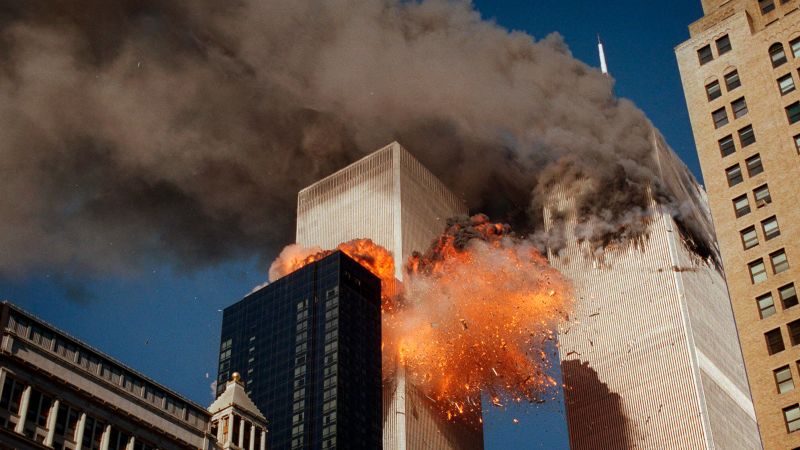
Twenty-five years after the towers came down, the World Trade Center dust is still making New Yorkers sick faster than anyone can treat them.
Twenty-five years after the towers came down, the World Trade Center dust is still making New Yorkers sick faster than anyone can treat them. Now — after a five-year delay, a bruising federal shake-up and 170,000 pages of City Hall records prised open by lawsuit — the government finally wants to track the 40,000 kids nobody ever bothered to study.
NEW YORK
Mariama James was eight months pregnant on the morning the sky over Lower Manhattan turned to powder.
Her apartment on Gold Street sat a few short blocks from the World Trade Center. When the towers came down it filled with a fine grey dust — pulverised concrete, glass fibre, asbestos, scorched plastic, the ground-up remains of two 110-storey buildings and the people inside them. Officials went on television and told her the air was safe.
The baby she was carrying that day is 24 years old now. She has respiratory problems. She has post-traumatic stress. She has, in her mother's words, spent an entire life "growing up ill from an event that occurred before you were even born, and you don't even know why you're impacted."
Twenty-five years to the day after the attacks, that sentence is close to the sum total of what the United States officially knows about what 9/11 did to its children.
Because nobody ever studied them.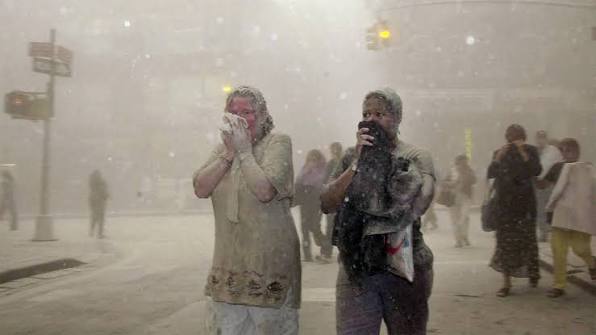
THE SECOND DEATH TOLL
Start with the number everybody knows: 2,977 people killed on September 11, 2001.
Now here is the number almost nobody knows. Since that day, more than 96,000 people have been diagnosed with a physical or mental health condition caused by the dust, smoke, debris and trauma of the attacks, according to the federal World Trade Center Health Program. The programme has recorded more than 9,000 deaths among its members since 9/11 — and while it is careful to say it cannot attribute every one of those deaths to the attacks, the grim arithmetic has already crossed a line that nobody expected in 2001. More people are now believed to have died of 9/11 than died on 9/11.
The programme's own quarterly figures, published for the period ending 30 June 2026, make the scale plain. There are 145,275 people currently enrolled — responders, survivors, office workers, residents, schoolchildren-turned-adults, plus 1,481 responders who worked the Pentagon and the Shanksville crash site. Over the programme's lifetime, 57,044 members have had a cancer certified as linked to their exposure.
Read that figure again, then read this one: 10,393 of those cancer certifications were issued in the last twelve months alone.
That is not a fading crisis. That is a crisis accelerating in year 25.
WHY NOW? BECAUSE CANCER IS PATIENT
The cruelty of what happened at Ground Zero is that it was designed, biologically speaking, to arrive late.
Solid tumours — the kind that account for roughly 87 per cent of certified WTC cancers — typically take decades to develop after a carcinogenic exposure. The health programme itself applies minimum latency periods before it will certify a cancer as 9/11-related, precisely because the science says these diseases do not appear overnight. The twenty-fifth anniversary falls squarely inside the window when the bill for September 2001 comes due.
The pattern in the certified cases tells its own story: breast cancer accounts for about 22 per cent, prostate 19 per cent, lung 8 per cent, thyroid 6 per cent, colorectal 6 per cent and melanoma about 4.5 per cent.
At Northwell Health — one of seven federally funded clinical centres in the New York metro area, with its World Trade Center clinic in Rego Park, Queens — the curve is visible in real time. Northwell's programme certified 177 new 9/11-linked cancers in 2023. By 2025 that annual figure had climbed to 235. In the first half of 2026 alone, another 132 arrived. Across 42 months, the Queens clinic has logged 811 new cancer cases. Roughly 30 per cent of everyone enrolled through Northwell has now battled cancer at some point, and clinicians there say they expect that share to rise sharply over the coming decade. Lung cancer diagnoses at the centre have doubled in five years.
"For over 25 years, we have cared for people who were exposed to the aftermath of September 11th," said Dr Jacqueline Moline, director of the Northwell World Trade Center Health Program and one of the longest-serving physicians in the field.
There is, buried in all this, one genuinely hopeful statistic. The City's newly released World Trade Center 25-Year Health Impact Report found that 86 per cent of WTC responders diagnosed with cancer were still alive five years after diagnosis — against 63 per cent of New York State residents diagnosed with the same cancers who were never exposed. The difference is not magic. It is surveillance. When you screen a population relentlessly for 25 years, you catch tumours early.

THE FIREFIGHTERS' LEDGER
That report, released on 1 September by Mayor Zohran Kwame Mamdani and Fire Commissioner Lillian Bonsignore, is the most detailed accounting yet of what the rescue and recovery effort cost the Fire Department of the City of New York.
Its numbers are brutal in their simplicity. A total of 10,562 FDNY members are now certified for at least one physical health condition — lower respiratory disease, upper respiratory disease, gastro-oesophageal reflux disease chief among them. Another 4,496 are certified for at least one mental health condition, though the report notes that reported symptoms of PTSD and depression have declined since the raw years immediately after the attacks. And 4,257 members currently hold a cancer certification, with non-melanoma skin cancer the most common, followed by prostate cancer.
More than 84 per cent of enrolled responders are still participating in the FDNY programme a quarter of a century on — an extraordinary retention rate for any longitudinal cohort, and the reason the data is good enough to be believed.
"Today, more than 10,000 FDNY members are living with a 9/11-related illness," Mamdani said. "Our obligation to them and their families did not end when the fires were extinguished or when the rubble was cleared."
Commissioner Bonsignore put it more plainly. "Every FDNY member and New Yorker who was in Lower Manhattan on September 11 and in the days and weeks that followed remembers the dust and debris that surrounded the World Trade Center site," she said. "Twenty-five years later, we continue to see and feel the lasting health impacts of that day."
170,000 PAGES, 68 BOXES, ONE UNCOMFORTABLE QUESTION
Then, on Tuesday, came the documents.
The Mamdani administration released more than 170,000 pages of post-9/11 air quality records — monitoring data, contamination readings, internal correspondence between city officials — through a public portal at nyc.gov/sept11docs. The release came as part of the settlement of two long-running 9/11 lawsuits. City officials said the material had been sitting in 68 boxes in a municipal office, much of it only rediscovered last year.
What the records show, according to officials who have reviewed them, is that government leaders understood a great deal about the dangers posed by the burning, smouldering pile at Ground Zero — including asbestos found in buildings less than a mile from the site — during the same period in which the public was being reassured that the air was fine to breathe.
At a City Hall news conference, Mamdani accused unnamed city and federal officials of the era of lying about air quality safety.
For the tens of thousands of people who went back to work, back to school and back to their apartments on the strength of those reassurances, the release is not a historical curiosity. It is the paper trail of the decision that shaped the rest of their lives.
THE 40,000 WHO WERE NEVER COUNTED
Which brings us back to the children.
Roughly 40,000 young people lived in Lower Manhattan and western Brooklyn — the zone officials designated the "disaster area" — on and after September 11, 2001, according to Dr Matt Karwowski, chief of research at the WTC Health Program. Thousands more went to school there. Stuyvesant High School sits a few hundred metres from the site. So does the Children's Discovery Center, a daycare centre that was, quite literally, inside the World Trade Center complex.
Hundreds of studies have been published on 9/11 health effects. They have examined the lungs and upper airways, the stomach and oesophagus, dozens of cancers, PTSD and depression. Almost all of them looked at adults — overwhelmingly, at the emergency responders who rushed to the pile.
Children were largely left out. And children, as Karwowski points out, do not experience a toxic environment the way adults do.
"Children are exposed to more dust and other potential sources of exposure through just normal activities that they do, like crawling on the floor, exploring things with their mouths," he said. They breathe faster relative to body size. Their lungs, immune systems and endocrine systems are still under construction. A dose that barely registers in a 40-year-old firefighter can rewrite the developmental trajectory of a four-year-old.
Now, finally, the federal government intends to find out what that meant. The World Trade Center Health Program and the Centers for Disease Control and Prevention are seeking applications from researchers to establish a World Trade Center Youth Research Coordinating Center and to build a Youth Research Cohort.
The eligibility rules are precise. Participants must have been 21 or younger — or in utero — and physically present south of 14th Street in Manhattan or anywhere in Brooklyn between 11 September 2001 and 31 July 2002. A comparison group of similarly aged but unexposed people will be recruited alongside them. Projected funding runs to $50 million. The estimated start date is 1 July 2027, and the grant listing notes that research will begin properly once enrolment "grows large enough."
The obvious question is why this is happening in 2026 rather than 2006.
FIVE YEARS LATE, AND COUNTING
Congress directed the WTC Health Program administrator to establish exactly this cohort back in December 2022 — a directive that has now taken the better part of four years to reach the point of a funding announcement, and will take another year to begin. Advocates have not been quiet about the delay.
Part of the holdup was bureaucratic. Part of it was the turbulence that swept through federal health agencies, including staffing cuts that hit the National Institute for Occupational Safety and Health, the termination and subsequent rehiring of NIOSH chief Dr John Howard — who has run the WTC Health Program since its creation in 2011 — and a letter from a bipartisan-in-geography, entirely-Republican group of New York and New Jersey members of Congress to Health and Human Services Secretary Robert F. Kennedy Jr warning of "devastating medical consequences" for responders and survivors.
The programme itself exists only because of a fight. The James Zadroga 9/11 Health and Compensation Act was passed by Congress in 2010 and took effect in 2011 — a full decade after the attacks — and had to be reauthorised in 2015 and fully funded again in 2026 to guarantee lifetime care for more than 140,000 responders and survivors.
Lila Nordstrom, who was a Stuyvesant High School student on 9/11 and has spent her adult life campaigning for the health of the people she went to school with, founded the advocacy group StuyHealth precisely because this population kept falling through the cracks.
"This newest call seems promising," she said of the youth cohort. "I think everyone's feeling really hopeful about it."
WHAT THIS MEANS FOR YOU
If you were 21 or younger — or your mother was pregnant with you — and you were below 14th Street in Manhattan or anywhere in Brooklyn between 11 September 2001 and 31 July 2002, you are eligible. You do not have to still live in New York; many of the people the programme is hunting for moved away years ago. The CDC has set up a page at cdc.gov/wtc where people can register to be notified when enrolment opens.
If you were a responder, a cleanup worker, an office worker, a resident, a student or a local business owner in the exposure zone, you may already qualify for the existing World Trade Center Health Program — which provides monitoring and treatment at no cost, for life, to certified members. Enrolment is still open. The latency data is the argument for acting now rather than waiting for a symptom: the cancers being certified in 2026 are, in many cases, the biological consequence of a few weeks in autumn 2001.
And if you are in neither category, there is still a lesson worth taking. The story of the last 25 years is not only that a toxic cloud caused disease. It is that the people who were told to go back inside were told wrong, that the records proving it sat in 68 boxes for a generation, and that the youngest victims waited a quarter of a century to be counted. Public health failures of that kind are rarely dramatic. They are administrative.
THE LONGEST DAY
There is a particular kind of grief attached to an anniversary that refuses to become history. Every September 11, New York reads the names of the people who died that morning. Increasingly, the city also buries people who died of that morning — firefighters in their fifties, office workers in their sixties, a growing number of people who were children when it happened and are now being diagnosed in their thirties.
The 57,044 certified cancers are not a closed ledger. They are an opening balance. With 10,393 new certifications in a single year, with 145,275 people on the rolls, with lung cancer doubling at a single Queens clinic in five years, the programme's clinicians say the honest expectation is that the numbers keep climbing through the 2030s.
And now, at last, somebody is going to go looking for the children who crawled on those floors.
Mariama James's daughter will be 25 next month. She has never been asked a single research question about why she is sick. If the Youth Research Cohort opens on schedule in July 2027, she will be nearly 26 before anyone starts.
Twenty-five years is a long time to wait for a doctor to ask you what happened.



