Written By | Staff Writer
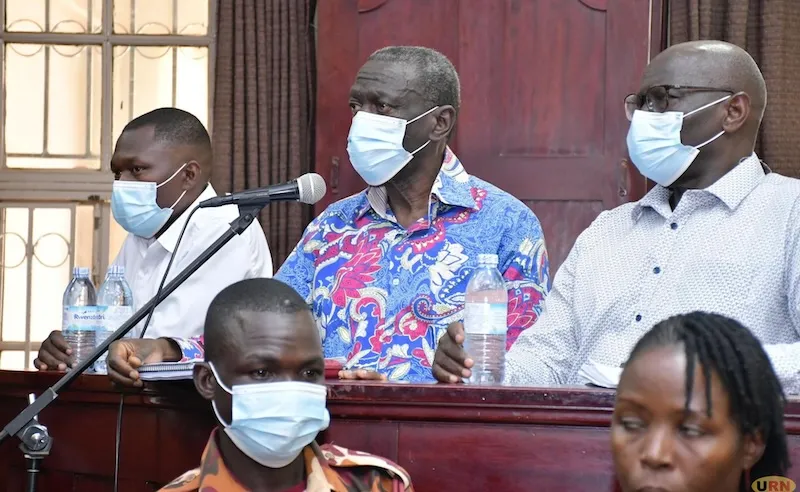
Dr Besigye was taken into custody in Nairobi in November 2024 and brought back to Uganda, where he was first produced before a military court.
KAMPALA
The treason trial of Dr Kizza Besigye, Uganda's most durable opposition figure and a four-time presidential candidate, has reached the stage most likely to decide it. After weeks in which the prosecution's principal witness delivered a series of dramatic allegations from the box at the High Court in Kampala, the defence has begun cross-examining him — and the credibility of that one man now carries much of the state's case.
What is happening
The witness at the centre of the proceedings is Andrew Wilson, referred to in court by the alias "Orlando". Across late August and the first half of September he gave the prosecution the narrative on which its case rests: that Dr Besigye had, in the state's telling, developed a plan to remove President Yoweri Museveni by force, and that Wilson was drawn into helping execute it.
Testifying on 27 August, Wilson told the court he was expected to send two men to Entebbe to monitor State House, observe the President's movements and assess his security detail, after which they would evaluate a plan he said had been supplied by Dr Besigye. On 1 September prosecutors played an audio recording in open court which they said captured Dr Besigye and Wilson discussing arrangements to overthrow the government — the first public airing of the material the state says corroborates its witness.
Further testimony added detail and, for the defence, additional surface area to attack. The court heard claims that US$5,000 changed hands to facilitate moving 36 Ugandan recruits to Kisumu, in western Kenya, for military training; references were made to Nakasongola airfield; and a separate allegation surfaced of a plot to bomb a Café Javas outlet in Kampala. On 8 September, Wilson told the court that Dr Besigye had expressed the view that removing Mr Museveni would throw Uganda into chaos because Gen Muhoozi Kainerugaba would not be capable of holding the country together, and that he did not regard National Unity Platform leader Robert Kyagulanyi, known as Bobi Wine, as a serious threat. If accepted, that account goes directly to motive.
The trial was then adjourned, with cross-examination of Wilson the business awaiting the court when it resumes. Reporting on Wilson himself has been inconsistent — some accounts describe him as an American national, others as an intelligence operative of Kurdish background — and that inconsistency is among the threads the defence has signalled it intends to pull.
How the case got here
Dr Besigye was taken into custody in Nairobi in November 2024 and brought back to Uganda, where he was first produced before a military court. That course drew sustained domestic and international criticism and ultimately did not hold: Uganda's Supreme Court barred the trial of civilians in military courts, and the matter moved to the civilian High Court, where it now sits.
He is jointly charged with treason and misprision of treason alongside his long-time aide Obeid Lutale and Capt. Denis Oyaa Oola of the Uganda People's Defence Forces. Both offences carry a maximum sentence of death on conviction. The prosecution's case is that, between 2023 and 2024, the accused and others still at large conspired — in Switzerland, Greece, Kenya and Uganda — to overthrow the Government of Uganda through the use of armed force.
The first half of 2026 was consumed by procedural skirmishing. The defence sought to halt proceedings and was refused; a dispute over the composition of the state's legal team was raised and rejected by Justice Baguma; the prosecution applied to conceal the identities of witnesses, which Dr Besigye and Lutale opposed; and the state in turn accused the accused of threatening witnesses. In mid-July the High Court cleared the way for the trial, ordering that it commence within a week. On 29 July, Dr Besigye collapsed in the dock — a reminder of the health questions that have shadowed his long pre-trial detention and that have repeatedly raised the awkward possibility of a capital trial proceeding in the absence of the accused.
One structural feature now matters more than it did during the pre-trial phase. Dr Besigye has been without lawyers of his own choosing since rejecting counsel offered on state brief, on the argument that he should not be made to accept representation selected by the government prosecuting him. Lutale and Capt. Oola retain counsel. Cross-examination is the most technically demanding part of a criminal trial, and an unrepresented accused facing a capital charge conducting it himself is a serious disadvantage — and, for the state, a potential appellate vulnerability.
Who the main players are
● Dr Kizza Besigye — once Mr Museveni's personal physician during the bush war, later the founding figure of the Forum for Democratic Change, and the president's opponent in the 2001, 2006, 2011 and 2016 elections. His arrests have been a recurring feature of Ugandan public life for two decades; a capital charge is a significant escalation.
● Obeid Lutale and Capt. Denis Oyaa Oola — the co-accused. The inclusion of a serving UPDF officer is what gives the state's armed-force theory its internal logic.
● Andrew Wilson "Orlando" — the prosecution's star witness, whose account, recordings and personal history now constitute the core of the case.
● Justice Baguma — the presiding judge, who has ruled consistently against applications to halt the trial.
● The Directorate of Public Prosecutions — which has pursued the matter through the shift from military to civilian jurisdiction.
Why it matters
A capital case against the country's most recognisable opposition veteran, heard months after a general election, is being read by many observers less as a discrete criminal matter than as a measure of judicial independence. Uganda's Supreme Court decision removing civilians from military courts was a significant assertion of that independence; how the High Court now handles the evidentiary and fair-trial questions in this case will indicate how much weight that assertion carries in practice.
The case also lands in the middle of an unusually visible contest over what comes after Mr Museveni. Gen Muhoozi Kainerugaba, the Chief of Defence Forces and the president's son, has spent the past month making public interventions that would once have been unimaginable — declaring the Presidential Advisory Committee on Exports and Industrial Development, chaired by his brother-in-law Odrek Rwabwogo, an "illegal organisation", threatening arrests of its members, and stating that he will run for president in 2031. Testimony placing Gen Muhoozi's fitness to govern at the heart of an alleged plot lands in a political environment already saturated with succession anxiety.
Internationally, the trial is being followed as a bellwether for civic space in Uganda, where rights monitors have documented shrinking room for opposition organising and recurring violence around electoral periods. The outcome will shape how donors, investors and regional partners read the durability of Uganda's institutions.
What to watch next
● Whether the defence damages Wilson's credibility — the provenance and chain of custody of the audio recordings, the inconsistencies in how his nationality and employment have been described, and whether any inducement was offered for his cooperation.
● Whether Dr Besigye secures counsel of his own choosing before the substantive cross-examination is complete, and whether the court makes any accommodation for an unrepresented accused in a capital case.
● His health, and whether the court is asked again to consider proceeding in his absence — a question with obvious appellate consequences.
● How many further prosecution witnesses are called, and whether the application to conceal witness identities is revived.
● The wider political temperature, including further public statements from Gen Muhoozi and the unresolved PACEID dispute, which shape the atmosphere in which any verdict will be received.
The court is expected to resume cross-examination when it sits again. Until Wilson has been tested, the case remains what it has been since August: a prosecution resting heavily on a single witness whose account has not yet been challenged in open court.



