A Resource Frontier Turns a Corner
Mauritania, a vast, largely desert country wedged between Morocco, Mali and Senegal on the Atlantic coast of the Sahel, has spent most of its independent history as a one-commodity economy defined by iron ore. In 2026 that picture is changing quickly. The near-simultaneous ramp-up of an offshore liquefied natural gas project shared with Senegal, an expansion of the state iron ore giant SNIM, and the advance of what could become one of the world's larger uranium mines are together repositioning Mauritania as a multi-resource economy for the first time. The transition is not without turbulence: growth forecasts for 2026 diverge sharply across the major multilateral institutions, poverty remains stubbornly high, and roughly 7.4 million people across the wider Sahel, including tens of thousands in Mauritania's eastern regions, are projected to face crisis-level food insecurity or worse in the June-to-August 2026 lean season.
The result is a country whose macroeconomic headlines look increasingly like those of a mid-sized energy exporter, even as its social indicators still reflect one of the poorer, more climate-exposed corners of West Africa.

Diverging Growth Forecasts
Mauritania's 2026 growth outlook has become a rare case study in institutional disagreement. The African Development Bank projects real GDP growth of 4.4% in 2026, rising to 4.7% in 2027, driven by agriculture and the start of gas production. The International Monetary Fund, in its fifth review under Mauritania's combined Extended Fund Facility, Extended Credit Facility and Resilience and Sustainability Facility arrangements (IMF Country Report No. 26/27), puts 2026 growth at a similar 4.7%, driven by a recovery in the extractive sector as output from the Greater Tortue Ahmeyim gas field increases. The World Bank, by contrast, has projected growth as high as 7.5-7.8% for 2026 on the back of improved export revenues, while some private assessments see a near-term deceleration to around 3.7% before gold and iron ore output pick back up later in the decade.
The spread reflects genuine uncertainty about how quickly new extractive capacity will translate into measured output, and about the trajectory of gold and iron ore volumes even as new capacity comes online elsewhere in the resource base. What is not in dispute is the direction of travel: Mauritania is entering a multi-year window in which gas, iron ore expansion and a nascent uranium sector all mature at roughly the same time.
First Gas from Greater Tortue Ahmeyim
The centerpiece of Mauritania's energy transition is the Greater Tortue Ahmeyim (GTA) project, an ultra-deepwater gas field straddling the maritime border with Senegal and developed by BP as operator alongside Kosmos Energy, Mauritania's state hydrocarbons company SMH and Senegal's Petrosen. In 2026, BP confirmed it had begun flowing gas from GTA Phase 1 wells to the project's floating production, storage and offloading vessel, the next stage of commissioning before full LNG exports. Once fully ramped up, Phase 1 is expected to produce around 2.3 million tonnes of LNG per year, with the $4.8 billion first phase designed to run at roughly 2.5 million tonnes annually before a planned second phase aims to double that capacity.
For Mauritania, GTA represents the country's entry into the ranks of LNG-exporting nations for the first time, a milestone both the IMF and AfDB cite explicitly as the swing factor behind their 2026 growth projections. The project is also a rare example of a resource development structured from the outset as a bilateral undertaking, with Mauritania and Senegal each holding stakes in the field and negotiating parallel revenue-sharing and local content frameworks — a template regional planners are watching closely as a model for cross-border energy cooperation in West Africa.
Iron Ore Expansion and a New Uranium Frontier
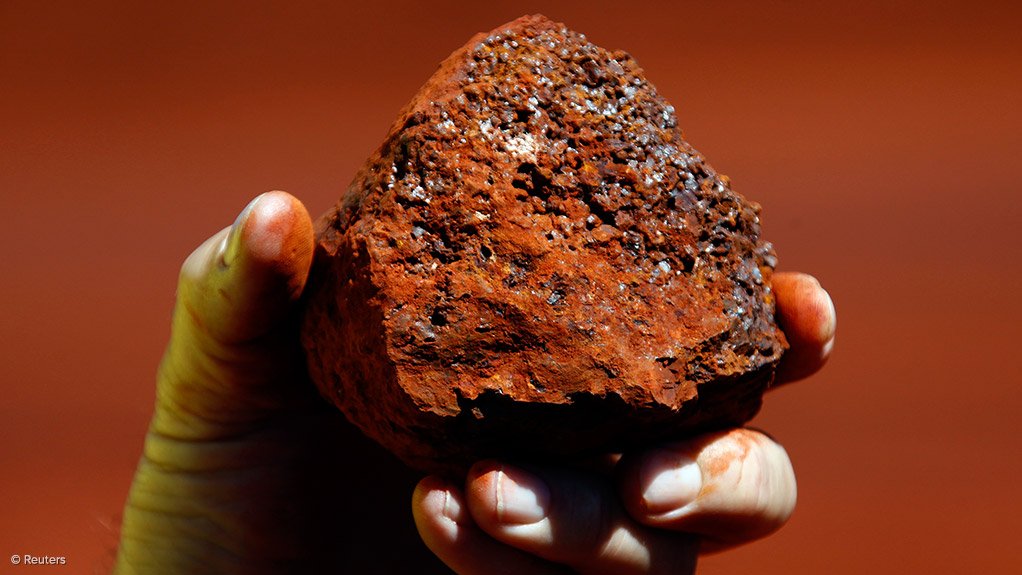
Iron ore remains Mauritania's traditional economic backbone, produced almost entirely by the state-controlled Société Nationale Industrielle et Minière (SNIM), one of the largest iron ore exporters in Africa. SNIM has set out plans to roughly double output by 2030 through expansion of its Zouerate-area mines and the associated rail and port infrastructure that carries ore nearly 700 kilometers to the Atlantic export terminal at Nouadhibou. That expansion is intended to offset near-term softness: several 2026 assessments flag a temporary decline in iron ore and gold output even as the medium-term expansion plans proceed, illustrating the lag between investment decisions and measurable production gains typical of large-scale mining projects.
Alongside gas and iron ore, Mauritania is emerging as a significant uranium prospect. Australia's Aura Energy has advanced its Tiris uranium project in the north of the country to the point of finalizing its processing flowsheet in 2026, removing what the company described as the last major technical uncertainty ahead of a targeted final investment decision by the end of the year. Aura has since increased Tiris's projected mine life from 17 to 25 years and lifted its total targeted uranium production by 44%, with the expanded resource estimate now standing at approximately 91.3 million pounds of uranium oxide. The roughly $230 million project is projected to produce about 2 million pounds of uranium annually, with potential expansion toward 3.5 million pounds, and the company has signed a non-binding memorandum of understanding with an international nuclear utility covering potential investment, offtake and technical collaboration — a signal of the kind of strategic interest uranium projects are attracting globally as nuclear power regains favor in several markets.

Fisheries, Fiscal Reform and a Looming EU Renegotiation
Beyond hydrocarbons and mining, fisheries remain a critical pillar of Mauritania's coastal economy and a significant source of foreign revenue through its Sustainable Fisheries Partnership Agreement (SFPA) with the European Union. The current six-year protocol, in force since November 2021, provides Mauritania with an EU financial contribution of €60.8 million per year, of which roughly €3.3 million annually is earmarked specifically to support the sustainable development of Mauritania's own fisheries policy rather than simply compensating for EU fleet access. That protocol expires in November 2026, meaning Mauritanian and European negotiators will need to conclude a successor agreement this year if EU vessels are to continue fishing in Mauritanian waters without interruption — a negotiation that will double as a test of how much leverage Mauritania's improving fiscal position gives it at the bargaining table.
On the fiscal side, Mauritania's public debt has continued to decline and the IMF assesses the country as remaining at only moderate risk of debt distress, a marked improvement from the debt-distressed years of the 1990s and 2000s when large portions of Mauritanian debt were rescheduled or cancelled under international relief initiatives. The IMF's fifth review under its three-facility, roughly $345 million program with Mauritania — covering the Extended Fund Facility, Extended Credit Facility and Resilience and Sustainability Facility simultaneously — underscores continued fiscal consolidation even as the government prepares to absorb new gas and uranium revenue streams.
Poverty Reduction Meets a Persistent Sahel Food Crisis
Mauritania's social indicators are improving, if unevenly. National poverty is reported to have declined from 27.0% in 2024 to 25.2% in 2025, continuing a longer-term downward trend, though other measures put multidimensional poverty — capturing deficits in health care, education and living conditions simultaneously — above 30% of the population. The government's long-standing Strategy for Accelerated Growth and Shared Prosperity (SCAPP), which runs through 2030, sets ambitious targets to bring food insecurity below 5% and reduce global acute malnutrition below 2% by the end of the decade.
Those targets sit uneasily against near-term conditions on the ground. Mauritania is one of six countries — alongside Burkina Faso, Chad, Mali, Niger and Senegal — covered by the World Bank-backed Sahel Adaptive Social Protection Program, which in 2026 launched its third phase (2025-2030) with an expanded mandate to build sustainable national adaptive social protection systems and support job creation across the region. The need is acute: the June-to-August 2026 Cadre Harmonisé food security assessment identified dozens of areas across Mauritania in stressed or crisis-level food insecurity, including several zones in the Hodh El Chargui region near the Malian border, while UN agencies estimate more than 590,000 Mauritanians remain vulnerable to malnutrition amid recurrent droughts and floods intensified by climate change. The juxtaposition — a government preparing to absorb its first LNG and uranium export revenues while a meaningful share of its population faces a lean-season hunger crisis — is likely to shape how Mauritania's new resource wealth is allocated in the years ahead, including how much is directed toward adaptive safety nets versus long-horizon infrastructure and sovereign savings.
A Regional Bellwether
Mauritania's trajectory carries significance beyond its own borders. As a Sahelian state that has largely avoided the political ruptures that have reshaped Mali, Burkina Faso and Niger's relationships with ECOWAS and France in recent years, Mauritania is emerging as a comparatively stable node for cross-border resource cooperation, exemplified by the joint Mauritania-Senegal structure of the GTA gas project. Its simultaneous bet on gas, expanded iron ore capacity and uranium — three resource classes with very different global demand drivers, from Asian LNG markets to steelmaking to a resurgent nuclear power sector — gives Mauritania a diversification profile that few of its Sahelian neighbors can currently match. Whether that translates into durable poverty reduction, rather than simply a reshuffled export basket, will depend heavily on the fiscal choices Mauritania's government makes as gas and uranium revenues begin arriving over the next two to three years.
Published By | Business News Editor