Written By | International News Agencies
How a stalled IMF programme, a devalued kwacha and a redesigned fertiliser subsidy are reshaping Malawi's post-election economic path
A recovery that keeps missing its own targets
Malawi enters the final quarter of 2026 in the position it has occupied, in one form or another, for most of the past three years: a government promising fiscal discipline, a currency under sustained pressure, and a population whose living standards have not caught up with the growth numbers on paper. The World Bank's 23rd edition of its Malawi Economic Monitor, published 23 September 2026 under the title "Building Stability to Unlock Growth," put the problem in blunt terms: the economy is expanding, but "too weak to deliver meaningful improvements in living standards." The report projected real GDP growth of just 2.8% for 2027, alongside a fiscal deficit of 8.8% of GDP in the 2025/26 fiscal year and foreign exchange reserves that remain below one month of import cover — a level well short of the three-month buffer considered a minimum safety margin for an import-dependent economy.
The African Development Bank's most recent country outlook offers a slightly more optimistic near-term picture but confirms the same structural fragility. It records growth accelerating from 1.8% in 2024 to 2.7% in 2025, before an unusual dip to a projected 2.3% in 2026 and a recovery to 3.3% in 2027. Inflation, while easing, remains punishing: the AfDB puts consumer price growth at 32.2% in 2024 and 28.5% in 2025, and Malawi's central bank has held its policy rate at 26% for two consecutive years in an effort to anchor expectations. Public debt stands at roughly 91% of GDP and is classified by multilateral lenders as being in distress, while the fiscal deficit, though narrowing from 10.6% of GDP in 2024 to 9.9% in 2025, remains far above levels consistent with debt stabilisation.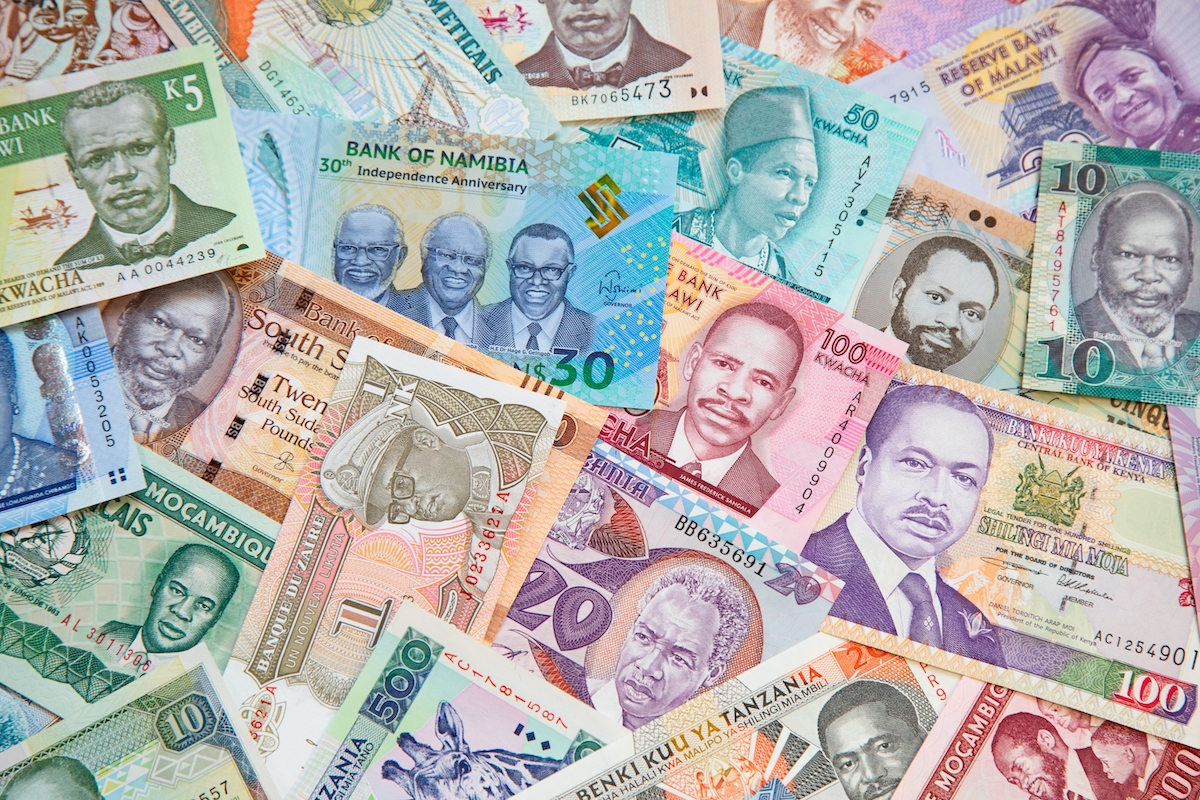
Politics resets the reform agenda
The macroeconomic story cannot be separated from the political one. President Lazarus Chakwera's Tonse Alliance coalition collapsed in the course of 2025 after seven constituent parties withdrew, citing corruption and nepotism, and Peter Mutharika returned to the presidency following that year's election. The change in government produced a new economic blueprint, the National Economic Recovery Plan (NERP), tabled in early June 2026, which the World Bank's September Economic Monitor now treats as the organising framework for reform. The plan is built around four priority areas: restoring macroeconomic stability, enabling a more dynamic private sector, improving service delivery and resilience, and strengthening critical infrastructure. It is paired with a specific initiative — "Reforming State-Owned Enterprises for Better Services" — aimed at the governance weaknesses and financial fragility that have long drained the public purse through loss-making parastatals.
Whether the plan translates into disbursed financing is, for now, an open question. Malawi's previous four-year, US$175 million IMF Extended Credit Facility, approved in November 2023, lapsed in May 2025 after the country failed to complete a required review within the 18-month window; only US$35 million of the total had been disbursed by that point. Talks on a successor programme resumed in 2026, with an IMF mission in the country from 9 to 18 June. The mission departed without a staff-level agreement. IMF Resident Representative Nelnan Koumtingue described the process as still "evolving," while a Ministry of Finance spokesman, Williams Banda, said the government and the Fund had "agreed on the pathway" without providing further detail. The Fund has been explicit that any new arrangement will hinge on Malawi's follow-through on reforms tied to debt management, fiscal consolidation, anti-corruption measures and social protection during the adjustment — precisely the areas where the country's track record over the past two programme cycles has been weakest.
A currency, and a donor relationship, under strain
The kwacha's most recent large devaluation, a 44% adjustment in November 2023 intended to bring the official rate closer to market fundamentals, has not been the last word on currency policy. Stabilising the exchange rate remains a stated priority of the Mutharika government, and Finance Minister Simplex Chithyola Banda's team has publicly resisted suggestions of a further devaluation even as reserve cover remains thin. Inflation was running at 28.7% in September 2025, and the government has set a target of bringing it below 21% during 2026 — a target that looks achievable only if fiscal slippage is contained and the exchange rate holds.
Malawi's room for manoeuvre has narrowed further on the external financing side. The United Kingdom has cut aid to Malawi by 60% for the 2026/27 financial year, with a full 90% reduction planned by 2028/29, and the United States terminated US$230.4 million in contracts affecting health and education programmes. Layered on top of climate shocks — Tropical Cyclone Freddy alone affected 2.2 million people and compounded damage from earlier storms — the combination of donor retrenchment, climate exposure and a stalled IMF track record explains why the World Bank's September report frames the country's task as building "stability to unlock growth" rather than growth itself as the immediate objective.
Rewriting the fertiliser subsidy that ate the agriculture budget
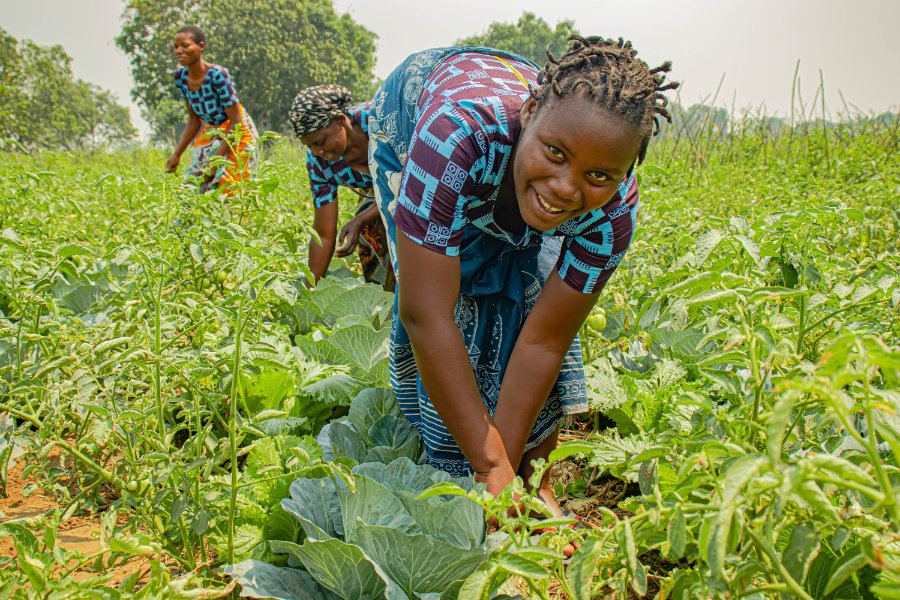
Nowhere is the reform pressure more concrete than in the Affordable Inputs Programme (AIP), the input-subsidy scheme that at its peak consumed roughly 75% of the Ministry of Agriculture's budget. Since 2023, the government — with World Bank support — has been redesigning the programme rather than simply funding it at the same scale. The changes include cutting subsidy levels per household, shifting the beneficiary pool toward roughly one million more productive farmers rather than a near-universal population, moving from a narrow focus on nitrogen fertiliser for maize toward a more diversified input basket, introducing e-voucher distribution bundled with extension advice and conservation requirements, and pushing more of procurement and distribution toward the private sector.
A soil-health pilot launched under the reform enrolled more than 23,000 farmers, 43% of them women, across twelve districts, with soil samples collected from 1,500 farmers to generate tailored fertiliser recommendations rather than blanket application. The World Bank's Food Systems 2030 Trust Fund has provided a US$20 million grant to support the pilot, and the government has signalled its intent to repurpose roughly US$300 million in annual input-programme spending toward a more targeted, more fiscally sustainable model. The stakes are high: agriculture still anchors rural livelihoods and export earnings in Malawi, and a subsidy programme redesigned badly risks both a political backlash and a further shock to smallholder incomes, while one redesigned well could free meaningful fiscal space for the debt consolidation the IMF is demanding.
A new resource frontier: rare earths and mineral diversification
Beyond agriculture, Malawi's longer-term diversification bet increasingly rests on mining. The World Bank's base-case scenario, cited in reporting published 7 September 2026, estimates that rare earths, graphite, rutile and uranium could generate as much as US$30 billion in mineral exports between 2026 and 2040, with annual exports reaching approximately US$3 billion by 2034. The clearest near-term example is the Kangankunde rare earths project, where Lindian Resources holds a binding agreement to supply Australia's Iluka Resources with 6,000 dry metric tonnes of monazite concentrate annually for around fifteen years, feeding into Iluka's Eneabba refinery — where the Malawian concentrate is expected to represent roughly 10% of planned feed capacity.
The caveat, as the World Bank itself notes, is that Malawi currently captures only a fraction of the potential value chain: concentrate is exported for processing abroad, while the higher-margin stages of separation, metallisation, alloying and magnet production occur in Australia rather than Malawi. Realising the full US$30 billion opportunity, analysts caution, depends on infrastructure, technical skills, regulatory capacity and macroeconomic stability that Malawi has not yet demonstrated it can deliver at scale — the same institutional constraints that have slowed the IMF negotiations and the AIP reform.
What comes next
Malawi's trajectory into 2027 will be decided less by any single announcement than by whether several slow-moving processes converge: a resumed and completed IMF programme that unlocks budget support and restores donor confidence; an AIP reform that protects smallholder productivity while freeing fiscal space; and a mining sector that begins moving beyond concentrate exports toward higher-value processing. The World Bank's own framing — stability before growth — captures the sequencing problem candidly. Until reserves rebuild, inflation falls durably below the mid-20s, and a credible multi-year fiscal path is in place, the 2.8% growth projected for 2027 will likely remain, in the Bank's own words, too weak to change most Malawians' daily economic reality.