Yaoundé, Cameroon
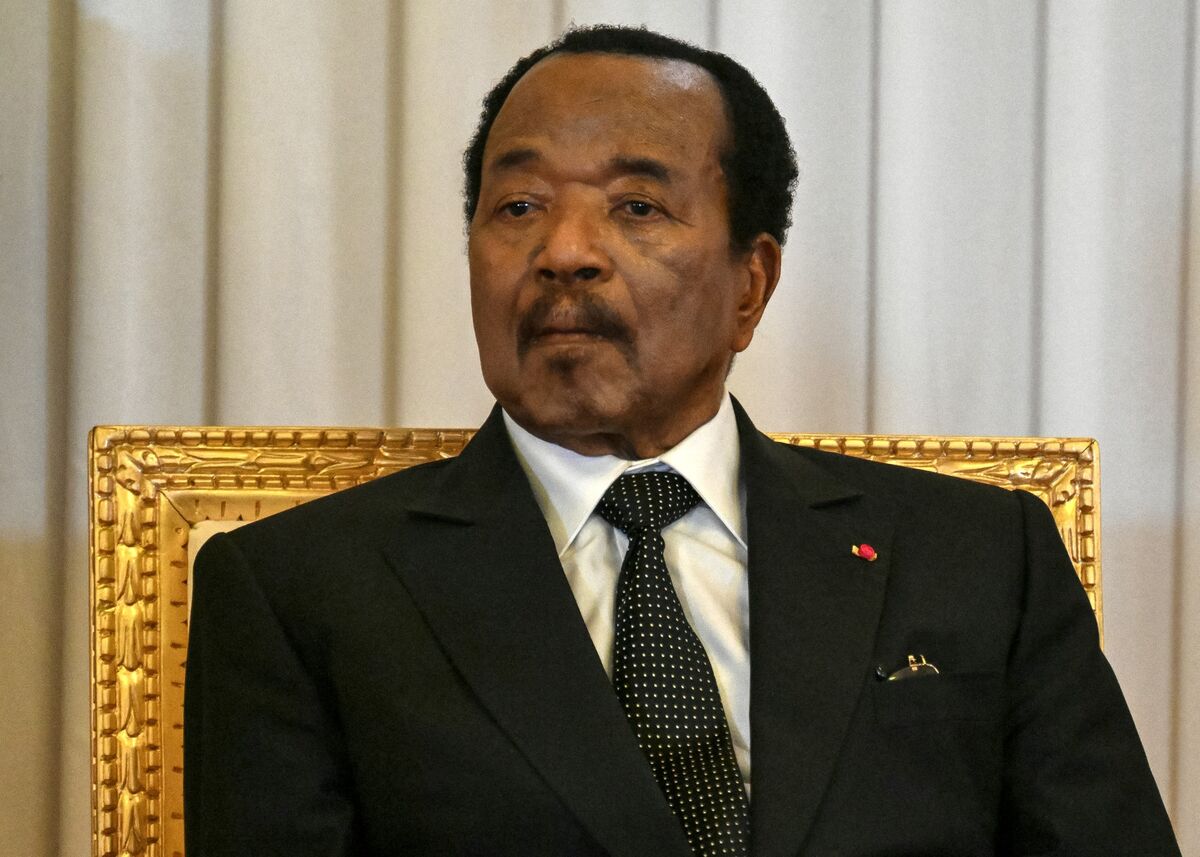
President Paul Biya came home last week. The question hanging over Cameroon is whether he ever really left the country's deepest problem behind: what happens when the 93-year-old, the world's oldest sitting head of state, can no longer govern.
Biya landed at Yaoundé's Nsimalen International Airport on Aug. 20 aboard a chartered flight from Geneva, ending a 73-day absence that his office had originally described as a "short private stay." It was the longest recorded stretch the president has spent outside Cameroon since he took power in November 1982. For 10 weeks, the head of state of a country of roughly 28 million people was, for practical purposes, unaccounted for in public, and the vacuum that opened up did more to expose the fragility of Cameroon's political system than any opposition speech could have.
A trip that would not end
Biya departed for Geneva in June, according to statements from the presidency, for a routine private visit. Weeks passed. Then a month. Cameroonian newspapers began running headlines asking where their president was and whether he was fit to serve. Rumors of a serious health episode circulated on social media and in diaspora networks, unconfirmed by any official source but fed by the silence coming out of Yaoundé.
The government's response was to keep the machinery of state visibly running in Biya's name. Presidential decrees continued to be signed and published. Official social media accounts kept posting updates attributed to the president. None of it stopped an opposition lawmaker from formally petitioning Cameroon's Constitutional Council to declare the presidency vacant — a direct challenge to the fiction that Biya was simply on holiday. The council did not act on the petition, and Biya's return on Aug. 20 rendered the immediate question moot. But the episode did lasting damage to public confidence that anyone, including the people around Biya, has a clear plan for what happens next.
Succession without a successor
That damage matters because Cameroon still has no vice president, no clear line of institutional succession, and no indication of when either will change. In April, Cameroon's Parliament — sitting in a joint session of the National Assembly and Senate — approved a constitutional amendment reviving the vice presidency, a post that had sat dormant for decades. The vote was lopsided: 200 lawmakers in favor, 18 opposed, four abstentions. The main opposition Social Democratic Front boycotted the session rather than participate in what it called a process that "fails to guarantee democratic legitimacy, inclusiveness, and proper institutional balance."
The amendment did not create a check on presidential power; it consolidated one. Under the new provisions, Biya alone can appoint and dismiss the vice president at will, and the office holder can exercise only those powers the president chooses to delegate. Critics, including academics who have studied Cameroon's institutions for years, described the design as built to manage a dynastic or hand-picked transition rather than to create an independent successor capable of stabilizing the country on short notice. Four months after the amendment passed, Biya still has not named anyone to the post. His 73-day disappearance is the clearest illustration yet of why that gap matters: had his condition worsened abroad, Cameroon would have had no constitutionally empowered figure to step in, only a Constitutional Council petition and a wall of official silence.
An election that settled nothing
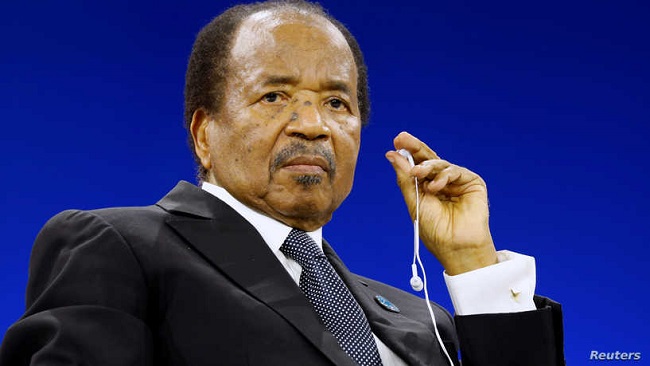
The succession anxiety did not appear in a vacuum. It follows directly from the country's Oct. 12, 2025, presidential election, in which Biya was declared the winner with 53.66% of the vote against 35.19% for his closest challenger, Issa Tchiroma Bakary, according to the Constitutional Council's official tally. The result extended Biya's rule into an eighth consecutive term — an additional seven years for a man who has now led Cameroon for more than four decades and is, by a wide margin, the oldest head of state in the world.
Tchiroma rejected the outcome outright, telling reporters at the time that "there was no election; it was rather a masquerade. We won unequivocally," and claiming his own internal count showed him winning with 54.8% to Biya's 31.3%. The dispute was never resolved through any independent mechanism — Cameroon's Constitutional Council, whose members are appointed by the president, has final say over election results and rejected the opposition's challenges.
The announcement triggered protests in Douala, the country's economic capital, and other cities. Security forces clashed with demonstrators, and at least four people were killed in Douala on Oct. 26, 2025, according to reporting at the time. More than 100 people, including opposition figures, were arrested in the crackdown that followed, and authorities warned against further demonstrations. Biya subsequently offered Tchiroma a role as prime minister in what was widely read as an attempt at reconciliation; Tchiroma declined it, choosing to remain in opposition rather than join a government he considers illegitimately elected.
Why this moment is different
Cameroon has weathered contested elections and health rumors about Biya before — he has a long history of extended absences that fueled speculation, dating back decades. What sets the current period apart is the convergence of three things at once: an election outcome that a significant share of the population and the opposition still consider fraudulent, a newly created but empty vice presidency designed to hand power to whomever Biya chooses rather than to anyone chosen by an independent process, and now the longest and most consequential test yet of what happens when the president is simply gone.
Analysts who track Cameroon's politics have long warned that the country's real crisis is not Biya's age itself but the absence of any agreed, legitimate mechanism for succession. The Anglophone regions of Cameroon, where a separatist conflict has simmered for years, are watching the succession question closely, as are neighboring states and international partners who worry that an abrupt, contested transition could destabilize a country that borders Nigeria, Chad, the Central African Republic, and other states already dealing with insecurity. Cameroon's military and security establishment, along with the ruling Cameroon People's Democratic Movement's inner circle, are widely seen as the likely arbiters of any real transition, regardless of what the constitution says on paper.
Cameroon's regional partners have their own reasons to worry about a mismanaged transition. The country sits at the hinge of Central and West Africa, bordering Nigeria to the west and Chad and the Central African Republic to the east and north, and its stability has long been treated by Paris and Washington as a bulwark against the instability that has spread through the wider Sahel. A chaotic succession in Yaoundé would also land on top of an already active, low-intensity separatist conflict in the country's Anglophone Northwest and Southwest regions, where armed groups seeking an independent state called Ambazonia have fought government forces since 2017 in a war that has killed thousands and displaced hundreds of thousands more. Diplomats and regional analysts have suggested that a power vacuum at the center could either embolden separatist factions to press their advantage or, alternatively, give the security establishment a pretext to tighten its grip further under the banner of national stability — neither outcome reassuring to a population already exhausted by nearly a decade of conflict.
What to watch next
Several threads are worth tracking in the weeks ahead. First, whether Biya moves to name a vice president now that he has returned — and if so, whether the choice signals a dynastic succession (his son, Franck Biya, has been the subject of persistent speculation) or a technocratic caretaker meant to preserve stability. Second, whether the Constitutional Council petition to declare the presidency vacant resurfaces in some form, particularly if Biya's public appearances remain limited or another unexplained absence occurs. Third, how the opposition, and Tchiroma specifically, respond in the coming months: continued street mobilization risks further crackdowns, while continued institutional boycotts risk marginalizing the opposition from any managed transition.
Finally, regional and international actors — the African Union, France, and Cameroon's Central African neighbors — will be watching whether Yaoundé's political class can manage a transition of power without the kind of instability that has recently convulsed other states in the region. Cameroon has avoided the coups that toppled governments in Mali, Niger, Guinea, and Gabon in recent years, but a poorly managed succession, layered on top of an already disputed election and an active separatist insurgency in the Anglophone Northwest and Southwest regions, could test that record. For now, Biya is back in Yaoundé. The question his absence raised — who actually runs Cameroon when he cannot — remains unanswered.
Published By | News Editor