Written By | Health News Agencies
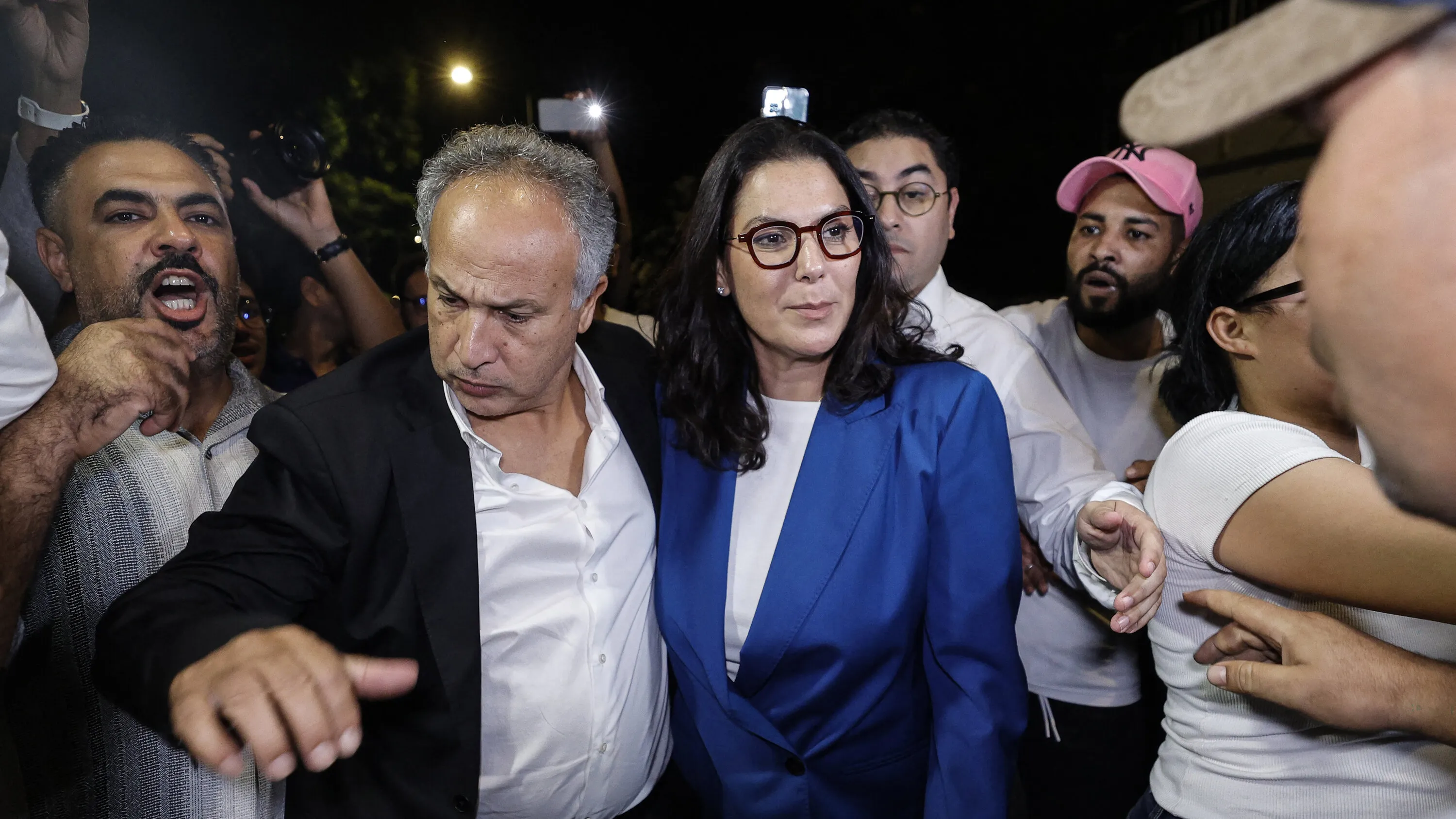
King Mohammed VI on Tuesday appointed Fatima Ezzahra El Mansouri as Morocco's first female prime minister
RABAT
King Mohammed VI on Tuesday appointed Fatima Ezzahra El Mansouri as Morocco's first female prime minister, six days after an election in which her Authenticity and Modernity Party (PAM) won 97 of the House of Representatives' 395 seats. She becomes only the second woman to lead an Arab government, after Tunisia's Najla Bouden, according to Al Jazeera and The National. "For the first time in our country's history, a woman is taking on the responsibility of leading the government," Ms. El Mansouri, 50, said in a televised address, calling the appointment "truly historic."
The milestone arrives with an asterisk. PAM is 101 seats short of the 198 needed for a majority, so Ms. El Mansouri must assemble a coalition from a parliament in which no party dominates, and she must do so in a political climate marked by low turnout, a resurgent Islamist opposition and the memory of youth-led protests over public services. The government she forms will oversee billions in investment ahead of Morocco's co-hosting of the 2030 FIFA World Cup with Spain and Portugal.
The election and its message
Morocco voted on Sept. 23. The results, as compiled by Wikipedia and confirmed for the main parties by Al Jazeera and The National, were a rebuke to the outgoing coalition. PAM rose to 97 seats from 87. The National Rally of Independents (RNI), the leading party of the outgoing coalition, fell to 66 from 102, ending its five-year lead of the government. The Istiqlal Party dropped to 65 from 81. The Justice and Development Party (PJD), the Islamist party that governed from 2011 to 2021, rebounded to 54 seats from 13. Wikipedia lists the Popular Movement at 29 seats and the Socialist Union of Popular Forces (USFP) at 26.
The PJD's recovery is the election's most dramatic storyline. Al Jazeera noted that the party had collapsed from 125 seats in 2021 before its return this year. Its resurgence, and the fall of the RNI, suggest that voters who did turn out were looking for an alternative to the incumbent coalition.
Many voters did not turn out at all. Turnout was 38.08 percent, down 12.78 percentage points from 50.86 percent in 2021, according to Wikipedia's entry and Al Jazeera's figures. Al Jazeera described it as the second-lowest turnout in parliamentary elections since King Mohammed VI took the throne in 1999, while The National characterized it as the lowest since 2007; the two outlets' characterizations differ, but both point to deep disengagement among Morocco's roughly 27 million voting-age citizens, a figure cited by The National.
The electoral rules complicate the picture. Wikipedia notes that the election used proportional representation with electoral thresholds removed, and that seat allocations were calculated on the basis of registered voters rather than ballots actually cast. Al Jazeera's coverage of the results centered on the resulting fragmentation. Reforms introduced regional women's lists and measures against misinformation.
The background: protests and promises
The campaign unfolded in the shadow of youth-led protests in 2025 that focused on public services, employment and corruption, issues that the parties subsequently made central to their platforms, according to Wikipedia's account. PAM's own manifesto pledged to "create one million jobs and expand investment in health care, social protection and wages," The National reported.
That promise will be measured against a hard baseline. The demands that brought young Moroccans into the streets last year — better hospitals, schools and job prospects — have not disappeared, and the low turnout in September suggests that many of them saw little point in voting. Ms. El Mansouri's task is therefore twofold: to build a governing majority and to persuade a skeptical public that the government can deliver.
Who is Fatima Ezzahra El Mansouri
Born in Marrakesh in 1976, Ms. El Mansouri studied law at the University of Montpellier in France and at New York University, Al Jazeera reported. She co-founded PAM, according to i24NEWS, and became mayor of Marrakesh in 2009, the city's first woman to hold the post. i24NEWS reports she served as mayor from 2009 to 2015 and again from 2021. Since October 2021 she has served as minister of national spatial planning and urban development, a portfolio that included housing support and earthquake-relief efforts. She leads PAM through a three-person leadership council, i24NEWS said.
Under Morocco's 2011 constitution, the king appoints the head of government from the party that wins the most seats, so her elevation follows the constitutional script. The Wikipedia entry on the election noted before the appointment that PAM's other potential candidate was Budget Minister Fouzi Lekjaa, who recently joined the party, and The National also named him as a possible prime minister.
The coalition arithmetic
The numbers offer more than one path, but each has problems. Al Jazeera calculated that PAM, the RNI and Istiqlal, the three partners in the outgoing arrangement, together hold 228 seats, well above the 198 needed. i24NEWS likewise expected the RNI and Istiqlal to join. But The National reported that PAM leaders had explicitly ruled out renewing their partnership with the RNI, and Al Jazeera observed that campaign tensions between the two could complicate talks. Without the RNI's 66 seats, PAM and Istiqlal would have only 162, and the party would need the Popular Movement's 29 and the USFP's 26 to reach 217, an arithmetic that is possible but would produce a broader and less cohesive coalition. This calculation is ours, based on the reported seat counts, and coalition talks are only beginning.
The PJD is not likely to be a partner. Al Jazeera reported on Sept. 29 that some parties, including the PJD, have already announced they will be in opposition. That gives the Islamist party, with 54 seats, the role of principal opposition, and a platform from which to challenge the government on cost of living and public services at the moment its base is re-energized.
The Hespress news site reported that Ms. El Mansouri planned consultations with the RNI and Istiqlal leadership, which suggests the ruling-party alliance has not been written off despite the campaign rhetoric. The outcome will show whether public statements were posture or a genuine break.
Analysis: a historic first, a constrained office
The symbolism should not be dismissed. In a region where women rarely lead governments, the appointment of a woman to head Morocco's cabinet is a genuine change in the political landscape, and Ms. El Mansouri's own framing emphasized the historic dimension. Regional women's lists in the electoral system, which Wikipedia says were introduced this cycle, point to a broader effort to expand women's presence in public life.
But some Moroccans are skeptical about what the milestone means in practice. i24NEWS reported concern that the appointment reflects a "Two-Speed" dynamic in which elites modernize while ordinary citizens lag behind economically. That critique echoes the 2025 protests and the low turnout: for voters who feel excluded from the economy, a first for women at the top may not address the concerns that matter most to them.
The office itself is also bounded. Morocco's king retains decisive authority over strategic matters, and elected governments manage the day-to-day economy and social policy. The coalition's freedom to maneuver will depend on the palace's priorities as much as on parliamentary math, and the World Cup preparations, with their large public investment, give the palace a strong interest in a stable and functioning cabinet. That may push the parties toward a deal, whatever their campaign differences.
The other structural challenge is legitimacy. A government formed on the back of 38.08 percent turnout begins with a thinner mandate than its predecessors. The 2021 turnout of 50.86 percent was itself a modest figure; the further decline signals that the party system as a whole, not only the outgoing coalition, faces a credibility problem. If the government fails to deliver on jobs and public services, the PJD's comeback shows that voters will look elsewhere.
What to watch
The first test is coalition formation: which parties join, whether the PAM-RNI rift is real, and how long the process takes. The composition of the cabinet, including how many women hold portfolios and who takes the finance and budget posts, will signal the government's priorities. The government's program, with its pledge of one million jobs, will be the benchmark against which the public measures progress. The PJD's conduct as the main opposition, and the reaction of the young Moroccans who protested in 2025, will show whether disengagement hardens into renewed unrest. Finally, the World Cup timetable will force early decisions on infrastructure spending that will shape both the economy and the government's popularity.
Ms. El Mansouri has a historic title. What she needs now is a majority and a reason for Moroccans to believe in it.



