Written By | Fashion and Design Desk
The UK's longest-running graduate design showcase collapses its two-week format into a single, discipline-spanning event — and puts sustainability and human creativity at the center.
LONDON
Every summer, a converted Victorian hall in Islington becomes the closest thing British design has to a crystal ball. New Designers, the country's flagship graduate showcase, fills London's Business Design Centre with the final-year work of thousands of emerging talents — the furniture makers, textile designers, ceramicists, and product engineers who will shape how the next decade looks and feels. This year, running July 1 to 4, the 41st edition arrives with its most significant structural overhaul in recent memory and a pointed message about what design is for.
One week, all disciplines, all at once
The headline change is logistical, but its implications are creative. For years, New Designers split its program across two separate weeks, dividing disciplines so that furniture and product design occupied one slot while textiles, fashion, and graphics filled another. For 2026, the organizers have collapsed that structure into a single, cohesive one-week showcase — more than 2,500 graduates from over 100 university courses, every discipline under one roof at the same time.
The rationale is cross-pollination. By putting a graphic designer's stand within sight of a furniture maker's prototype and a knitwear graduate's samples, the new format encourages the kind of accidental collision that rarely happens when fields are siloed. For the buyers, recruiters, and press who work the floor, it also means the full spectrum of emerging British design can be surveyed in a single visit rather than two trips a fortnight apart.
The change also reflects a hard commercial reality about how design careers now begin. The lines between disciplines have blurred: a product designer may need to think like a brand strategist, a textile graduate may end up working in digital, and employers increasingly hunt for makers who can move fluidly across fields. A show that mirrors that fluidity — everyone in one hall, at one time — is arguably a truer preparation for the working world these graduates are about to enter than the neat categorical divisions of the old format.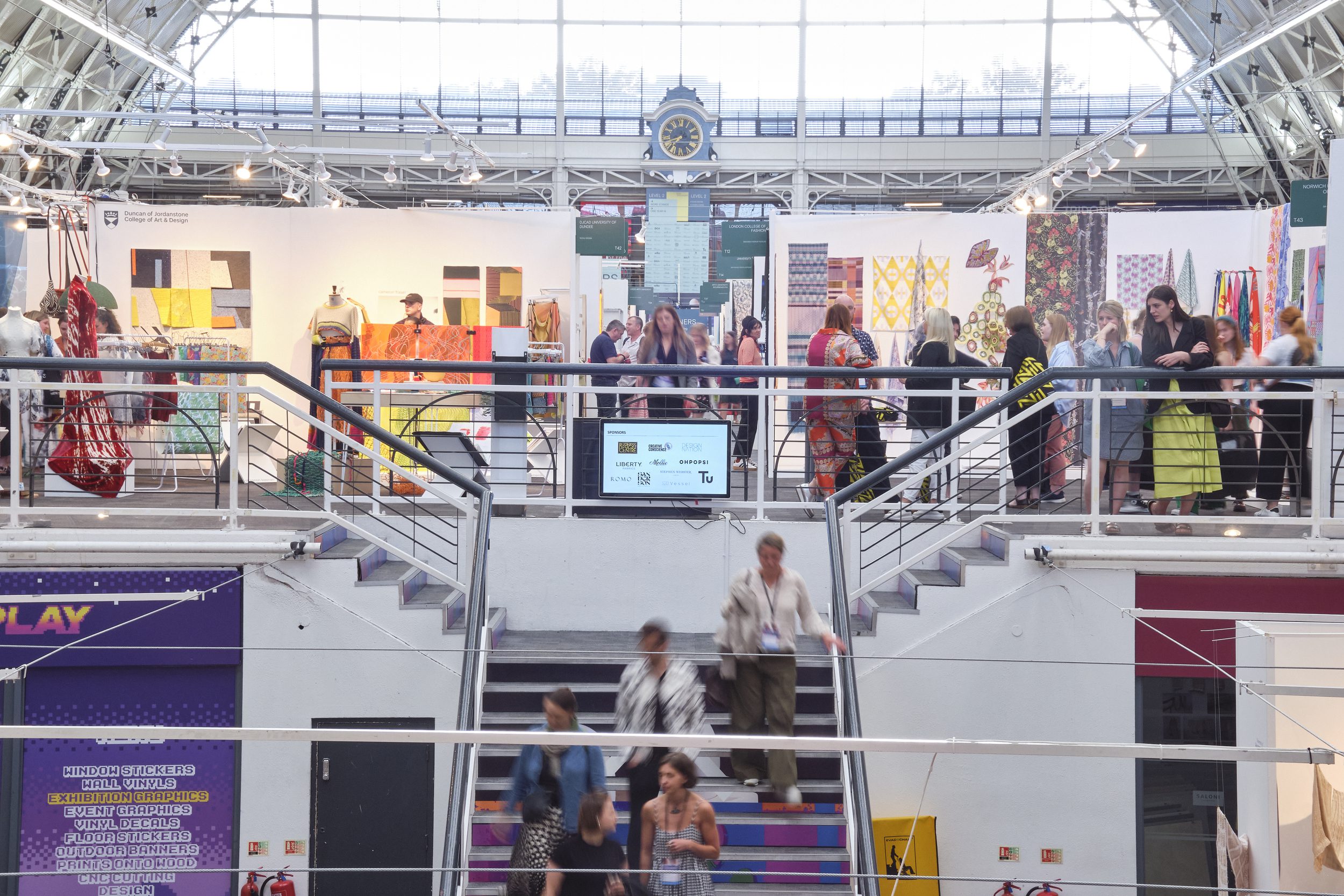
The themes emerging from the floor
Beyond the reshuffled calendar, a set of shared preoccupations runs through the 2026 cohort. Across disciplines, students are wrestling with the role of human creativity in an increasingly AI-driven world — a strikingly self-aware theme for a generation entering the profession just as generative tools upend it. Others are designing for accessibility and wellbeing, reimagining traditional craft practices, and responding, with real urgency, to the demand for more sustainable ways to make things.
Those ideas are not abstract. University of Staffordshire graduate Herbert's project "RE-PLAY (Recycled + Play)" builds a seat from plastic waste, insisting that sustainable design can be playful rather than preachy. Elsewhere, a knitwear collection inspired by the landscapes of Dartmoor translates organic textures into tactile samples using British wool, deadstock lambswool, mohair, and natural dye techniques — a small, precise argument for craft, locality, and lower-impact materials all at once.
Rewarding the next generation
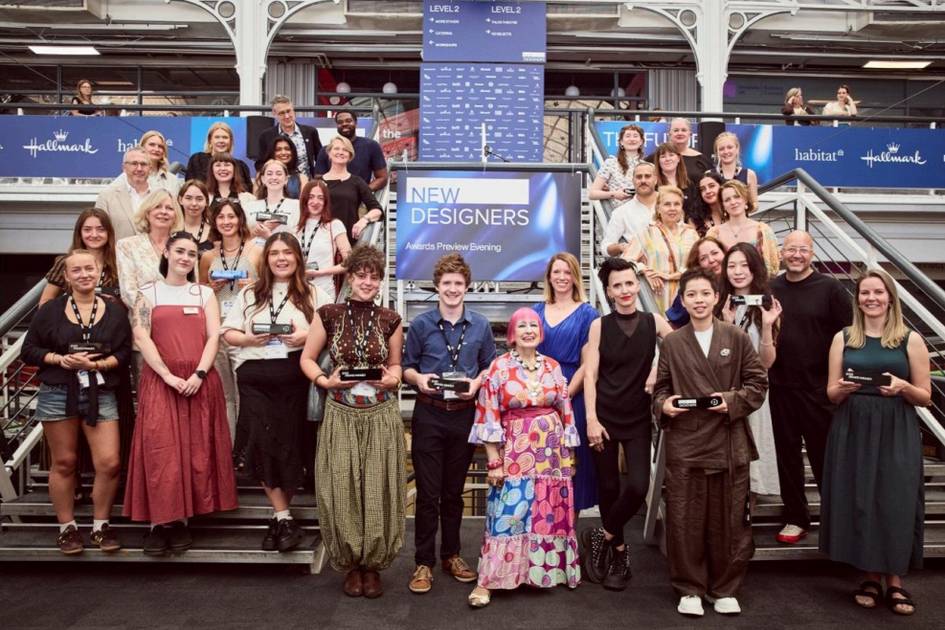
New Designers has always been as much a launchpad as an exhibition, and its awards program is where that ambition sharpens into recognition. The ND Awards Evening took place on Wednesday, July 1, with the coveted New Designer of the Year Award — the show's top honor — presented by the celebrated British designer Lee Broom. For a graduate, the exposure can be career-defining: past editions have served as first meetings between young makers and the studios, manufacturers, and retailers that go on to hire or collaborate with them.
Supporting the exhibition is ND Educates, a dedicated program of talks, workshops, and industry masterclasses built to give emerging designers the commercial insight and professional confidence that design education does not always provide. Sessions this year include a Hallmark-led exploration of collaboration and creative agility — how multidisciplinary teams actually work together — reflecting a recognition that technical skill alone does not build a career.
That emphasis on the practical business of being a designer is deliberate. Graduating with a strong portfolio is only the first hurdle; knowing how to price work, pitch to clients, protect intellectual property, and sustain a creative practice financially is what separates a promising showcase from a lasting career. By pairing the exhibition with structured professional guidance, New Designers is trying to close the gap between the studio and the marketplace — treating its graduates not merely as talents to be admired for a weekend, but as emerging professionals to be equipped for the years that follow.
Why it matters beyond the show floor
It is easy to file a graduate showcase under industry housekeeping, but New Designers functions as an early-warning system for the wider culture. The materials, methods, and values on display this week — recycled plastics engineered into furniture, natural dyes replacing synthetic ones, accessibility treated as a design brief rather than an afterthought — tend to migrate, over a few years, from student stands into the products people actually buy. What reads as experimental in Islington in July often becomes mainstream in shops not long after.
The cohort's preoccupation with human creativity in the age of AI is especially telling. This is the first wave of designers to train entirely alongside generative tools, and their instinct — to foreground the handmade, the tactile, and the specifically human — offers a clue about how the creative professions may define their value in the years ahead. For anyone trying to read where design is heading, the New Designers floor is a more honest forecast than any trend report.
The bottom line
In its 41st year, New Designers has done something its own graduates are praised for: it has redesigned itself. The move to a single unified week is a bet that design is stronger when its disciplines share a room, and the work on show suggests a generation intent on making that room more sustainable, more accessible, and more human. The buyers and recruiters walking the aisles this weekend are not just admiring student projects — they are getting a first look at the objects, textiles, and ideas that will fill our homes and lives in the decade to come.
Reported for the Lifestyle Desk, July 3, 2026.



