Written By | Fashion and Design Desk
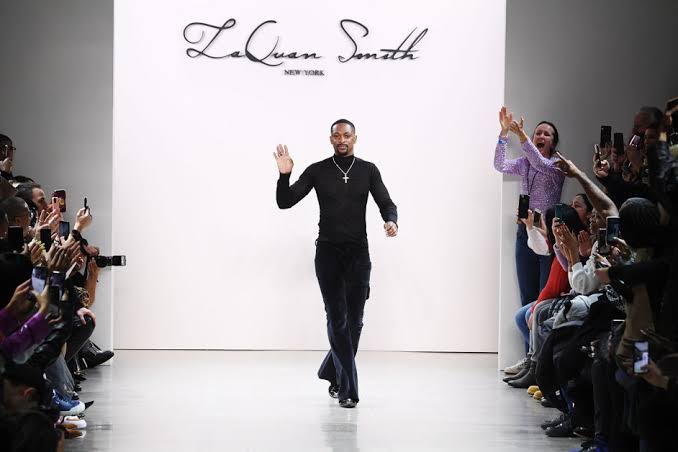
LaQuan Smith shows Spring 2027 at nine o'clock tonight, in the closing hours of a fashion week crowded with debuts, first-timers and institutional change.
NEW YORK
New York Fashion Week is, by Monday evening, a tired animal. Five days in, the editors have seen roughly sixty shows, the buyers have stopped pretending to be surprised, and the Spring 2027 season — which opened on 10 September and closes tomorrow with Thom Browne — has already delivered its quota of debuts, comebacks and institutional firsts.
Which is a useful context for what happens at nine o'clock tonight, when LaQuan Smith shows. Smith's slot is late, and it is late on purpose. His collections have never been about the 10 a.m. editorial gaze. They are about what people wear when the sun has gone down and the photographs are going to be taken anyway.
The week he is closing out
This season's official CFDA calendar runs to around seventy runway shows and presentations across six days, with further collections shown by appointment and digitally. It has been a week unusually heavy on newcomers: Benjamin Seidler, Grey's, High Sport, Hikari no Yami, Max Esmail, Patrick Taylor, Sabyasachi and Zaldy all joined the official schedule for the first time, alongside the debuts of CFDA/Vogue Fashion Fund finalists Bad Binch TongTong, Jamie Haller and Milamore.
It opened on Thursday with Henry Zankov's first collection as artistic director of Diane von Furstenberg and runs through to Thom Browne's closing show tomorrow. It is also the first New York season staged under the CFDA's fur ban, a policy shift the industry has been arguing about since it was announced.
Amid all that institutional motion, Smith is the fixed point — one of the few names on the schedule whose proposition requires no explanation whatsoever.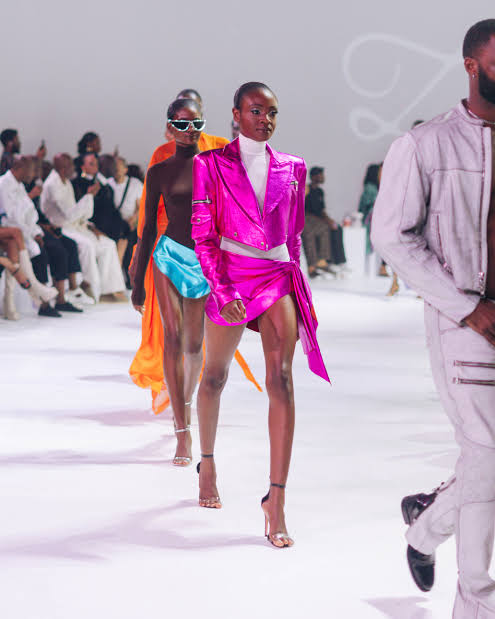
The grandmother, the rejection letters, the 21-year-old
Smith's biography has been told often enough to have hardened into legend, which is a shame, because the details are better than the legend. He learned to sew from his grandmother in Queens, in middle school. He applied to the major fashion schools and was rejected. Rather than treat that as a verdict, he treated it as a routing problem: he taught himself, hustled his way into the industry's orbit, and found mentors — most consequentially the late André Leon Talley — who took him seriously before anyone had a commercial reason to.
He staged his first runway show at twenty-one. The brand's formal debut came in 2013. That is thirteen years of building a house in public, in a city where independent American labels have been closing at a rate that makes survival itself a form of achievement.
A signature that never needed refining
What Smith figured out early, and has refused to complicate, is a silhouette: body-conscious, cut high and low, structured where structure reads as armour, and detailed with hardware. Cut-outs. Slink. Clothes that assume the wearer wants to be looked at and has decided the terms.
In a decade that has cycled through normcore, quiet luxury, and the current industry-wide retreat into taste, that position has been unfashionable more often than not. Smith's answer has been to keep making it anyway, and to let the cycle come back around — which it has, repeatedly, because the customer never left.
That customer is worth being precise about. Beyoncé, Rihanna, the Kardashians and Lady Gaga were early and visible supporters. Kamala Harris has worn the label. But the commercially significant part is quieter: a global private-order clientele that runs, as the brand describes it, from Lagos to London. A designer with a made-to-order book on two continents is not dependent on a wholesale market that has spent five years contracting.
Why the 9 p.m. slot matters
Show times are not neutral. A brand showing at 9 a.m. is asking to be assessed as a proposition. A brand showing at 9 p.m. on the second-to-last night is asking to be experienced — and is calculating, correctly, that a fashion week's closing hours generate a different kind of image.
Smith's shows have consistently been among the most heavily attended by celebrities on the New York calendar, which cuts both ways. It guarantees reach. It also means the clothes get discussed through the front row, and a designer with genuine technical range can find himself reduced to the adjective "sexy" for a decade.
Tonight is an opportunity to complicate that. The question the industry will be asking is not whether Smith can produce a glamorous evening look — that has never been in doubt — but whether Spring 2027 broadens the vocabulary: daywear, tailoring, the parts of a wardrobe that build a business rather than a moment.
What this means if you do not follow fashion week
Three things transfer beyond the tents.
First: self-taught still works, but only with a distribution strategy. Smith's route around the rejection letters was not raw talent alone. It was talent plus relentless self-promotion plus mentors plus a willingness to dress the most photographed women alive before anyone was paying him properly for it.
Second: consistency is an asset, not a limitation. The strongest independent brands of this decade have been the ones whose customer can describe their aesthetic in a sentence. Trend-chasing is what happens when a label has not decided what it is.
Third: the American fashion industry's centre of gravity keeps shifting toward designers who built audiences directly. Smith did not come up through a European house. He came up through Instagram, red carpets and a private-order book, and arrived at the official schedule from outside the traditional pipeline — which is increasingly how it is done.
After the lights go up
By Tuesday night, New York will hand the season to London, then Milan, then Paris, and the discourse will move on to bigger houses with bigger budgets and considerably longer histories. What New York will have produced this week is a set of arguments about what American fashion is for: an institutional one at DVF, a fur-free one at the CFDA, a technical one at Thom Browne.
Smith's argument is simpler and older than all of them. Someone, somewhere, is going out tonight and wants to be the most looked-at person in the room. That has never stopped being true, and it has never stopped being a business.



