The 2026 RIBA National Awards named 32 of the UK's best new buildings, and a university campus in East London walked away with the top honor. Here's what the winners say about where British architecture is headed.
LONDON
Every July, the Royal Institute of British Architects hands out its National Awards, the first stage in a process that eventually crowns the RIBA Stirling Prize, the country's most prestigious architecture honor. This year's list, announced this week, tells a distinctly London-centric story: of the 32 buildings recognized nationally, 17 — well over half — sit within the capital, continuing a run of London dominance that has become almost a fixture of the awards in recent years.
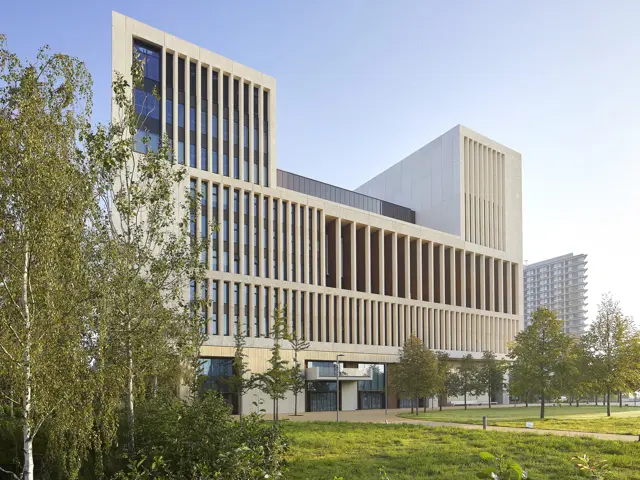
At the top of the pile sits Marshgate, the centerpiece of University College London's new East London campus, designed by Stanton Williams and named London Building of the Year 2026. The win places Marshgate, alongside its campus neighbor One Pool Street, in contention for the Stirling Prize later this year — the architectural equivalent of an Oscar nomination following a strong festival run.
A Campus Built From First Principles
Marshgate is not a subtle building, in either scale or ambition. The eight-storey, 35,000-square-metre structure is UCL's largest single building and the centerpiece of a £250 million development — the biggest single scheme in the university's two-hundred-year history. RIBA's jury described it as "a bold expression of confidence in the future of university research," language that captures both the physical scale of the project and the intent behind it.
What distinguishes Marshgate from a typical university science block is its underlying premise. Rather than starting from a conventional academic brief — lecture halls here, labs there, offices somewhere else — Stanton Williams built the design from first principles, developed through extensive consultation with UCL academics and staff, to support genuinely cross-disciplinary research and teaching. The result is a building conceived less as a container for existing departments and more as an instrument for a new kind of academic collaboration, one designed to help researchers from different fields solve problems that don't respect traditional departmental boundaries — the kind of global challenges, as UCL and RIBA both framed it, that increasingly require scientists, engineers, and social researchers to work in the same rooms rather than adjacent buildings.
The building's location matters too. Marshgate sits within UCL East, the university's new campus built on the Queen Elizabeth Olympic Park site in Newham, part of a broader, decade-long effort to extend redevelopment momentum from the 2012 Olympics eastward into one of London's historically under-invested boroughs. A university anchor of this scale — bringing students, researchers, and jobs into the area — is itself a significant piece of urban infrastructure, independent of the building's architectural merits.
London's Winning Streak, By the Numbers
Marshgate's win is the headline, but the broader list of 17 London winners paints a fuller picture of what's being built, and rewarded, across the city right now. The awards spanned a wide range of building types and budgets, from major public institutions to targeted community infrastructure:
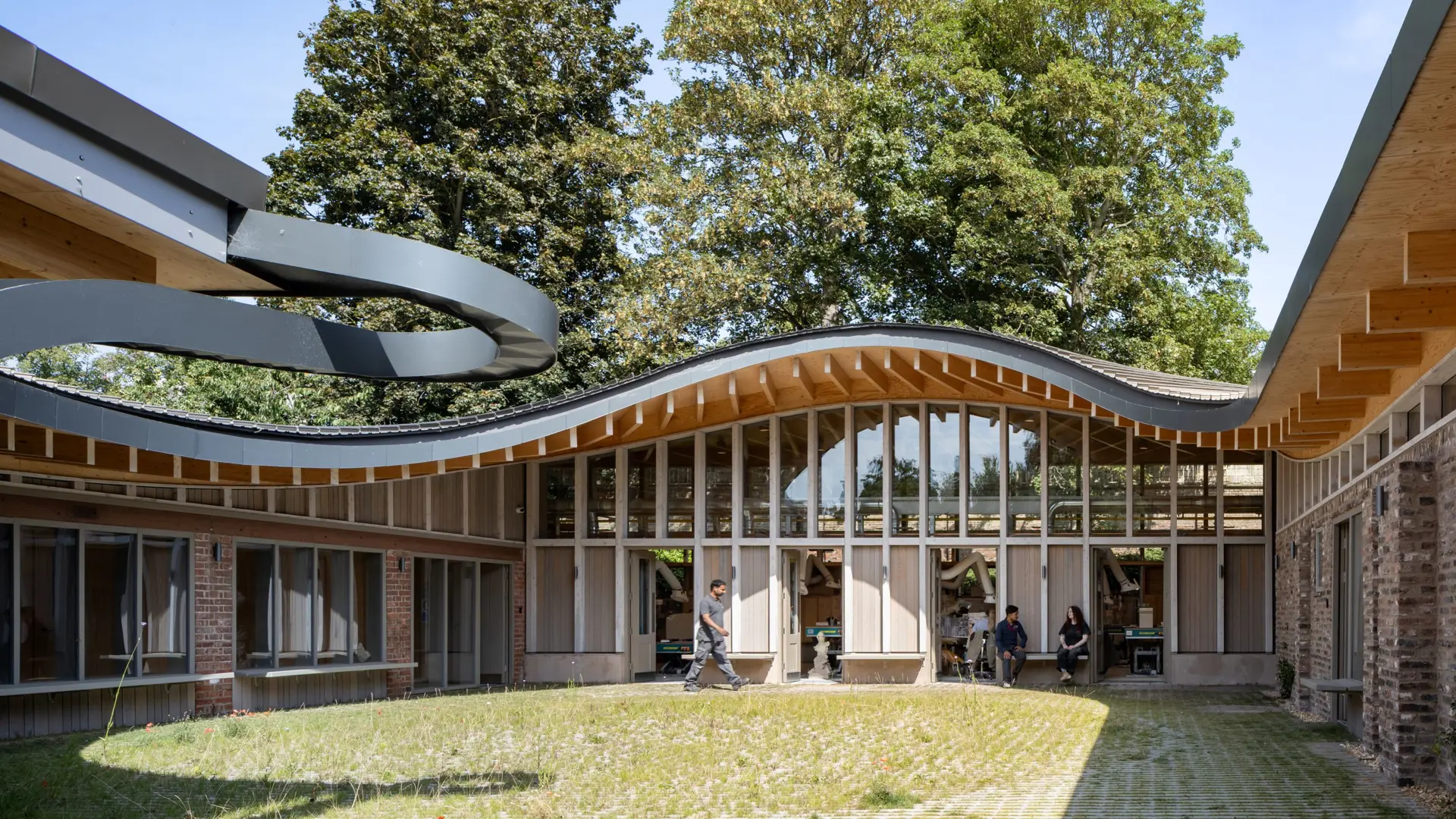
The Urban Nature Project at the Natural History Museum, designed by Feilden Fowles, reimagines the museum's five-acre gardens as a living, publicly accessible ecological exhibit — turning outdoor space that was previously peripheral to the museum experience into a central part of its mission. Sadler's Wells East delivered a new dance theatre and school of choreography, expanding the capital's performing arts infrastructure beyond its traditional West End concentration. And a cluster of adaptive reuse projects — the refurbishment of the Grade-II listed Arding & Hobbs department store in Clapham Junction and the transformation of Paddington Square among them — reflected a continuing trend toward retrofitting and reimagining existing structures rather than building purely from scratch.
Housing featured prominently as well. Canada Water Plot K1 delivered 79 affordable homes as the first phase of a much larger area masterplan, while The Brentford Project added more than 800 new homes as part of a wider regeneration effort along Brentford's High Street — both signals that the awards jury continues to prioritize projects tackling London's acute housing pressures alongside pure design achievement.
No practice had a bigger year than Morris+Company, which claimed four separate national winners, all within London: Canada Water Plot K1, the Harold Moody Health Centre in Southwark, Norton Folgate, and The Featherstone Building. That kind of sweep is unusual even by the standards of a strong architecture year, and it positions the firm as one of the capital's most consistently rewarded practices heading into the back half of the decade.
What the Numbers Say About British Architecture Right Now
Beyond the specific winners, the 2026 list offers a useful snapshot of where the profession's energy — and its jury's priorities — currently sit. Health infrastructure (the Harold Moody Health Centre), education (Marshgate, One Pool Street), cultural venues (Sadler's Wells East, the Natural History Museum gardens), and affordable housing all featured prominently, suggesting an awards cycle more interested in rewarding civic and public-serving architecture than purely private commercial or residential showpieces. Heritage retrofit projects also carried real weight, reinforcing a broader industry shift — driven partly by sustainability pressures and partly by economics — away from demolition-and-rebuild toward adaptive reuse of existing structures.
Why It Matters for Readers
For anyone outside the architecture trade press, awards like these can seem like industry navel-gazing. But the RIBA National Awards function as a genuine leading indicator: winners here go on to compete for the Stirling Prize, Britain's most publicly visible architecture honor, and buildings recognized in this cycle — Marshgate especially — tend to become reference points cited in design conversations for years afterward. For Londoners, several of this year's winners, including the Natural History Museum's redesigned gardens and Sadler's Wells East, are also simply new public spaces worth visiting: buildings that reward a walk-through as much as a write-up.
Looking Ahead
The 32 National Award winners now advance toward the Stirling Prize shortlist, expected later this year, where a smaller group will compete for the single title of Britain's best new building. Given Marshgate's scale, ambition, and the strength of the jury's language around it, it enters that race as an early frontrunner — though with 31 other credible contenders in the mix, London's architecture scene is unlikely to have the final word settled without a fight.
Published By | Features Editor