Written By | Business Experts
Zimbabwe closed the first half of 2026 with a set of numbers that, taken in isolation, would suggest a country in the middle of a genuine economic revival
Economic & Social Transformation
Zimbabwe closed the first half of 2026 with a set of numbers that, taken in isolation, would suggest a country in the middle of a genuine economic revival. Growth accelerated sharply in 2025, inflation has been tamed to single digits, a new gold-backed currency is gaining traction in everyday transactions, and lithium exports are surging on the back of new Chinese-financed processing plants. Yet beneath those headline figures sits a population where roughly one in two people still lives in extreme poverty, a public debt stock that climbed past US$21.5 billion by mid-2026, and a government still years away from resolving the arrears that have locked it out of international capital markets for more than two decades. Zimbabwe's story this year is less a turnaround than a fragile stabilization — real, but unevenly felt and still contingent on reforms that have failed before.
A Currency Finding Its Footing
The Zimbabwe Gold, or ZiG, introduced in April 2024 as the country's sixth attempt at a stable currency since 2008, has had its best run yet in 2026. According to the International Monetary Fund, the exchange rate has remained broadly stable through the first quarter of the year, helped by tight monetary policy from the Reserve Bank of Zimbabwe and gold-backed reserve management. ZiG usage has climbed to roughly 35–40% of domestic payments, still short of full dollarization-reversal but a marked improvement on the currency's shaky 2024 launch, when parallel-market premiums repeatedly threatened to unravel it. Inflation, which spiked violently in past ZiG episodes, fell to 4.4% year-on-year in March 2026 — a figure that would have seemed unthinkable during the hyperinflationary crises of 2008 or 2020. The IMF credits the improvement to a combination of tighter money supply growth, a more disciplined approach to central bank financing of the budget deficit, and the stabilizing effect of gold and mineral export receipts flowing through formal channels.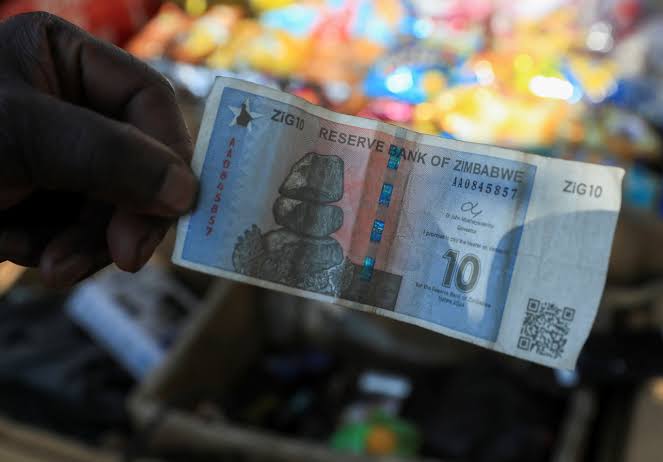
Mining-Led Growth and the Lithium Gambit
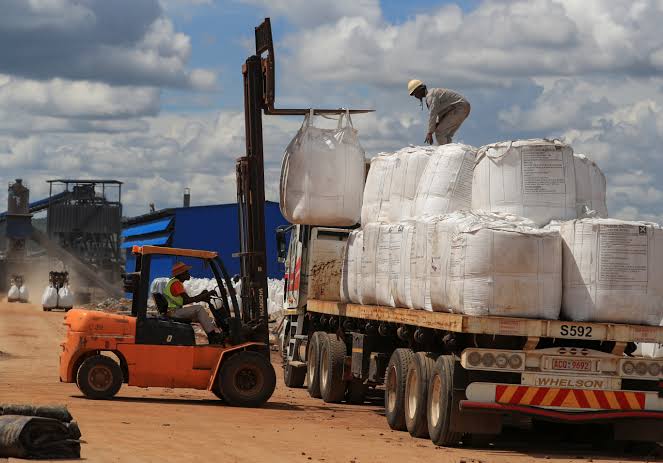
Real GDP growth reached an estimated 7.6% in 2025 according to the African Development Bank (the IMF puts the figure closer to 8.3%), a sharp rebound from just 1.7% in 2024, when El Niño-driven drought hammered the agricultural sector. Mining expanded by 7.3% for the year, propelled by continued investment in lithium alongside firm international prices for gold and platinum. The AfDB now ranks Zimbabwe as the world's fifth-largest lithium producer, with three Chinese-owned operators — Sinomine Resource Group, Zhejiang Huayou Cobalt, and Suzhou TA&A Ultra Clean Technology — controlling the country's most productive mines. Lithium exports earned US$782.2 million in the first half of 2026 alone, a 229.8% jump year-on-year that has made the metal Zimbabwe's third-largest mineral export behind gold and platinum group metals, according to industry data reported by the Rio Times.
That windfall sits behind a deliberate policy shift. In February 2026 the government banned exports of raw lithium concentrate and unprocessed mineral ore outright, forcing miners to route output through domestic processing plants before it leaves the country. The move follows years of frustration in Harare that Zimbabwe was capturing only a sliver of the value chain while ore was refined — and the bulk of the profit realized — in China. New Chinese-built processing plants have already come online in response, and the government is betting that forced local beneficiation will translate resource wealth into jobs, tax revenue, and downstream industrial capacity rather than simply exported ore. Analysts at Boston University's Global Development Policy Center have cautioned, however, that the pivot carries real execution risk: processing capacity, power supply, and technical skills all remain constrained, and a heavy-handed export ban could just as easily deter the next wave of investment as it accelerates local value capture.
Agriculture's Rebound — and Its Limits
Agriculture grew by a striking 24% in 2025, the primary driver of the year's overall growth surge, after favorable rains reversed the previous season's drought-driven collapse. The Famine Early Warning Systems Network (FEWS NET) reported in April 2026 that the improved 2025/26 harvest would boost food access nationally, though the relief is expected to be brief in areas that remain structurally food-insecure. That caveat matters: Zimbabwe's underlying food balance has deteriorated for a quarter-century. Demand has outstripped domestic production every year since 2001, and the resulting deficit widened to roughly 2.3 million metric tons by 2023. Climate models cited by researchers tracking the sector project the country will grow hotter and drier in the coming decades, potentially rendering much of the rural landscape unsuitable for maize cultivation by mid-century. In other words, a single good rainy season — however welcome — masks a structural vulnerability that fair weather alone cannot fix.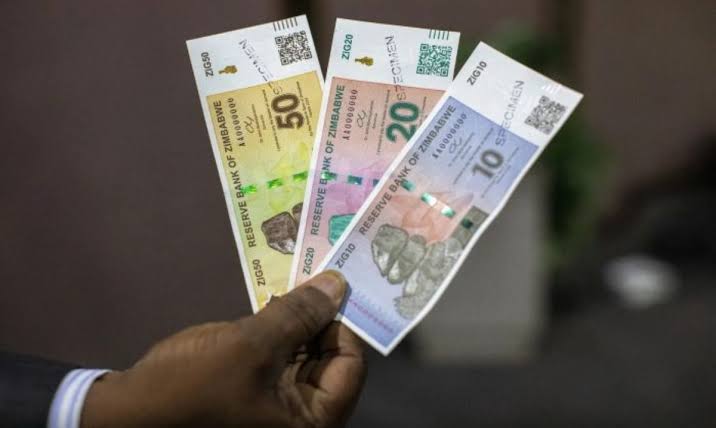
The IMF Program and the Path to Arrears Clearance
Zimbabwe's re-engagement with the international financial system took a concrete step forward in 2026. The IMF reached a staff-level agreement on a new Staff-Monitored Program (SMP) on February 6, 2026, which the Fund's management formally approved on April 16. On July 7, staff reached agreement on the program's first review, and IMF Management approved its completion on July 27 — a signal, the Fund said, that Zimbabwe is building a credible track record of policy implementation that can eventually support arrears clearance and debt restructuring talks with multilateral creditors including the IMF, World Bank, and African Development Bank. The scale of the problem those talks must resolve is substantial: external and domestic debt arrears stood at US$7.8 billion as of end-March 2025, equivalent to 36% of total public and publicly guaranteed debt. By the government's own mid-term budget review, released around August 1, 2026, total public debt had climbed to US$21.5 billion. An SMP carries no IMF financing of its own — it is a monitoring and credibility-building exercise — which means the actual clearance of arrears and any debt restructuring remains a multi-year project contingent on continued fiscal discipline that Zimbabwe's governments have historically struggled to sustain once growth returns and political pressure to spend intensifies.
Poverty Persists Beneath the Headline Numbers
The growth and currency stabilization data obscure a harder social reality. World Bank research shows extreme poverty fell to 43% of the population by 2021 before climbing back to roughly 50% in more recent assessments — meaning half the country lives below the extreme poverty line even as GDP posts some of its strongest growth in years. The World Bank's own analysis, published under the banner "Reversing the Tide: Reducing Poverty and Boosting Resilience," identifies female-headed households, people with disabilities, the unemployed, and workers in the informal economy as disproportionately exposed. That disconnect between macroeconomic recovery and household welfare is a familiar pattern in resource-and-agriculture-driven rebounds: mining windfalls and a single strong harvest lift national output figures quickly, but rarely translate into broad-based income gains at the same speed, particularly when a large share of the population depends on subsistence farming vulnerable to the next drought.
What Comes Next
The AfDB projects growth will moderate to 4.3% in 2026 and 4.5% in 2027 as the one-off boosts from a strong harvest and cyclical mining investment fade — a more sustainable but far less dramatic pace than 2025's rebound. The government's own AfDB-authored Country Focus Report for 2026, titled "Mobilizing Zimbabwe's Development Financing at Scale in a Fragmented World," frames the coming years around a familiar challenge for the continent: closing financing gaps in an environment where traditional donor and multilateral flows are increasingly constrained. For Zimbabwe specifically, the test will be whether the SMP's credibility-building translates into an actual arrears-clearance and debt-restructuring deal, whether the lithium beneficiation bet pays off without chilling investment, and whether a currency that has finally found some stability can survive the political and fiscal pressures that have sunk five predecessors since 2008.