Written By | International News Agencies
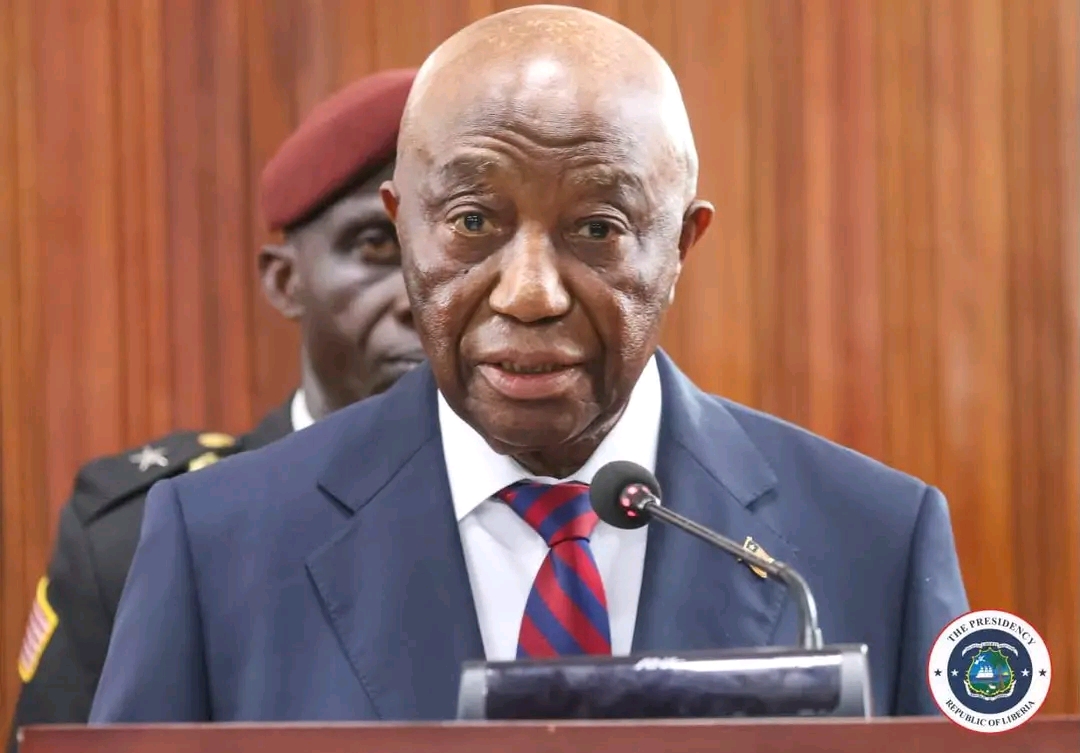
President Joseph Nyuma Boakai
Monrovia, Liberia
President Joseph Nyuma Boakai used a nationally televised address this week to defend his government's escalating campaign against drug trafficking and organized crime, insisting the effort would proceed "without fear or favor" even as it has ensnared one of Liberia's most prominent political figures: former Vice President Jewel Howard Taylor, who remains in detention in connection with an ongoing narcotics investigation. The opposition Coalition for Democratic Change responded within a day, branding the president's remarks "dishonest and nefarious" and demanding an independent probe into what it alleges is drug-cartel infiltration of Liberia's own security institutions — even as it confirmed that former President George Weah, the CDC's political leader, will return to Liberia on September 2 for the first time in months, setting up a direct confrontation between the government and its most organized opposition bloc.
The dispute has pushed Liberia's fight against transnational drug trafficking — already one of the defining security challenges of Boakai's presidency — into the center of the country's political life, testing both the credibility of his anti-corruption agenda and the fragile institutional balance of a nation still rebuilding from back-to-back civil wars that ended in 2003.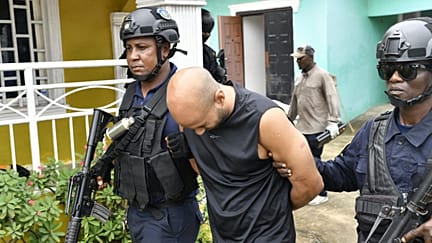
A transit hub under pressure
Liberia's location on West Africa's Atlantic coast, combined with weak port and maritime enforcement capacity, has made it an increasingly attractive transit point for cocaine moving from South America toward European markets. Liberian authorities have recorded a $317 million cocaine burn in 2026 alone, according to security officials, as the country's relationship to the narcotics trade has shifted from what analysts once described as a wartime financing tool into what is now characterized as a full-blown regional transit crisis. The scale of the problem was underscored by the seizure of what the opposition CDC says was approximately 3,971 kilograms of cocaine, a shipment the party alleges was escorted, at least in part, by Liberia National Police officers operating under the command of Police Inspector General Gregory Coleman — an allegation that, if substantiated, would point to compromised law enforcement at the highest levels rather than mere porous borders.
It is against this backdrop that Jewel Howard Taylor, who served as vice president under Weah's CDC administration from 2018 to 2024 and is the former wife of ex-president and convicted war criminal Charles Taylor, was arrested and charged in connection with the drug investigations. Her detention has drawn national and international attention both because of her political stature and because of the historical resonance of her surname in a country where Charles Taylor's decade-long civil war left deep and still-unhealed scars.
Boakai's address: due process amid political pressure
In his address to the nation on the evening of August 26, Boakai sought to frame the anti-narcotics campaign as a matter of national survival rather than partisan score-settling. "This is not simply a law enforcement issue; it is a national security and moral issue," he said, describing illicit drugs as one of the gravest threats facing the country, one that is "destroying young lives, weakening families, fueling violence and threatening the country's future."
Addressing the controversy surrounding Taylor's case directly, Boakai sought to reassure both her supporters and international partners that she was being treated fairly under Liberian law. "She is presumed innocent, has access to legal counsel, and is entitled to due process, which will be upheld," the president said, adding that "it is not the President's role to determine guilt or innocence. That responsibility belongs to our independent justice system." He rejected suggestions that the crackdown was being used either to persecute opponents or shield allies, declaring flatly: "My Administration will neither persecute nor shield anyone because of political affiliation, office, status, or influence." Boakai also praised Liberia's Joint Security forces for what he called their professionalism under pressure, and appealed to political and religious leaders to avoid rhetoric that could incite violence or undermine state institutions.
The opposition's rebuttal
The CDC's response, issued the following day through its National Executive Committee, rejected the president's framing wholesale. The party accused Boakai of hypocrisy and selective prosecution, alleging — without providing independent evidence — that the president's son, Jojo Boakai, had been named in a video by an alleged cocaine cartel and remains free from any accountability. The CDC further argued that the administration has failed to act against Inspector General Coleman despite the police's alleged role in escorting the large cocaine consignment, and it called the president's national address "a mockery of democratic and constitutional governance."
At the heart of the CDC's demand is a call for an investigation that is "credible, impartial and free from political interference" into whether international trafficking networks have penetrated Liberia's state and security institutions. "A compromised national security apparatus cannot investigate itself," the party said in its statement, arguing that Liberians deserve transparency and equal application of the law rather than selective prosecutions paired with reassuring speeches.
Political analysts in Monrovia note that the CDC's allegations against the president's son have not been independently substantiated and that the party did not present corroborating evidence beyond referencing an unverified video; the dispute, at this stage, remains a battle of competing narratives rather than one settled by public documentation.
Weah's return and a reorganizing opposition
The CDC's statement did more than criticize the government — it also served as a mobilization notice. The party confirmed that George Weah, who led Liberia from 2018 to 2024 and remains the CDC's political leader, is expected to return to the country on Wednesday, September 2, after an extended period away. A steering committee headed by former House Speaker Bhofal Chambers has been established to coordinate the logistics of his homecoming, and the party has called on supporters and "peace-loving Liberians" to turn out for the occasion.
Five days later, on September 5, opposition leaders are expected to convene at the Jamaica Resort in Paynesville for a roundtable discussion on Liberia's political, economic, security and governance challenges, presided over by Weah and coordinated by former Foreign Minister Dee-Maxwell Saah Kemayah. The CDC has framed the gathering as an effort to strengthen cooperation among opposition actors "in defense of democracy, constitutional governance and national accountability" — language that suggests the party intends to use the drug-trafficking controversy as a rallying point heading into a period of intensified political organizing.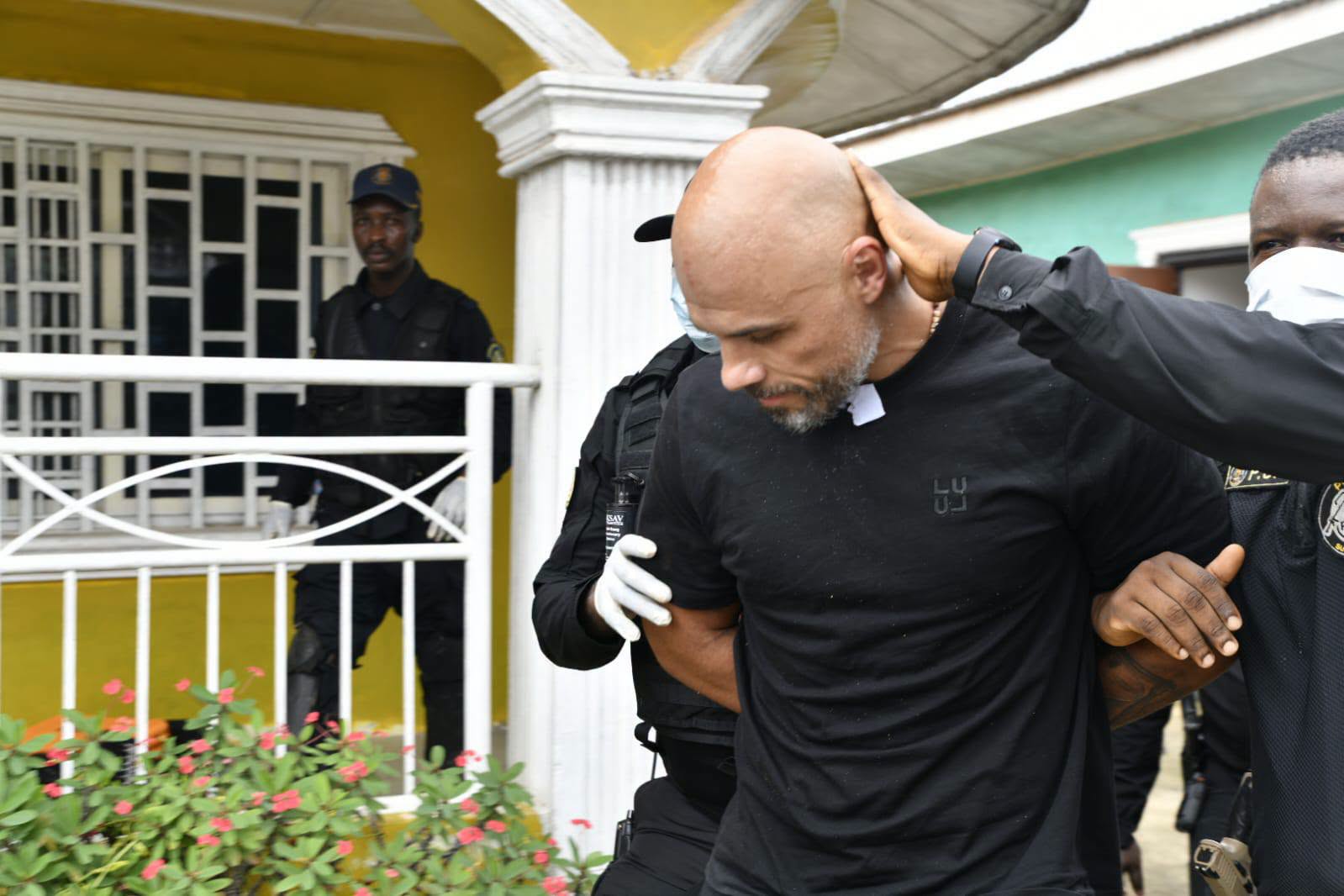
Analysis: a test of institutional credibility
The unfolding standoff places Boakai in a difficult position. Having built part of his political identity around cleaning up governance after the Weah era — a platform reinforced by his administration's high-profile pursuit of the war crimes court legislation and his public commitments to rule-of-law reforms — the president cannot easily dismiss the CDC's demand for an independent investigation without appearing to confirm the opposition's central charge: that his government's anti-drug campaign applies unevenly, robust against opposition-aligned figures like Taylor but comparatively passive toward allegations touching his own inner circle and senior security officials.
At the same time, the CDC's own credibility is not unblemished. Its allegations against the president's son rest on an unverified video rather than documented evidence, and the party's timing — pairing its harshest attack on the government with the announcement of Weah's return and a fresh opposition mobilization effort — will invite skepticism that political calculation, as much as principle, is driving its demands. Still, the substance of the CDC's core complaint, regarding the alleged police escort of a multi-ton cocaine shipment, is serious enough that dismissing it purely as opportunism would be premature; Liberia's own security institutions, not just its politicians, are now under a cloud that an independent inquiry — something neither side has yet delivered — would be best positioned to resolve.
The stakes extend beyond domestic politics. Liberia's standing as a reliable security partner for the United States and European governments engaged in counter-narcotics cooperation in West Africa depends in part on demonstrating that its own law enforcement apparatus is not compromised by the very networks it is meant to be fighting. A credible, independent investigation — one that Boakai has so far described only in general terms rather than committed to establishing — would do more to reassure both domestic and international audiences than another address asserting the government's good intentions.
What to watch next
The most immediate marker will be Weah's September 2 arrival and how the government manages the security and political dimensions of his return, given Liberia's history of large opposition gatherings testing the limits of public order. The September 5 opposition roundtable will offer the clearest signal yet of whether the CDC intends to escalate its confrontation with the Boakai administration into sustained street mobilization or contain it to formal political messaging.
On the legal track, developments in Jewel Howard Taylor's case — including whether prosecutors formally charge her and what evidence they present — will test Boakai's promise of due process under intense political scrutiny. And the CDC's specific allegations regarding Inspector General Coleman and the escorted cocaine shipment warrant close attention: if credible evidence emerges corroborating police involvement in trafficking, it would validate the opposition's central claim and force the government's hand on the independent investigation it has so far resisted committing to by name.



