Written By | Peter Luzinda
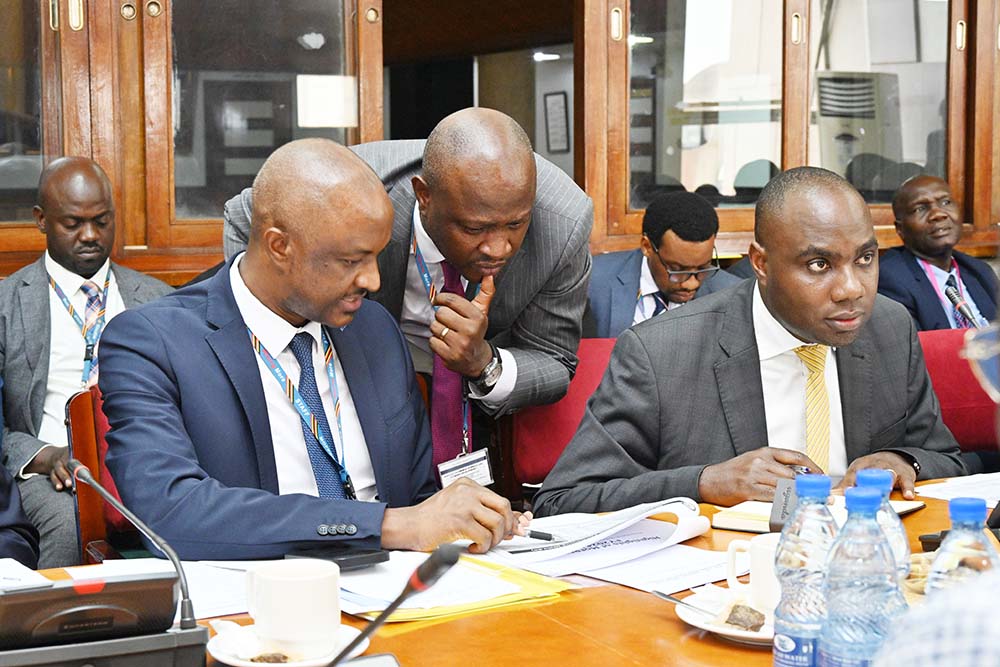
Ggoobi in Parliament respresenting Ministry of Finance
PARLIAMENT
Uganda’s public debt has risen to UGX130.9 trillion, according to the latest Quarterly Debt Statistical Bulletin and Public Debt Portfolio Analysis for December 2025 released by the Ministry of Finance, Planning and Economic Development.
The report shows that the country’s total public debt stock increased from US$34.21 billion (UGX128.6 trillion) at the end of September 2025 to US$34.86 billion (UGX130.94 trillion) by December 2025.
According to the ministry, the increase was largely driven by higher domestic borrowing during the period.
“The total public debt stock increased to US$34.86 billion (UGX130.943 trillion) by the end of December 2025, up from US$34.21 billion (UGX128.648 trillion) at the end of September 2025,” the report states.
The analysis indicates that domestic debt accounts for the largest share of the total debt stock, standing at 54.5 percent, equivalent to US$19.02 billion (UGX68.86 trillion).
Meanwhile, external debt represents 45.3 percent, equivalent to US$15.84 billion (UGX57.33 trillion).
The ministry attributes the quarterly increase primarily to increased domestic debt issuances.
Decline in Domestic Debt Servicing
Despite the rise in total debt stock, the report shows that government expenditure on domestic debt servicing declined during the quarter.
Domestic debt servicing fell by UGX916 billion, dropping to UGX2.997 trillion in December 2025 from UGX3.913 trillion recorded at the end of September 2025.
Undisbursed Debt Also Increases
The report further shows that Uganda’s undisbursed debt increased during the same period, rising from US$3.36 billion (UGX12.6 trillion) in September 2025 to US$3.74 billion (UGX14.03 trillion) by the end of December 2025.
According to the ministry, the increase was mainly due to new loans secured during the quarter.
“Over the quarter, undisbursed debt from private and multilateral creditors increased from US$0.02 billion to US$0.14 billion and from US$2.64 billion to US$2.99 billion respectively, while those from bilateral creditors declined from US$0.71 billion to US$0.61 billion,” the report notes.
The rise in undisbursed external debt is linked to newly recorded loans during the quarter, including the Education in Biomedical Sciences loan from the African Development Fund (ADF), a line of credit for trade finance from BADEA, the Resilient Livestock loan from IFAD, and the fourth line of credit to Uganda Development Bank Limited (UDBL) from the OPEC Fund, among others.
Who Holds Uganda’s Debt?
The Ministry of Finance report shows that multilateral lenders remain Uganda’s largest creditors, holding 65.13 percent of the country’s external debt, equivalent to US$10.32 billion.
Among these, the International Development Association (IDA), International Monetary Fund (IMF), and African Development Fund (AfDF) collectively account for 54.7 percent of the external debt portfolio.
For bilateral creditors, China’s Exim Bank and the UK Export Finance (UKEF) are the largest lenders, holding US$2.1 billion and US$0.39 billion respectively.
Among private creditors, Stanbic Bank holds the largest share, with US$0.82 billion during the same period.
Debt by Currency
The report also highlights the currency composition of Uganda’s external debt, with the US dollar dominating the portfolio.
As of December 2025:
Rising External Debt Repayments
The report also indicates an increase in external debt servicing during the second quarter of the 2025/26 financial year.
Uganda spent US$416.62 million (UGX1.563 trillion) on external debt repayments during the period, up from US$381.52 million in the previous quarter.
The increase was attributed to higher principal repayments and associated fees during the period.
The Ministry of Finance releases the Quarterly Debt Statistical Bulletin to provide updates on Uganda’s public debt position, borrowing trends, and debt sustainability as government continues to finance development programmes and infrastructure projects.
Torch Media Africa



