SCIENCE
Daniel Ek made his fortune teaching the world to stream music instead of buying it. Now the Spotify co-founder wants to change how you think about your own body — and he's just persuaded some of the richest, most famous people on the planet to bet $700 million that he's right.
Neko Health, the Stockholm-founded startup Ek launched with childhood friend Hjalmar Nilsonne, announced on July 15, 2026 that it has closed a $700 million Series C funding round, catapulting the company to a valuation of nearly $7 billion — a staggering fourfold jump from the $1.7 billion it was worth at its last funding milestone in January 2025. The round was led by Lightspeed Venture Partners and co-led by O.G. Venture Partners, with existing backers Atomico, General Catalyst and Lakestar returning, alongside a roster of new investors that reads like a Davos guest list: Liberty City Ventures, Positive Sum, and BDT & MSD.
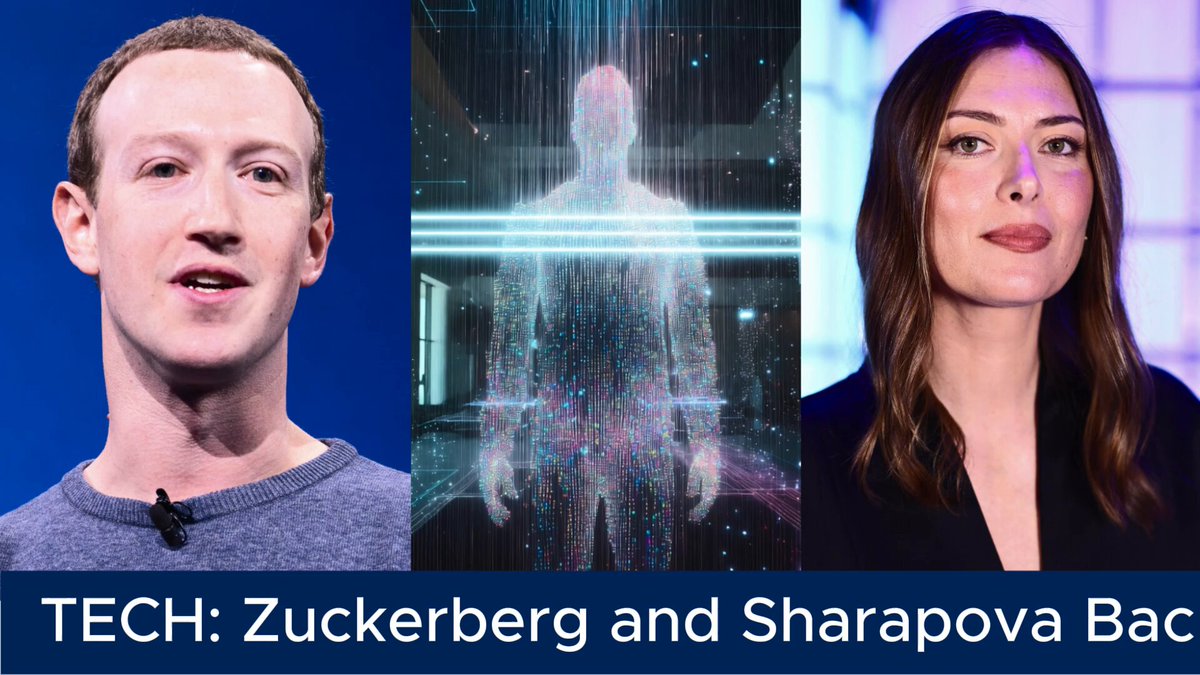
But it's the individual names attached to the round that have turned heads across the health and tech worlds. Among the backers: Meta CEO Mark Zuckerberg and his wife Priscilla Chan, author and podcaster Tim Ferriss, tennis champion Maria Sharapova, musician will.i.am, and even OpenAI itself. The message is unmistakable: Silicon Valley's power players are putting real money behind the idea that the future of medicine looks less like an annual checkup with your GP and more like a full-body scan performed by machines and interpreted, in part, by artificial intelligence.
WHAT ACTUALLY HAPPENS INSIDE A NEKO SCAN
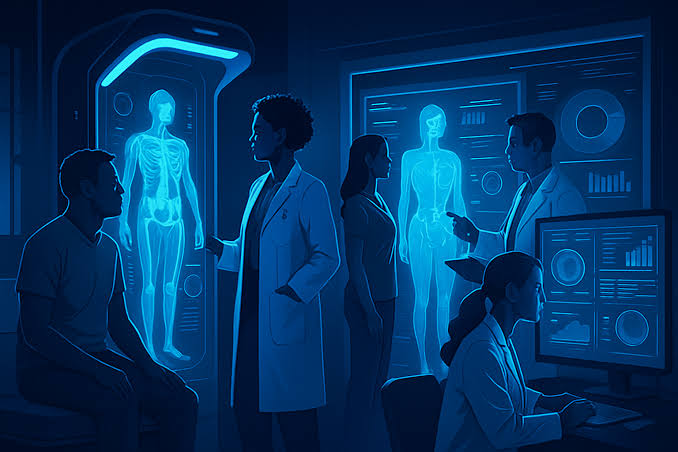
The Neko Health Scan is pitched as a 60-minute, non-invasive, radiation-free health assessment — no MRI tunnels, no CT radiation — that combines dozens of sensors with blood analysis to capture what the company describes as millions of individual health data points in a single visit. During the appointment, patients are scanned for skin abnormalities that could indicate skin cancer, assessed for cardiovascular risk factors linked to stroke and heart attack, screened for blood abnormalities, and measured for body composition and biomarkers associated with pre-diabetes risk. The results are compiled into a personalized report, with the promise of catching problems years before they'd normally surface in a traditional doctor's visit.
The price tag isn't pocket change: the scan runs £299 in the United Kingdom and 2,750 Swedish kronor in Sweden — expect a comparable, if not higher, price point when the company opens its first U.S. location, which the fresh capital is earmarked to fund, with New York City as the beachhead market. Until now, Neko Health has operated exclusively out of clinics in the UK and Sweden; the Series C round is explicitly framed by the company as fuel for aggressive American expansion, putting it on a collision course with the U.S. healthcare and diagnostics establishment.
THE CASE FOR THE MACHINE
Neko Health's pitch rests on a simple, seductive idea: most serious diseases are far easier to treat if you catch them early, and most people don't get comprehensive health screening until something has already gone wrong. The company points to its own first-year operating data out of its original Stockholm clinic as proof of concept. Of roughly 2,707 people scanned in that initial cohort, the company reports that 14 percent required further medical attention or ongoing monitoring based on what the scan uncovered, and in about 1 percent of cases, patients received what the company characterizes as potentially life-saving interventions — catches that might otherwise have gone undetected until symptoms forced the issue, possibly at a more advanced and harder-to-treat stage.
Supporters of the whole-body scanning model — and there is a growing contingent among concierge and longevity-focused medicine circles — argue that traditional annual physicals have become too cursory to catch much of anything, leaving patients to fend for themselves in a system that often only intervenes after a diagnosis is already serious. To that crowd, Neko Health and companies like it represent a democratization of the kind of exhaustive screening that used to be reserved for the ultra-wealthy at exclusive executive health clinics.
THE CASE AGAINST: A CENTURY-OLD DEBATE, SUPERCHARGED BY AI
But mainstream medicine has been here before, and it is not nearly as convinced. Commercial whole-body scanning has cycled in and out of popularity for more than two decades, and each wave has run into the same wall of skepticism from evidence-based medicine advocates. Critics writing in outlets like Science-Based Medicine have described this AI-powered resurgence as, in essence, old marketing hype for whole-body scans wearing a shinier coat of paint — and argue that adding artificial intelligence to the mix doesn't resolve the fundamental clinical problem that has dogged these scans since their first commercial boom in the early 2000s.
That fundamental problem is overdiagnosis. Medical experts caution that scanning healthy, asymptomatic people for abnormalities across their entire body creates "an obvious risk that the individuals buying this intervention will be harmed through overdiagnosis and overtreatment." In practice, that means the scans are prone to flagging incidental findings — small nodules, benign-looking growths, ambiguous shadows — that would likely never have caused a problem in a person's lifetime, but which nonetheless trigger a cascade of follow-up biopsies, additional imaging, specialist referrals and, for the patient, weeks or months of gnawing anxiety over what might turn out to be nothing at all.
Critics have also pointed out that Neko Health's own touted results — the 14 percent follow-up rate and 1 percent life-saving intervention figure — come from company-reported data that has not undergone the rigor of a peer-reviewed clinical trial with a control group. Without a comparison group of similar patients who did not receive the scan, it's difficult to know how many of those "caught early" conditions would have been detected anyway through routine care, or how many of the follow-up interventions were genuinely necessary versus precautionary overreach. Observers in the space have also questioned whether tech entrepreneurs building these platforms have the deep clinical and epidemiological expertise required to navigate the genuinely difficult diagnostic question of which incidental findings matter and which don't — a question radiologists and oncologists spend entire careers wrestling with.
THE MONEY IS BETTING ON A DIFFERENT KIND OF HEALTHCARE
Regardless of where the clinical debate lands, the financial bet being placed on Neko Health reflects a broader shift in venture capital's appetite within digital health. Investors who spent years pouring money into consumer wellness apps — step trackers, meditation subscriptions, telehealth platforms for minor ailments — have cooled noticeably on that category as user engagement and retention numbers disappointed. In their place, capital is increasingly concentrating in preventative diagnostics and clinical deep-tech ventures that promise to intervene earlier and more precisely in the disease process itself, even if the clinical evidence base is still catching up to the hype.
That shift explains why a company charging hundreds of dollars for a scan not covered by most insurance plans can still command a near-$7 billion valuation: investors are betting that a wealthy, health-anxious, longevity-obsessed consumer base — the same demographic driving demand for continuous glucose monitors, at-home hormone testing kits and biological age tests — will pay out of pocket for the reassurance, or the early warning, that a comprehensive scan promises to deliver.
WHAT THIS MEANS FOR YOU
If you're considering a service like Neko Health once it opens stateside, it's worth going in with clear eyes about both sides of the ledger. A scan could genuinely catch something meaningful — the company's own data suggests it happens for a small but real slice of patients. But you should also be mentally and financially prepared for the more statistically likely outcome: an incidental finding that requires follow-up testing, insurance headaches (since many of these scans and any resulting workups may not be covered), and weeks of uncertainty over a result that ultimately turns out to be benign. Before booking a scan, it's reasonable to ask what happens next if something ambiguous shows up, whether the company can connect you with follow-up specialists, and how the service reconciles its findings with your existing primary care physician, who should ideally remain the quarterback of your overall health picture rather than being replaced by a single high-tech appointment.
For those without several hundred dollars to spend on elective screening, the good news is that the fundamentals of preventative health haven't changed: regular checkups with a primary care doctor, staying current on age- and risk-appropriate screenings like mammograms, colonoscopies and blood pressure checks, and addressing symptoms promptly rather than waiting for an annual event remain the evidence-backed foundation of catching disease early — no $7 billion valuation required.
THE BOTTOM LINE
Neko Health's $700 million raise is a bet that the future of preventative medicine looks like a scanning bay staffed by sensors and algorithms rather than a stethoscope and a waiting room. The star-studded investor list shows just how much appetite exists among the world's wealthiest people for that vision. Whether the rest of us should share their enthusiasm is a question the medical establishment is still very much unsettled on — and one that will only get louder as the company's scanning bays open their doors in New York and, likely, well beyond.
Published By | Features Editor