NEW YORK/CAMBRIDGE, MASS.
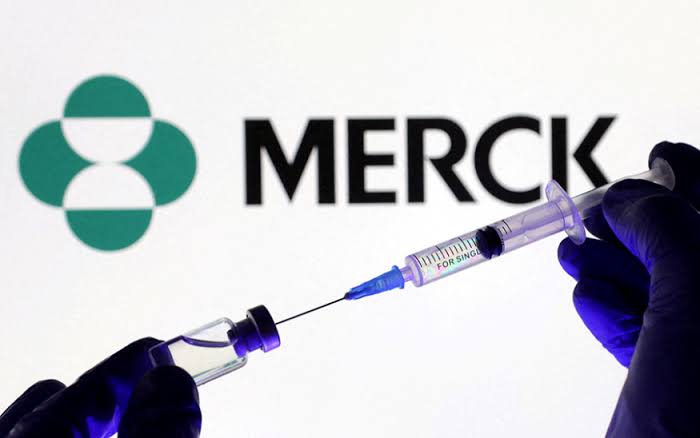
For decades, "cancer vaccine" was a phrase doctors used carefully, almost apologetically — a promise that had been chased since the 1890s and broken more times than anyone could count. On Wednesday, that changed. Moderna and Merck announced that their experimental personalized mRNA cancer vaccine, given alongside the blockbuster immunotherapy drug Keytruda, hit its main targets in a major late-stage trial for melanoma — becoming the first-ever Phase 3 randomized trial to show that a neoantigen vaccine can actually reduce the odds of cancer coming back.
Shares of both companies jumped on the news. Wall Street analysts reached for words like "landmark." One oncologist told ABC News he now expects the treatment on pharmacy shelves — well, hospital shelves — by early 2027. For a field that has spent 130 years chasing the idea of a cancer vaccine, this is being treated as the moment it finally arrived.
Here's what actually happened, what it means for the roughly 100,000 Americans diagnosed with melanoma every year, and why some experts are warning that political headwinds could still slow this breakthrough down before it reaches patients.
THE TRIAL THAT CHANGED THE CONVERSATION
The study, known as INTerpath-001, enrolled 1,137 patients with high-risk, stage IIB through stage IV melanoma who had already had their tumors surgically removed. That detail matters: this isn't a vaccine meant to prevent melanoma in the general population, and it isn't a shot given to people with active, unremoved tumors. It's an "adjuvant" therapy — something given after surgery to mop up microscopic cancer cells the knife couldn't catch, before they have a chance to regroup and come roaring back.
Patients in the trial were randomized into two groups. One group received Keytruda (pembrolizumab), the immune-checkpoint inhibitor that has become a cornerstone of modern oncology, all by itself. The other group received Keytruda plus the experimental vaccine, called intismeran autogene — known in the scientific literature by the less poetic name mRNA-4157, or V940.
The results, according to Merck and Moderna's joint announcement, showed statistically significant and clinically meaningful improvements in two measures that oncologists care about most: recurrence-free survival (how long patients go without the cancer returning) and distant metastasis-free survival (how long before the cancer spreads to new parts of the body). It is, by the companies' own description, the first combination regimen ever to hit both of those marks against Keytruda alone in a randomized trial.
The companies have not yet released the specific percentage improvements — those numbers are being saved for an upcoming medical conference and for regulators — but the safety profile was described as consistent with what's already been seen in earlier studies, with no new red flags.
HOW A VACCINE MADE OF YOUR OWN TUMOR ACTUALLY WORKS
If a flu shot trains your immune system to recognize a generic virus, this vaccine trains it to recognize you — or more precisely, your specific cancer.
Here's the process: after a patient's tumor is surgically removed, scientists sequence its genetic mutations. Cancer cells accumulate mutations as they grow and divide, and some of those mutations produce abnormal proteins on the cell surface called neoantigens — essentially flags that mark a cell as cancerous and foreign. Intismeran autogene is built to detect up to 34 of these neoantigens unique to an individual patient's tumor, then uses the same mRNA technology that powered COVID-19 vaccines to teach the immune system to hunt down and destroy any cell carrying those markers.
Because every patient's tumor mutates differently, no two doses are exactly alike. Each vaccine is manufactured individually — a process that takes weeks, not something pulled off a shelf. That individualized approach is precisely why it took this long to prove it works in a randomized trial: manufacturing a unique product for each of over 1,000 patients is a logistical feat that simply wasn't possible with older vaccine technology.
Moderna and Merck first partnered on this vaccine years ago, and earlier data — including five-year follow-up results presented at the 2026 ASCO Annual Meeting — had already shown a durable benefit in patients with high-risk, resected stage III/IV melanoma. What makes this week's announcement different is scale and rigor: this is the large, randomized, controlled trial that regulators and skeptical oncologists have been waiting for.

WALL STREET'S REACTION SAYS EVERYTHING
Within hours of the announcement, financial analysts were doing the kind of math usually reserved for blockbuster drugs. TD Cowen analyst Tyler Van Buren called the result a "landmark moment." Jefferies analyst Andrew Tsai projected the vaccine could generate billions of dollars in sales from melanoma alone. Barclays analysts put a number on it: roughly $3 billion in sales for the melanoma indication by 2035.
Those projections matter beyond shareholder returns, because melanoma is widely viewed in the pharmaceutical industry as the proving ground — the first, most tractable target for neoantigen vaccine technology, with the goal of eventually expanding into lung cancer, kidney cancer, bladder cancer, and other tumor types with high mutation loads that make them good candidates for this kind of personalized approach. If the strategy works for melanoma, the entire category of cancer vaccines gets a credibility boost that could accelerate development across dozens of other cancers currently in earlier-stage trials.
An oncologist at Florida's H. Lee Moffitt Cancer Center told ABC News he doesn't expect the treatment to face a difficult path to regulatory approval, given how enthusiastically oncologists are likely to embrace it for advanced melanoma patients who currently have limited options once their disease progresses despite surgery and immunotherapy. He estimated patients could have access to the treatment by early 2027, assuming Merck and Moderna move quickly to file with the FDA — something the companies say they intend to do "within months," though they have not committed to an exact date.
THE POLITICAL SHADOW OVER mRNA TECHNOLOGY
Here's the twist that makes this story more than a straightforward medical win: it's landing in the middle of a politically fraught moment for mRNA technology in the United States.
Federal funding for mRNA vaccine research and development — particularly for respiratory virus applications — has been cut back significantly during the current Trump administration, a shift that has rattled scientists who fear it could choke off the next generation of mRNA innovation just as the technology is proving its worth beyond COVID-19. Public skepticism toward mRNA vaccines, fueled in part by vaccine politics that have dogged the platform since 2021, has also made the technology a target of scrutiny that has little to do with the actual clinical data.
Experts interviewed about the melanoma vaccine results were blunt: the safety concerns that have attached themselves to mRNA vaccines in the public consciousness are largely unfounded when it comes to the actual science, and this trial's clean safety profile is more evidence of that. But the funding and political environment could still slow how quickly the broader mRNA cancer-vaccine pipeline develops, even as this particular product races toward approval on the strength of its own data.
It's a strange split-screen: a technology treated with suspicion in one political arena delivering what may be the most significant cancer treatment breakthrough of the year in another.
WHAT EXPERTS ARE SAYING
Beyond the Wall Street commentary, oncologists who were not involved in the trial have described the results as a genuine inflection point rather than incremental progress. The core excitement isn't just that this particular vaccine works — it's that a randomized, controlled, Phase 3 trial has finally proven the underlying concept of personalized neoantigen vaccines can move the needle on hard outcomes like recurrence and metastasis, not just softer measures like immune response in the blood.
That's a big deal because the "cancer vaccine" concept has burned researchers before. Prior attempts — going back decades — often showed promising immune activation in early trials that simply failed to translate into patients living longer or staying cancer-free. INTerpath-001 is being treated as different because it cleared that bar in a trial large and rigorous enough that regulators are expected to take it seriously.
WHAT THIS MEANS FOR YOU
If you or someone you love has been diagnosed with melanoma, here's the practical takeaway: this treatment is not yet approved and is not yet available outside of clinical trials. Merck and Moderna have said they plan to file for regulatory approval "within months," and outside experts are estimating an approval and rollout timeline of early 2027 at the earliest — assuming the FDA doesn't ask for more data, which remains possible given that full efficacy numbers haven't even been published yet.
For patients currently living with resected, high-risk melanoma, the standard of care today remains Keytruda or similar immunotherapy after surgery. Ask your oncologist whether you might be a candidate for an ongoing clinical trial involving intismeran autogene or similar neoantigen vaccines — several trial sites are actively enrolling patients across cancer types as the platform expands beyond melanoma.
More broadly, this result is a signal worth watching even if you have no connection to melanoma. The same personalized-vaccine approach is already being tested against lung cancer, kidney cancer, and other tumor types. If intismeran autogene wins approval, it will likely accelerate investment and trial activity across that entire category — meaning the ripple effects of this week's announcement could reach far beyond the roughly 100,000 Americans who hear the word "melanoma" from a doctor each year.
THE BOTTOM LINE
For the first time in a field littered with disappointment, a randomized Phase 3 trial has shown that a vaccine built from a patient's own tumor can meaningfully change the course of their cancer. It isn't a cure, it isn't available yet, and it's landing in a political climate where mRNA technology is oddly both celebrated and distrusted at the same time. But for melanoma patients — and, potentially, for the millions of Americans facing other cancers down the road — August 19, 2026, may end up being remembered as the day the cancer vaccine finally stopped being a promise and started being real medicine.
Published By | Features Editor