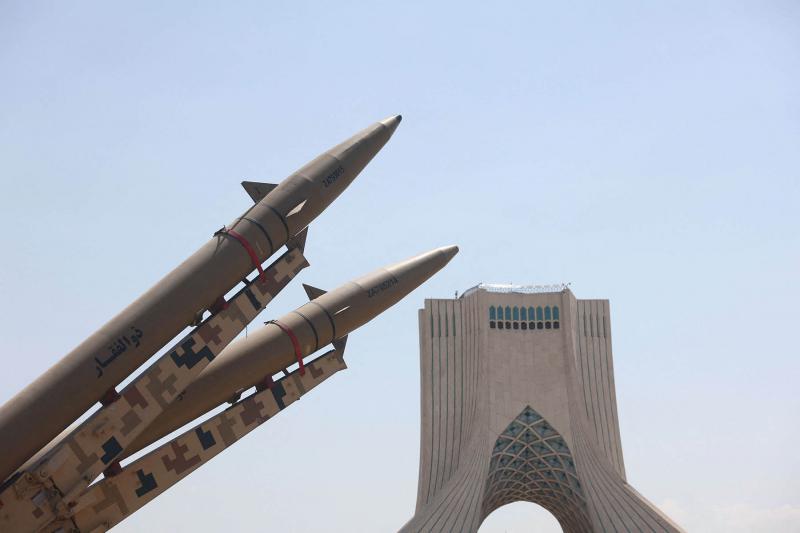
NEWS AGENCIES
Overview
The United States and Israel are preparing what officials describe as one of the harshest bombing campaigns to date against Iran's energy infrastructure, with strikes potentially beginning as soon as this weekend and continuing for several days. The plan, confirmed by multiple U.S. officials to CBS News, CNN and other outlets on August 1, would target Iranian power plants, oil refineries and related facilities — a marked escalation from the more limited, largely military strikes that have characterized the conflict since it reignited in mid-July. President Trump has not yet given the final order to proceed, and officials cautioned the operation could still be called off, but the administration's rhetoric has hardened sharply. "We'll be hitting them very hard," Trump told reporters at a Cabinet meeting, signaling that any pause in hostilities is likely to be short-lived.
The prospective campaign lands at a precarious moment. Iran's military accused Washington on August 1 of "escalating tensions," with armed forces chief of staff Major General Ali Abdollahi warning that "any country serving as a defensive shield for criminal and aggressive America will be engulfed by the flames of war" — a thinly veiled threat against Gulf states hosting U.S. forces. Hours earlier, Kuwait's Ministry of Defense said its air defenses intercepted drone attacks it attributed to Iran, hitting a government facility and civilian vehicles without causing casualties. A tanker was also struck by an unidentified projectile near the Strait of Hormuz, according to the UK Maritime Trade Operations agency, underscoring how quickly the conflict's effects radiate across the Gulf's shipping lanes.
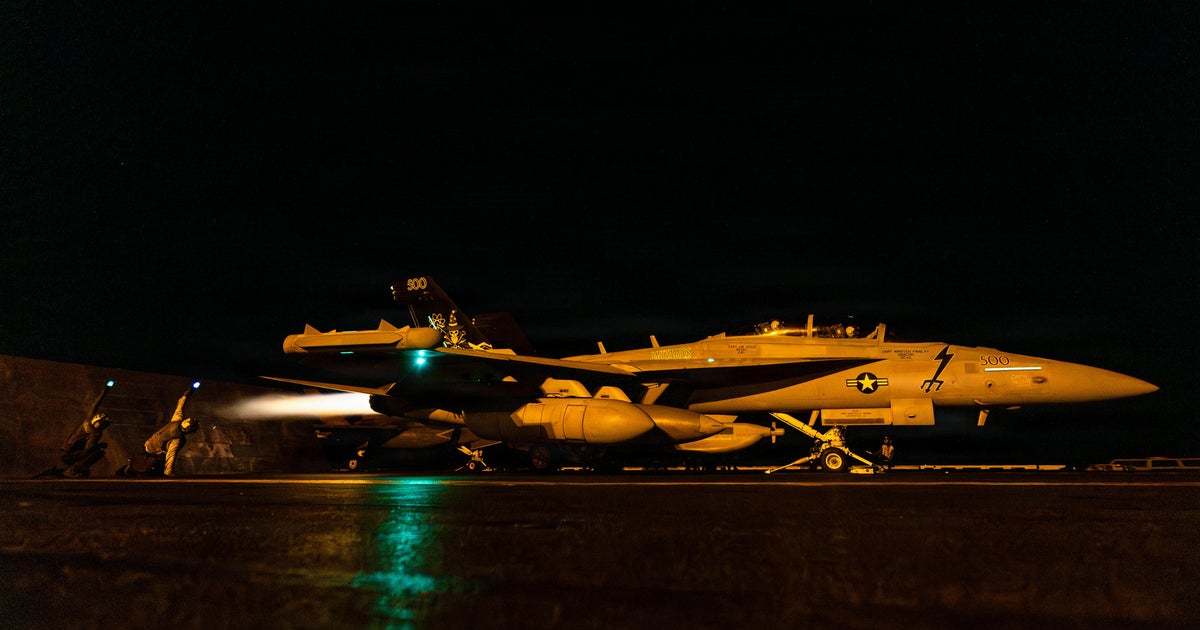
Background: How the 2026 Iran War Reached This Point
The current war traces back to February 2026, when the United States and Israel launched a campaign against Iran's nuclear and military infrastructure, killing then–Supreme Leader Ali Khamenei in the opening strikes and installing his son, Mojtaba Khamenei, as his unconfirmed successor. A ceasefire memorandum of understanding signed June 17 was intended to end major hostilities, but it has proven fragile and been declared "over" by Trump on multiple occasions since. Iran has repeatedly struck shipping in the Strait of Hormuz — the world's most important oil chokepoint, through which roughly a fifth of global crude flows — while the U.S. has responded with rounds of strikes numbering in the dozens to well over a hundred targets at a time.
The past two weeks alone have seen the ceasefire collapse and partially reconstitute several times. Two U.S. service members were killed in an Iranian missile strike on a Jordanian air base in mid-July, triggering a new wave of American retaliation. A brief Pentagon-ordered pause in strikes, driven by concerns from Vice President JD Vance and Joint Chiefs Chairman Gen. Dan Caine about dwindling munitions stockpiles, ended abruptly on July 28 when Iran's Revolutionary Guard Corps launched ballistic missiles at U.S. forces in what the Pentagon called an attempted surprise attack; all incoming missiles were intercepted. Days later, the U.S. resumed strikes across five Iranian provinces, and the conflict's collateral geography has widened to include Kuwait, Jordan, Egypt and Iraq, where the U.S. and Saudi Arabia carried out their first acknowledged joint strikes against Iran-backed militias.
Throughout, oil markets have served as a real-time barometer of the war's intensity. Brent crude has swung sharply with each escalation, climbing above $100 a barrel during the most acute phases of fighting and falling back when diplomacy briefly seemed to gain traction. Analysts and administration officials alike have flagged the same tension shaping this weekend's planning: any large-scale campaign against Iranian energy infrastructure risks a sustained oil-price shock just as markets prepare to open Monday.
Key Developments
According to officials who spoke to CBS News and Yahoo News, the proposed operation would represent a qualitative shift from strikes on military and nuclear-linked sites toward direct targeting of the infrastructure that sustains Iran's economy and, indirectly, its ability to sustain the war. Power plants, refineries and other energy facilities are under consideration, and Israeli officials have been briefed and are coordinating with Washington on the plan. There has been internal discussion about compressing the campaign into a matter of days, driven partly by market-timing concerns, though no firm end date has been set and the operation could stretch on if Trump authorizes an open-ended effort.
The immediate trigger appears to be a mix of unresolved provocations: continued Iranian and Iran-aligned drone and missile activity against U.S. partners in the Gulf, the unresolved status of the two American troops killed and missing in Jordan, and Tehran's rejection of an Iraqi-mediated ceasefire proposal in late July. Iran, for its part, has cast any renewed U.S.-Israeli campaign as unprovoked aggression and has signaled it retains the capacity to respond asymmetrically — through the Strait of Hormuz, against Gulf state infrastructure it associates with U.S. basing, and potentially through proxy forces such as the Houthis, who have separately struck Saudi oil tankers in recent weeks.
Kuwait has emerged as one of the more exposed frontline states. Government facilities and civilian vehicles were hit in Saturday's intercepted drone attacks, following earlier incidents in 2026 that damaged fuel tanks at Kuwait International Airport and struck Port Shuaiba. Kuwaiti authorities have consistently characterized these episodes as "Iranian aggression," a framing that complicates Tehran's efforts to portray itself solely as a victim of American and Israeli escalation. Jordan, Bahrain, Qatar and the UAE have all reported intercepts or alerts at various points over the past month, illustrating how the conflict's front line now runs through the entire Gulf littoral rather than being confined to Iran and Israel.

Reactions
Reaction inside the United States has split along familiar lines but with rising unease even among some Republicans. Congressional Democrats have pointed to the unauthorized nature of the ongoing campaign — the Senate blocked a defense authorization bill in mid-July partly over objections to the administration's conduct of the war — and are likely to renew calls for a war-powers debate if the energy-infrastructure campaign proceeds without new congressional buy-in. Energy-sector voices have warned that strikes on refineries and power plants carry a higher risk of prolonged market disruption than strikes on military sites, given the time required to rebuild damaged civilian infrastructure.
Regionally, Gulf governments have offered muted, cautious statements calling for de-escalation while quietly reinforcing air defenses. Saudi Arabia, which has already suffered Houthi tanker strikes linked to the broader conflict, has pushed alongside Pakistan and Qatar for renewed mediation, though those efforts have repeatedly stalled. Iran's own messaging has grown more explicitly threatening toward Gulf states seen as hosting or enabling U.S. operations, a signal that Tehran may be preparing to broaden retaliation beyond direct U.S. and Israeli targets if the energy campaign goes ahead. European governments, largely sidelined from the military dimension of the conflict, have focused their public statements on humanitarian and economic fallout, including the risk of a renewed oil-price spike compounding inflation pressures across the continent.
Israeli officials have offered little public comment beyond confirming coordination with Washington, consistent with a pattern throughout the war of Israel deferring to U.S. messaging on strike timing while participating directly in operational planning. Within Iran, state media has amplified Gen. Abdollahi's warnings and framed the anticipated campaign as confirmation that the U.S. and Israel never intended to honor the June ceasefire, a narrative aimed at rallying domestic support behind the untested leadership of Mojtaba Khamenei.
What's Next
The most immediate question is whether Trump gives the final authorization this weekend, and if so, how far the campaign extends. Officials' emphasis on concluding strikes before Monday's market open suggests the administration is at least considering a contained operation, but the war's track record over the past month — repeated pauses followed by rapid re-escalation — suggests any restraint could prove temporary. A campaign that visibly degrades Iran's refining or power-generation capacity would mark a new phase in the conflict, one aimed less at military targets and more at economic attrition, with correspondingly higher humanitarian stakes for Iranian civilians already coping with wartime shortages.
Watch for three signals in the coming days: whether Iran follows through on threats against Gulf states hosting U.S. forces, whether oil prices spike sharply enough to force a political reckoning in Washington over the campaign's economic costs, and whether the stalled Qatar- and Pakistan-mediated diplomatic track shows any sign of revival once the immediate strikes conclude. Congress is also likely to renew scrutiny of the war's legal basis, particularly if the administration moves ahead with a multi-day campaign against civilian-adjacent infrastructure without new authorization. For now, the region is bracing for a weekend that officials themselves describe as potentially the most intense of the war's energy-focused phase to date.
Published By | News Editor