Addis Ababa/Nairobi
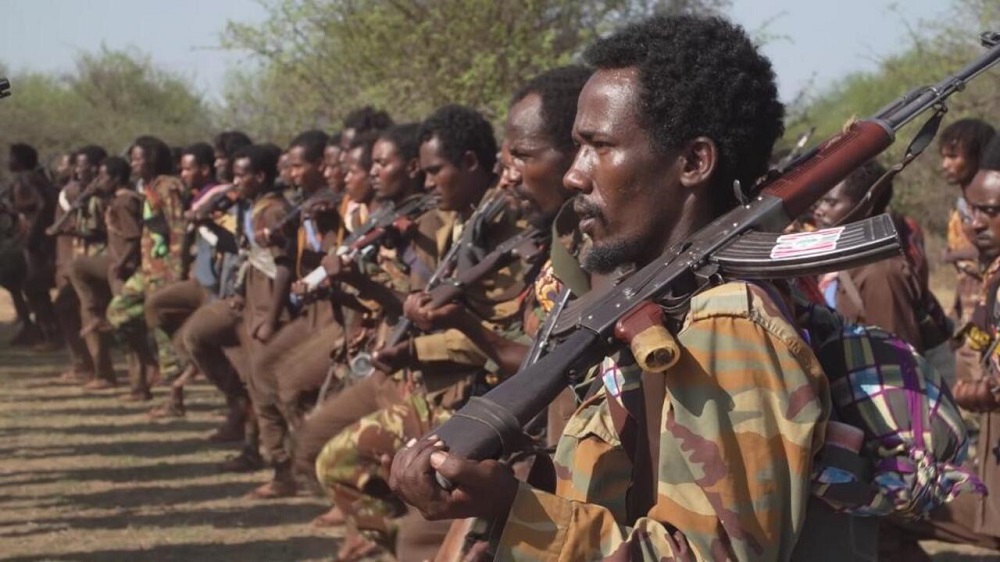
Seven armed groups representing six of Ethiopia's regions announced Sunday that they have formed a joint military and political coalition aimed at removing Prime Minister Abiy Ahmed from power, in the most serious unified challenge to his government since the end of the devastating Tigray war in 2022. The coalition, calling itself the Ethiopian Peoples' Forces Alliance for Survival, brings together former battlefield rivals — including the Tigray People's Liberation Front (TPLF) and the Amhara region's Fano militias, which fought on opposite sides of the federal government's war in Tigray — alongside Oromo, Somali, Afar and two smaller regional movements. Their stated goal, according to a joint statement and a senior TPLF official, is nothing less than the removal of Abiy's administration and its replacement with a transitional government.
The announcement lands at a moment of mounting strain on Ethiopia's federal system, Africa's second-most populous country and a linchpin of Horn of Africa security. It raises the prospect that a nation already grappling with active, if lower-intensity, insurgencies in three of its largest regions could slide toward a broader, multi-front confrontation with the federal government in Addis Ababa.
What the alliance says it wants
In a statement released Sunday, the coalition declared: "We have established a joint alliance called the Ethiopian Peoples' Forces Alliance for Survival." The seven signatories are the TPLF; the Oromo Liberation Army (OLA); the Amhara Fano National Movement; the Ogaden National Liberation Front (ONLF), which has fought for self-determination in Ethiopia's Somali region for decades; the Afar Revolutionary Democratic Unity Front, known as Ugugumo; the Benishangul Peoples' Liberation Movement; and the Gumuz Peoples' Democratic Movement. Together, the groups claim bases of support across Oromia, Amhara, Tigray, the Somali region, Afar, and Benishangul-Gumuz — six of Ethiopia's ten regional states.
Amanuel Assefa, the TPLF's vice president, told the AFP news agency Sunday that the coalition's objective was to "remove the regime and facilitate a transitional government." It is a striking pivot for the TPLF, which led the very federal government it and its current allies now describe as a common enemy for nearly three decades before losing power to Abiy's coalition in 2018. The party has grown increasingly estranged from Addis Ababa since the November 2022 Pretoria peace agreement — formally the Cessation of Hostilities Agreement — that ended two years of war between federal forces, allied Eritrean and Amhara militias, and Tigrayan forces. That war is estimated by researchers to have killed several hundred thousand people, mostly in Tigray, through fighting, starvation and denial of aid, and displaced millions more. The TPLF declared the Pretoria agreement "effectively dead" in mid-July of this year, citing the federal government's failure to fully withdraw non-Ethiopian National Defense Force troops from Tigrayan territory and to facilitate the return of displaced people to contested western Tigray.
A coalition of former enemies
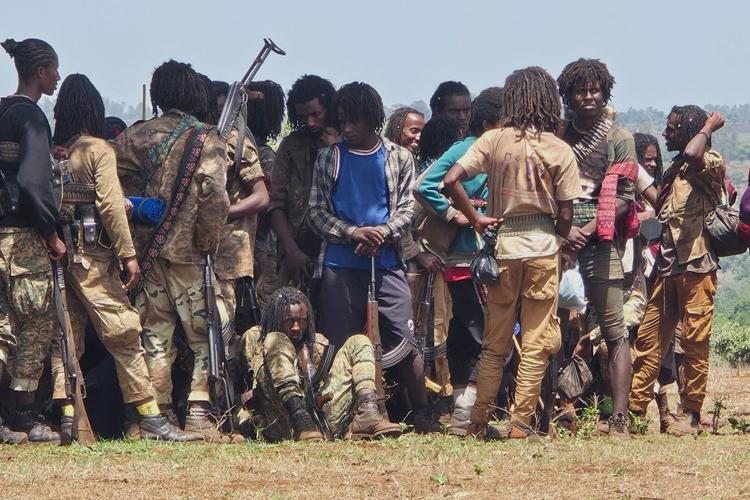
What makes Sunday's announcement notable is not merely its scale but its composition. The OLA has waged a low-level insurgency against federal and regional forces in Oromia since 2018, after peace talks between the group and the government collapsed in 2023 amid mutual accusations of bad faith. The Fano militias, drawn from Ethiopia's second-largest ethnic group, took up arms against the federal government in April 2023 after Abiy's administration moved to disband regional special forces — a conflict that has since killed thousands and displaced hundreds of thousands of Amhara civilians. Notably, Fano fighters were themselves allied with the federal government against Tigrayan forces during the 2020-2022 war, illustrating how thoroughly Ethiopia's political fault lines have been redrawn in the years since.
The ONLF, Ugugumo, and the two smaller groups from Benishangul-Gumuz round out a coalition that, if it holds, would extend armed opposition to federal authority into six of the country's regions simultaneously — a scenario Ethiopian officials have long characterized as an existential threat to the country's territorial integrity. Analysts caution, however, that the announcement of a political alliance is a considerably lower bar than the establishment of a functioning joint military command. Eyob Tilahun, an Ethiopian academic who has studied the country's armed movements, said the common thread binding the disparate groups was less a shared political program than a shared sense of vulnerability: "Those allied forces believe that they all face a survival threat," he said, a reading reflected in the coalition's own chosen name.
Kjetil Tronvoll, a Horn of Africa analyst who has closely tracked Ethiopia's civil conflicts, offered a more skeptical assessment of the alliance's near-term prospects, describing the venture as a potential "sacrificial war for the rebels" given the strength of federal forces. But he added a caveat that officials in Addis Ababa are likely weighing closely: "If they coordinate as a military command, it may make a difference." That qualifier — coordination — is the crux of the matter. Ethnic-nationalist insurgencies in Ethiopia have historically pursued narrow, region-specific goals and have shown little appetite for subordinating their own chains of command to a joint structure, let alone to former adversaries.
Government silence, and the shadow of Eritrea
As of Sunday evening, the federal government in Addis Ababa had issued no formal, on-the-record response to the alliance's formation. Officials from Abiy's Prosperity Party have historically dismissed talk of unified rebel action as overstated. Abiy himself addressed a related scenario in earlier remarks this year, when rumors circulated of a potential understanding between the TPLF and Eritrea — a country with which Ethiopia's relations have deteriorated sharply since the 2022 Pretoria deal, despite Eritrean forces having fought alongside the federal government against Tigray earlier in that war. "Even if others were added, we do not have an iota of fear regarding Ethiopia's sovereignty," Abiy said at the time, a posture his government is likely to reiterate in response to Sunday's announcement.
That backdrop matters because Eritrea, under President Isaias Afwerki, has emerged as an unpredictable variable in the region's security calculus. Asmara's relationship with the TPLF remains bitterly hostile, complicating any notion of an Eritrean hand behind the new alliance, even as Eritrean-Ethiopian relations more broadly have curdled over disputed access to the Red Sea and mutual accusations of destabilization. Egypt, locked in its own long-running dispute with Ethiopia over the Grand Ethiopian Renaissance Dam, is another regional actor whose reaction will be watched closely, though it, too, had not commented publicly as of Sunday.
What the federal government can bring to bear
Militarily, the balance of forces still favors Addis Ababa. The Ethiopian National Defense Force retains air superiority, having acquired armed drones from Turkey, Iran and the United Arab Emirates in recent years — weapons that proved decisive in blunting Tigrayan advances toward the capital in 2021 and that have since been deployed against Fano and OLA fighters. A coordinated push by the new alliance would, in theory, force federal commanders to fight on four or five fronts simultaneously, stretching logistics and manpower in ways the 2020-2022 war against Tigray alone did not. Whether the rebel coalition can translate seven separate signatures on a joint statement into synchronized offensives, shared intelligence, and a common political endgame is the question that will determine whether Sunday's announcement marks a genuine turning point or another symbolic gesture in a fragmented insurgent landscape.
What to watch next
Several signals in the coming weeks will indicate whether the alliance is more than rhetoric. The first is whether the federal government responds with negotiation overtures, a security crackdown, or continued silence — each carrying different risks for de-escalation. The second is whether the coalition produces evidence of joint military planning, such as coordinated attacks across regional lines, rather than parallel but separate insurgent activity. The third is the response of Ethiopia's international partners, including the United States, the African Union — headquartered in Addis Ababa — and the United Nations, all of which have previously pressed for full implementation of the Pretoria agreement and would likely view a fracturing federal order with alarm given Ethiopia's role as a troop contributor to regional peacekeeping missions and its centrality to Horn of Africa stability. Finally, the durability of the alliance itself bears watching: Ethiopia's armed opposition movements have a long history of tactical alignments that dissolve once immediate battlefield pressures ease, and old grievances between groups like the TPLF and Fano — who battled each other for control of western Tigray as recently as 2022 — have not disappeared simply because a joint statement has been signed.
Published By | News Editor