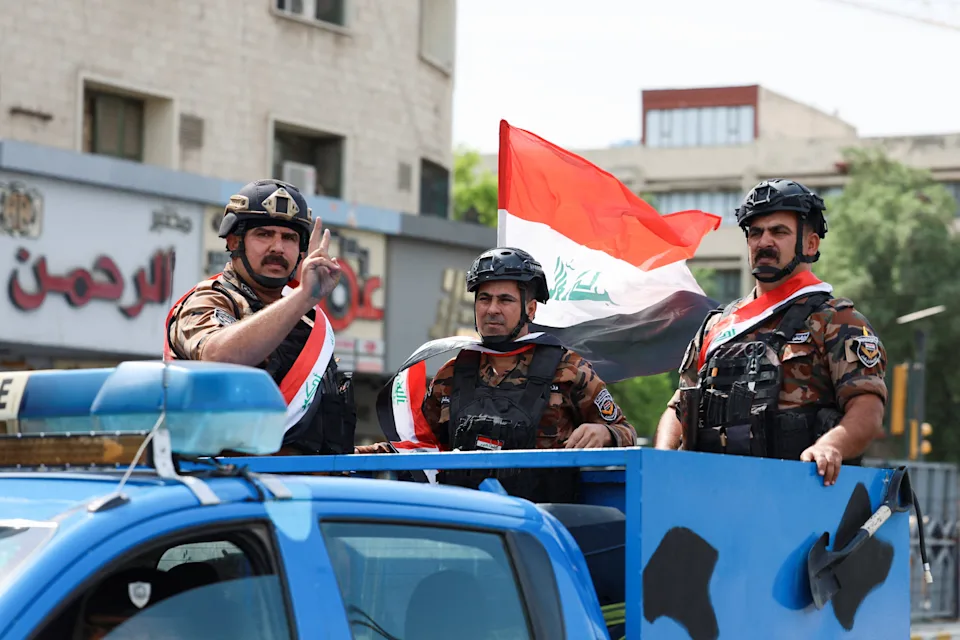
The Pentagon says the final U.S. troops left Iraq on September 30, closing a 12-year counter-ISIS mission amid a regional war with Iran and unresolved questions about Kurdistan's defenses and Iran-backed militias.
Overview
On September 30, 2026, the United States military declared that its withdrawal of troops from Iraq was complete, ending a 12-year mission against the Islamic State and closing a chapter that began with the 2003 invasion that toppled Saddam Hussein. According to reporting by the Associated Press, PBS NewsHour and ABC, the last American forces departed from an air base in Erbil, in Iraq's semi-autonomous Kurdistan Region, bringing to zero a U.S. troop presence that at its peak exceeded 100,000 and that, until recently, still included roughly 2,500 advisers.
The departure is the culmination of a process agreed between Washington and Baghdad in 2024, but it lands in an unusually charged moment. The United States and Israel have been engaged in a war with Iran since February 2026, Iraqi territory has repeatedly been touched by that conflict, and Iran-aligned armed groups inside Iraq have been among the loudest voices celebrating the exit. Supporters of the withdrawal call it a long-overdue restoration of Iraqi sovereignty; critics, including officials in Kurdistan, worry that it leaves a security vacuum just as the region is at its most volatile in years.
This article reviews how the withdrawal came about, what officials on each side have said, who is most anxious about the consequences, and what to watch for in the months ahead. Where outlets differ on details, those differences are noted rather than resolved.
Background: From Invasion to Exit
The American military story in Iraq runs in three acts. The first began in 2003, when a U.S.-led coalition invaded to remove Saddam Hussein, a war that became a prolonged occupation and insurgency. U.S. forces withdrew in 2011 under the Obama administration. The second act began in 2014, when the Islamic State seized large parts of northern and western Iraq and the Iraqi government invited American forces back as part of a multinational coalition. That campaign, which the Pentagon now describes as a 12-year mission, helped Iraqi and Kurdish forces retake territory and dismantle the group's self-declared caliphate.
The third act is the wind-down. In September 2024, the Biden administration and the Iraqi government announced that the coalition mission would be concluded in stages, with the military presence in federal Iraq ending first and a residual presence in the Kurdistan Region continuing for a limited additional period. According to the timeline summarized on Wikipedia, formal departures began in August 2025 with the drawdown at Al-Asad Air Base in Anbar province, which was handed over to Iraqi control in January 2026. At that point the remaining American troops, roughly 2,500 advisers according to a CNN report carried by Yahoo, were concentrated at Harir Air Base in Erbil province. NATO, meanwhile, pulled out its remaining personnel in March 2026 as the Iran war escalated.
The withdrawal timetable was reaffirmed during a Washington visit by Iraqi Prime Minister Ali al-Zaidi, with September 30, 2026 as the final date. That the deadline has now been met, in the middle of a regional war, is itself notable: many analysts had expected the conflict with Iran to delay or even derail the exit.

Key Developments
The Pentagon's announcement was framed as a success story. Spokesperson Sean Parnell said the milestone "reflects the success of a 12-year campaign that defeated ISIS" and marks "a transition from a wartime coalition mission to an Iraqi-led security effort," according to AP-based accounts. U.S. officials said Washington would continue to provide "targeted training and intelligence support" to Iraqi partners, and earlier reporting noted that future cooperation, including counter-ISIS operations if needed, could be staged from bases in Kurdistan or elsewhere in the region without a permanent American garrison inside Iraq.
Iraqi Prime Minister al-Zaidi described the moment as the beginning of "a new phase, one defined by Iraq's sovereignty." President Donald Trump, in remarks relayed by different outlets, characterized the departure as orderly. ABC quoted him calling it "a victory for the United States, a victory for Iraq," while PBS reported that he described the American presence as "a very expensive excursion into Hell." The two quotes are not mutually exclusive, but they reflect a president who is simultaneously claiming credit and distancing himself from the original venture.
The timing intersects with the Iran war in ways that complicate the tidy narrative. The Kurdistan Region absorbed more than 1,000 drone and ballistic-missile attacks during the recent U.S.-Iran fighting, according to figures cited by multiple outlets, and Iran-aligned groups in Iraq had threatened and at times attacked American positions. The Associated Press also reported that the deadline for disarming powerful non-state militias, which had been targeted for September 2026, has been pushed back to June 2027, a sign of how difficult that task remains for Baghdad.
Italy, another coalition member, also finished pulling its troops out of Iraq this week, according to the Just Security daily roundup, reinforcing the sense that the multinational presence is closing out across the board rather than the United States alone leaving.
There is a minor discrepancy in how outlets describe the final site. Some reports refer to the departure from "an air base in Erbil," others to Harir Air Base, which lies in Erbil province. These are most plausibly the same location described at different levels of precision, but readers should note that the specific base was not described identically across sources.
Reactions
Reaction split sharply along geopolitical lines. In Baghdad, a resident quoted by Democracy Now! called the departure "the withdrawal of the occupier," a sentiment that resonates widely in a country where memories of the 2003 invasion and its aftermath remain raw. Iran and its allies celebrated; CNN headlined its report that Iran and its partners were marking the exit. Kataib Hezbollah official Abu Mujahid al-Assaf went further, according to ABC, warning the Iraqi government against carrying out "American plans" and suggesting that any government that failed the people would face overthrow "by all means." That language, from the leader of a group designated as a terrorist organization by the United States, underscores the stakes for Baghdad's attempt to assert a monopoly on force.
In the Kurdistan Region the mood was very different. The regional government's Peshmerga Ministry said the departure without the provision of air-defense systems was "a matter of concern," per ABC. Kurdish leaders have long viewed American forces as a deterrent against both extremist violence and pressure from Baghdad and Tehran. Having endured more than a thousand attacks in a single conflict, they are acutely aware that their air defenses are thin. The Peshmerga Ministry's statement was less a rejection of the withdrawal than a request for a replacement security guarantee.
Security analysts who commented in the coverage were more mixed. The Pentagon and the Iraqi government both stress that ISIS has been reduced to scattered sleeper cells that require monitoring rather than an organized territorial force. Others caution that the group has historically exploited transitions and security gaps,.
Why It Matters
The first reason is symbolic and historical. For two decades, Iraq was the defining American military commitment in the Middle East, shaping U.S. politics, alliances, and public attitudes toward intervention. Its formal end, under a president who campaigned on ending "endless wars" and who now simultaneously prosecutes a war with Iran, is a significant moment regardless of one's view of the original decision.
The second reason is strategic. Iraq has been a theater where the United States and Iran competed for influence, and Iran-backed militias have been a central lever of that competition. Those groups had justified keeping their weapons by pointing to the foreign presence. A report cited by CNN noted that Kataib Hezbollah has previously said it would disarm only once Iraq achieved "full sovereignty, including the withdrawal of foreign forces." With that condition now arguably met, Baghdad has an opening to press for disarmament, and the militias a test of whether their stated position was sincere. The extension of the disarmament deadline to June 2027 suggests that few in Baghdad expect this to be quick.
The third reason is regional deterrence. Washington has spoken of a strategic pivot toward Asia, and a troop-free Iraq supports that narrative. Yet the Iran war shows that the Middle East continues to demand American attention. Without ground presence in Iraq, the United States will rely more heavily on over-the-horizon capabilities, naval power in the Gulf, and partners such as Saudi Arabia, Qatar and Israel. Whether that is sufficient to protect Kurdish areas and deter militia attacks is an open question.
What's Next
Several things deserve watching. The first is the Kurdistan Region's air defense. Whether the United States, European partners or Baghdad supply defensive systems will indicate how seriously the allies take Erbil's concerns. The second is militia behavior. If Iran-aligned groups feel emboldened, attacks on Kurdish targets or pressure on the Zaidi government could rise; if they accept the political process, the exit could stabilize Iraqi politics. The third is the Iran war itself. Diplomatic efforts, including a seven-day Strait of Hormuz proposal conveyed through Qatari mediators, have so far produced little movement, according to Just Security, and a collapse of talks could draw Iraq back into the fighting regardless of who is stationed there.
Finally, there is the question of the counter-ISIS mission. U.S. officials promise training and intelligence support, but without an in-country advisory presence the quality of that support will be tested the first time a serious ISIS cell reappears. The Pentagon says the group has been defeated; the coming year will show whether Iraqi forces can keep it that way.
The withdrawal is both an ending and a gamble. It fulfills a 2024 promise, satisfies a longstanding Iraqi demand, and delivers the White House a talking point. It also removes the most visible American stabilizer from a country caught between Washington and Tehran at the exact moment those two capitals are at war.
Published By | News Editor