Written By | Business Experts
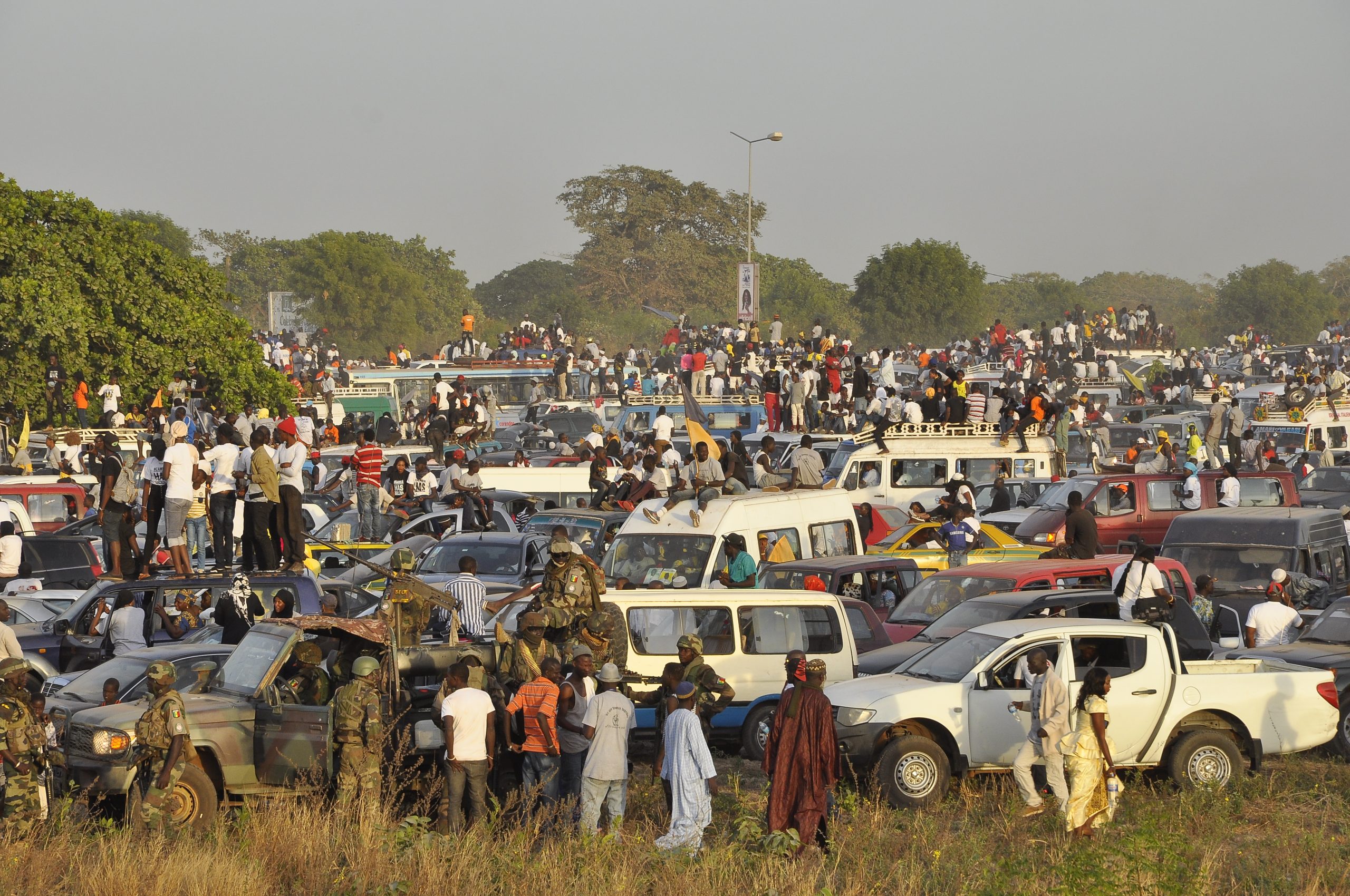
Growth of around 6%, remittances worth a third of GDP and a fragile fiscal repair are on the line as Africa’s smallest mainland country votes on 5 December 2026.
Growth of around 6%, remittances worth a third of GDP and a fragile fiscal repair are on the line as Africa’s smallest mainland country votes on 5 December 2026.
Africa Daily
On paper, The Gambia has one of West Africa’s steadier growth records. The IMF estimates real GDP grew 6.0% in 2025, after 5.9% in 2023 and 5.6% in 2024. Inflation has come down from a 2023 average of 17%. Public debt is past its peak, and an IMF programme has been running since January 2024. In the street the picture is different. In a national CepRass poll, 76% of respondents rated the economy negatively and 42% named rising prices as the most important economic problem. That gap between the numbers and how people feel matters on 5 December 2026, when Gambians vote in a presidential election that President Adama Barrow hopes will give him a third term.
This article looks at what is driving growth, why many households see little of it, and the policy choices that will face whoever wins. The country has about 2.5 million people and is surrounded by Senegal on three sides. In an election year, it is also a useful example of a wider African problem: growth funded from outside the country does not easily become jobs at home.
Growth on paper, hardship at home
The main forecasters broadly agree on how fast the economy is growing. The IMF expects growth to slow to 4.7% in 2026 and then settle near 5% over the medium term. The World Bank puts 2026 at 5.3%, or 3.1% per person. The African Development Bank (AfDB) projects 4.9% for 2026 and 5.0% for 2027. All three say the main drag in 2026 is the knock-on effect of the war in the Middle East. Higher fuel and fertiliser prices raise costs in an economy that imports much of its rice, wheat, cooking oil and fuel.
Income levels show why that growth does not feel like much. The IMF estimates GDP per person at US$912.9 in 2025, rising to about US$955.6 in 2026. The World Bank’s June 2026 Gambia Economic Update says extreme poverty fell only from 21.5% to 20.3%. The Bank’s later country assessment, which uses a different series, puts extreme poverty at 21.6% in 2025 and expects it to fall only to 21.1% in 2026. On either measure, progress is slow. Prices are rising again. Headline inflation was 7.0% in April 2026, against the Central Bank’s 5% target, and the World Bank reports 7.6% in June and 7.0% in July. The Central Bank cut its policy rate by 200 basis points in February and has kept it at 14% since.
The real engine: money sent home
The economy’s most important foreign-currency source is not an export. It is money sent home by Gambians abroad. The Central Bank reported that remittance inflows rose 12.4% to US$872.1 million in 2025. In his March 2026 State of the Nation address, President Barrow said that was equal to 34% of GDP. In 2024 remittances were about US$776 million, or 31.5% of GDP, and Bloomberg reported that they already rivalled tourism as a source of foreign exchange. The United States alone sent 24.3% of private remittances in the first nine months of 2025.
This "diaspora dividend" holds up the rest of the economy. It helped bring the current-account deficit down to 3.2% of GDP in 2025, from 4.4% in 2024. It also lifted gross official reserves to an IMF-estimated US$586.2 million and supports household spending that keeps shops and builders busy. Tourism helps too. World Bank figures show arrivals rose from 224,472 to 233,113, then by another 5.4% to 120,713 in the first half of 2026. The Bank’s Country Climate and Development Report (CCDR) estimates that tourism accounts for about 20% of GDP and 15% of jobs.
But remittances tend to fund spending, not productive investment. They also depend on the migration routes that send young Gambians abroad, often through the dangerous "backway" to Europe. Barrow has himself named irregular migration, youth unemployment and the cost of living as continuing problems. An economy that relies on its people leaving has not yet built enough work for those who stay.
Jobs, gender and the "learning without earning" problem
The World Bank’s June 2026 Economic Update, titled "Learning Without Earning", sets out the labour-market gap. About 81% of workers are in the informal sector. Among young people aged 15 to 34, 41.3% are not in employment, education or training. Girls do better than boys at primary and lower-secondary school, but this does not carry into work. Women’s labour-force participation is 41.9%, against 54.9% for men. When women do work, 78.1% are informal, and they earn on average 31.5 dalasi an hour against 42.4 for men.
The Bank recommends clearer paths from school to work, stronger land and property rights for women, and better access to finance and childcare. It calls closing the education-to-employment gap "a high-return priority". The same problem shows up among firms. The CCDR finds that small and medium-sized enterprises make up 80% of Gambian businesses, but only 15% get formal finance. Agriculture still provides about 70% of jobs.
The fiscal repair job
The government’s finances are the weakest part of the picture. The World Bank’s Public Finance Review finds that tax revenue averaged only 10.3% of GDP between 2017 and 2024. That is well below the roughly 15% the Bank considers necessary for basic government functions. Deficits over the same period averaged 4.5% of GDP. Spending rose to 29.4% of GDP in 2025 by IMF figures, and the deficit widened to about 5% of GDP. As a result the country missed its end-December 2025 IMF targets for net domestic borrowing and the domestic primary balance. Interest payments took 22% of government revenue in 2025.
Estimates of the debt differ but point the same way. The IMF puts public debt at 82.1% of GDP in 2025 and projects 73.5% in 2026 and 67.8% in 2027. The World Bank uses 76.2% for 2025 and projects 67.8% for 2026. Both rate The Gambia at high risk of debt distress. Corrective measures are already showing up in the half-year data. The World Bank reports that the fiscal deficit fell to 1.7% of GDP in the first half of 2026, from 3.1% a year earlier, mainly through spending cuts.
The Public Finance Review says there is a way through. Closing gaps across the main taxes could raise 3% to 4% of GDP in extra revenue. Reforms to hiring, allowances and payroll could save 2.6% of GDP between 2025 and 2029. The Bank also recommends replacing broad subsidies with targeted transfers and fully implementing the 2023 State-Owned Enterprises Act.
The IMF lifeline, extended
On 6 July 2026 the IMF Executive Board completed the fifth review of The Gambia’s Extended Credit Facility (ECF) and the second review of its Resilience and Sustainability Facility (RSF), and concluded the 2026 Article IV consultation. The decisions released about US$22.51 million immediately. That brings ECF disbursements to about US$75.98 million and RSF access to about US$35.16 million. The Board also extended both arrangements by six months. It added SDR 12.44 million (20% of quota) to the ECF to cover balance-of-payments pressure from the Middle East war, and waived the missed end-2025 targets.
The Fund’s language was guarded. Directors described programme performance as "mixed". They stressed spending control "in the 2026 election year", protecting fuel revenue and tight, data-driven monetary policy. They also urged the government to set up the anti-corruption commission and to pass the revised anti-money-laundering law and the National Audit Office Act. The IMF accepted targeted short-term relief, including cash transfers funded by a World Bank grant. Its message was clear, though: support for households during the campaign has to stay within the budget.
The climate bill that sits behind every forecast
The Gambia’s longer-term risk is physical. The World Bank’s CCDR, published on 5 May 2026, estimates that floods, heat stress and coastal erosion could cut GDP by 9.3% by mid-century if current trends continue. A more ambitious, resilience-focused growth path would reduce that loss to 2.6%. Flooding already causes damage equal to about 3.8% of GDP a year. More than 60% of Gambians live in exposed coastal and urban areas, and the report describes a "very real threat of submersion" for greater Banjul by the end of the century. It puts long-term investment needs at around US$11 billion by 2050, and calls for raising private participation to about 35% through blended finance.
The World Bank’s grant-financed portfolio in the country totals US$728.95 million. It includes US$50 million approved in June 2026 under a regional energy-access programme to connect more than 565 communities without electricity, a US$108 million agricultural value-chain project and a US$68 million tourism diversification project. These programmes are long-term and will not ease prices before December.
The ballot and the budget
The country no longer has a constitutional term limit, because draft constitutions failed in 2020 and again in July 2025. Barrow is therefore eligible to run for a third term. His main challengers are veteran opposition leader Ousainou Darboe, Coalition 2026 candidate Talib Bensouda and former Truth, Reconciliation and Reparations Commission (TRRC) counsel Essa Mbye Faal. An August 2026 poll by Gambia Participates had Barrow on 32%, Darboe on 25%, Bensouda on 19% and 17% undecided. The election may go to a second round if no candidate wins more than 50%.
Whoever wins will face the same choices. Over the next few months, watch for:
Conclusion
The Gambia’s post-2017 record is real. Growth has averaged about 5%, inflation has been brought down from double digits, and debt is falling. But much of that stability is paid for by money sent home from abroad. The jobs, tax revenue and climate protection needed to make it last are still missing. The election on 5 December will be fought over the price of rice and fuel. The bigger question for the next five years is whether the country can turn its diaspora dividend into a domestic economy that gives young Gambians, especially women, a reason to stay.



