Written By | Staff Writer
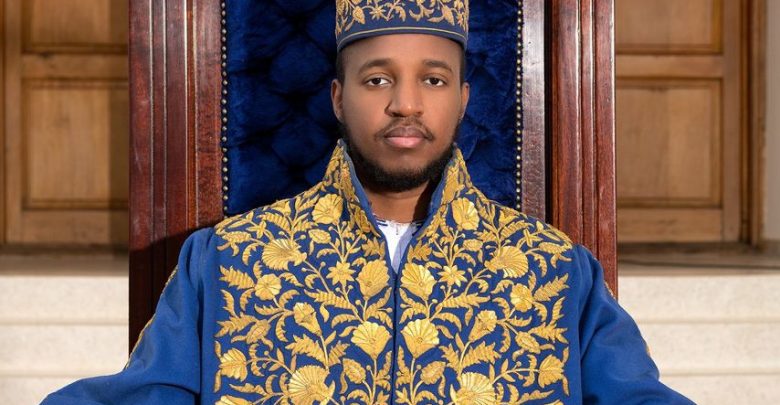
A 21-member clan committee has named a state television anchor as the next Omukama. The late king's mother and sisters say his will named a son almost nobody has seen. The burial is tomorrow.
Kampala
Uganda's Tooro Kingdom enters the weekend of its king's funeral without agreement on who should inherit his throne. On Wednesday evening a 21-member Royal Succession Committee drawn from the royal Babiito clan named Prince Edward Rukidi Kijanangoma, a news anchor and editor at the state broadcaster Uganda Broadcasting Corporation and a cousin of the late monarch, as successor to Omukama Oyo Nyimba Kabamba Iguru Rukidi IV. Within hours the announcement had been rejected by the late king's mother, his sisters and other branches of the royal family, who say Oyo left a will appointing a son as his heir.
King Oyo died on 27 August in the United States, where he had been receiving treatment for cancer. He was 34. His body was flown home and received at Entebbe International Airport on 4 September, and he is scheduled to be buried on Saturday. The succession quarrel has therefore broken out in the narrow window between the return of the body and its interment, a sequence the kingdom's own prime minister has publicly described as the wrong order of business.
"There will be time to examine the Will, to hear those advancing a different position, and to consider our customs, the applicable law and the proper institutions through which succession should be determined," Prime Minister Calvin Armstrong Rwomiire Akiiki wrote on X on Thursday, appealing for calm. "That process should take place calmly and credibly, not through competing announcements, confrontation, or attempts to establish facts on the ground while our King still awaits burial."
The will, and the heir nobody has seen
The document at the centre of the dispute is dated 14 September 2022. The kingdom's spokesperson released the relevant passage, which reads: "I hereby declare and direct that if, at the date of my death, I am survived by a son lawfully recognised as my biological son, I appoint him as my heir to the throne of the Kingdom of Tooro."
The difficulty is that Oyo never married and was not publicly known to have children. The existence of an heir was first raised by Armstrong himself on 27 August, in the social media post announcing the king's death, which said Oyo had left behind "a Prince as his heir, whose identity will be formally revealed at the appropriate time." More than two weeks later, that identity has still not been disclosed.
Princess Ruth Komuntale, Oyo's sister, told a press conference on Wednesday that the will settles the question. Queen Mother Best Kemigisa, in a statement issued early on Thursday, went further, denouncing what she called a "self-appointed group of clan members" who had proceeded to select a king despite having had the will read to them hours earlier. Princess Elizabeth Bagaya, the veteran diplomat and one of the kingdom's best-known figures, has also rejected the committee's choice, and sons of the Musuuga branch of the royal family have separately said they do not accept Kijanangoma.
Sceptics of the will's application are equally pointed. Andrew Mwenda, a prominent Ugandan journalist and a relative of the royal family, wrote on X on Thursday that the family had not produced a photograph of the purported son and had declined to give details about the boy's mother's family. He argued that under Tooro custom a king's son may succeed him only if born to a queen formally married to the king, a condition that, if applied, would exclude any child born outside such a marriage regardless of what the will says.
Where authority actually sits
The dispute turns on an old and unresolved question: when a written will, clan custom and a succession committee disagree, whose decision is final? Uganda is a constitutional republic, and its traditional rulers hold no formal governmental power. But the kingdoms restored in the early 1990s remain socially and politically weighty institutions whose leaders command deference across large parts of the country. In practice a claimant's position hardens once the central government treats him as the recognised cultural leader, which gives Kampala considerable influence over an outcome it is not formally empowered to decide.
That is why one element of the Queen Mother's statement has drawn particular attention. She said the military had removed royal guards from the palace without notice and placed the family under house arrest. A spokesperson for Uganda's military did not immediately respond to a request for comment on the claim, and members of the succession committee could not immediately be reached. Unverified as it is, the allegation places the army inside a family dispute at precisely the moment when the question of who is recognised is being settled.
Who King Oyo was
Oyo's own accession is part of why the kingdom matters beyond its borders. He became Omukama in 1995 at the age of three, following the death of his father, Patrick Kaboyo Olimi III, and was described at the time as the world's youngest reigning monarch, an image that travelled considerably further than Tooro itself. He later served as a United Nations goodwill ambassador and campaigned on HIV and AIDS. For a small kingdom in western Uganda, he was an outsized source of international visibility.
That visibility cuts both ways now. A contested succession in Tooro is not a local administrative matter. It is a story with an international audience, playing out in a region whose districts sit close to the Albertine corridor that carries much of Uganda's oil development and a great deal of its border traffic with the Democratic Republic of the Congo.
What to watch
Three things will determine how quickly this settles. The first is the burial on Saturday: if the ceremony proceeds without a rival coronation attempt, the immediate risk of two parallel claims being enacted recedes. The second is whether the family produces the son named in the will, and on what terms, meaning a name, a mother and a verifiable lineage. Without that, the will describes an heir who does not, for public purposes, exist. The third is whether the matter reaches court. Uganda's courts have handled cultural-institution disputes before, and a filing would shift the contest from press conferences to a forum where the will's validity and the committee's mandate can actually be tested.
There is also the question of what the government says, and when. Silence from Kampala is itself a position, because it leaves the committee's announcement standing as the only formal act on the record. A statement recognising either claimant would effectively decide the matter in practice, whatever a court might eventually find.
For now Tooro has a king-elect its royal family does not accept, a will naming an heir it has not produced, and a funeral to conduct. The kingdom's prime minister has asked for all of it to wait until Saturday is over. Whether the parties oblige is the first real test of whether this dispute can be contained.



