Khartoum/Addis Ababa
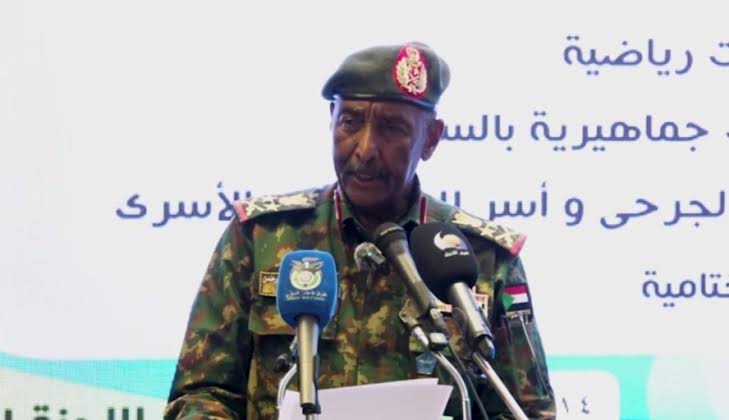
As Sudan's civil war grinds toward the end of its fourth year, army chief Abdel Fattah al-Burhan is pressing forward with a proposal for an all-inclusive national dialogue inside the country — an offer his own political opponents met last week not with cautious engagement but with outright rejection, accusing him of using the process to cement the legitimacy of a military-led government that seized power in an October 2021 coup and has waged war against the paramilitary Rapid Support Forces since April 2023.
Burhan said on August 14 that he had agreed to a package of security, legal and political guarantees proposed by an independent national panel to host the dialogue on Sudanese soil, a step framed by his government as an overdue effort to chart a political path out of a war that has displaced roughly a quarter of the country's population. The proposal reportedly includes offers to drop charges punishable by death against opposition figures and to form a preparatory committee to organize a full dialogue conference. It follows an African Union delegation's visit to Khartoum on August 16 — the bloc's first since the 2021 coup — signaling renewed, if still tentative, international engagement with Burhan's Transitional Sovereignty Council, which he chairs alongside Prime Minister Kamil Idris, a former director general of the World Intellectual Property Organization whom Burhan appointed to head Sudan's internationally recognized cabinet in mid-2025.
The opposition says no
The response from Sudan's fractured civilian and political opposition arrived within days, and it was unambiguous. A two-day consultative meeting held in Addis Ababa on August 22 and 23 brought together a coalition describing itself as anti-war forces unaligned with either side of the conflict — including groups associated with the Sudanese Declaration of Principles, the Popular Congress Party, the Umma Party led by Mubarak al-Fadil, along with civil society organizations and women's and youth networks. At the close of the meeting, participants adopted a joint position paper titled "The Peace Process We Want," formally rejecting Burhan's dialogue initiative and proposing an alternative process built around parallel humanitarian, security and political tracks rather than a single dialogue convened and controlled by one belligerent.
The core of the opposition's objection is structural: a national dialogue hosted and run by Burhan's government, they argue, cannot produce genuine peace while the RSF, led by his rival Mohamed Hamdan "Hemedti" Dagalo, is excluded from the talks and the fighting itself continues unabated. Participants at the Addis Ababa meeting accused Burhan of attempting to use the dialogue to legitimize the authority his government has held since the coup, rather than genuinely opening space for a negotiated settlement that would require concessions from the military as well as from the RSF. Abdalla Hamdok, Sudan's former prime minister who now heads the Somoud coalition and the Declaration of Principles group, told reporters in Addis Ababa on Sunday, August 23, that "we do not carry weapons, and we have informed the regional community that there is no military solution in Sudan," arguing that recent army battlefield gains would not by themselves end the conflict and that only sustained civilian unity and regional diplomatic engagement could do so. His comments capped the two days of talks that brought together political parties, civil society groups and youth and women's networks in an attempt to build what organizers described as a unified civilian front against the war.

The war Burhan's dialogue is meant to address
The dialogue proposal comes against the backdrop of a war that has defied repeated predictions of resolution. Sudan's military has notched significant recent gains: the Sudanese Armed Forces recaptured several towns along the strategic Export Road connecting the central Nile valley to the country's west, a corridor whose recapture on July 27 pushed the RSF into what analysts describe as a defensive posture across much of central Sudan. In early August, the army and allied groups repelled two successive RSF assaults in the strategically significant Bir Saliba area. But the RSF has responded by intensifying attacks elsewhere, particularly in North Kordofan, where roughly half a million people remain trapped in the state capital, El-Obeid, as the paramilitary group tries to reassert dominance over the wider Kordofan and Darfur regions. Having lost the supply route linking Omdurman and El-Obeid when the army recaptured it in late July, the RSF has turned increasingly to drone warfare: ten consecutive days of strikes killed at least 50 civilians across El-Obeid and North Kordofan and caused substantial damage to civilian infrastructure, according to reporting from the area. Hemedti himself has vowed to press the RSF's fight until his forces reach Khartoum, which has remained under army control since the RSF's retreat from the capital.
The RSF's brutal capture of El-Fasher, the Darfur regional capital, last year — during which thousands of civilians were killed after Sudanese army forces withdrew — remains a defining atrocity of the war and a central reason many opposition figures and international observers view any RSF-excluded, Burhan-run dialogue with suspicion: without addressing accountability for mass civilian killings in Darfur and elsewhere, critics argue, a dialogue process risks papering over crimes that will continue to drive conflict and distrust regardless of any political settlement reached in Khartoum or Port Sudan. An opinion analysis published by Al Jazeera on August 26 argued that even an eventual RSF battlefield defeat "will not end Sudan's war but merely fragment it" into more localized conflicts among the militias, tribal forces and regional power brokers the war has empowered over more than four years of fighting — a warning that a negotiated political settlement, not simply military victory by either side, is the only route to durable peace, and one that lends credibility to the opposition's argument that Burhan's current framework is too narrow.
A humanitarian catastrophe outpacing the diplomacy
Whatever the fate of the dialogue proposal, it is unfolding against a humanitarian crisis of a scale that has made Sudan, in the assessment of United Nations agencies, the world's largest displacement emergency. As the war entered its fourth year this spring, the UN reported that some 14 million people — roughly a quarter of Sudan's population — had been forced to flee since the fighting began on April 15, 2023, with about 9 million displaced inside the country and 4.4 million having crossed into neighboring Chad, South Sudan, Egypt and elsewhere. That crisis has continued to deepen even as battle lines have shifted: UN News reported on August 19 that intensifying fighting and destructive seasonal flooding had displaced at least another 200,000 people since late 2025. Researchers and humanitarian analysts caution that the war's death toll is difficult to state with precision given restricted access to conflict zones, but estimates that combine direct conflict casualties with deaths from the famine, disease and collapsed health care the war has caused commonly run into the hundreds of thousands — a scale of loss that has led UN human rights officials to repeatedly renew calls for both accountability and a negotiated end to the fighting as the conflict has now stretched into a fourth year with no clear resolution in sight.

What to watch next
The immediate question is whether Burhan's preparatory committee — the body his government has proposed to organize the dialogue conference — can be formed and staffed in a way that draws in enough of the civilian opposition to give the process credibility, or whether the Addis Ababa coalition's rejection hardens into a permanent boycott that leaves the dialogue looking like an internal exercise among Burhan's existing allies. Also worth watching is whether the African Union, having sent its first post-coup delegation to Khartoum on August 16, uses that opening to press Burhan toward a more inclusive framework, potentially one that finds some mechanism to address the RSF's exclusion without legitimizing Hemedti's forces after the atrocities documented in El-Fasher and elsewhere in Darfur. On the battlefield, the coming weeks will show whether the army's recent gains along the Export Road and at Bir Saliba translate into a sustained shift in momentum or whether, as the RSF's drone campaign in North Kordofan suggests, Hemedti's forces simply adapt their tactics to compensate for lost supply lines and territory. And on the humanitarian side, with seasonal flooding compounding a displacement crisis already affecting a quarter of Sudan's population, the practical test of any dialogue process — inside or outside Burhan's framework — will be whether it can translate into safe humanitarian corridors and a reduction in civilian suffering, rather than remaining a political conversation conducted at a remove from the war's daily toll.
Published By | News Editor