BUSINESS
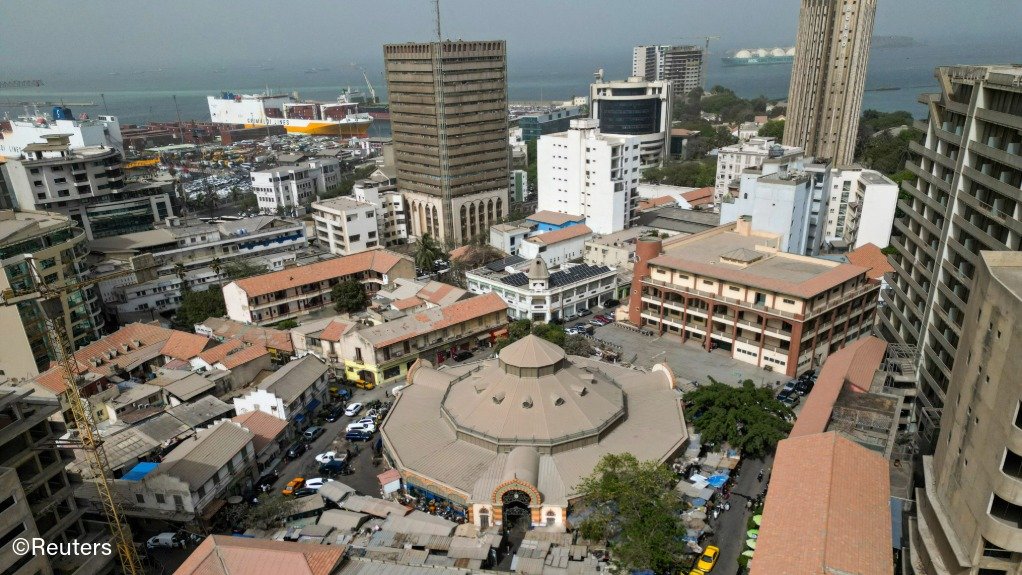
Two years after Senegal's incoming government revealed that its predecessor had concealed billions of dollars in public debt, the country is still working through the consequences: a stalled International Monetary Fund program, a sharply downgraded growth outlook, and a political rupture at the top of the state. Yet beneath the fiscal turbulence, Senegal's underlying economy is being reshaped by a genuinely new force — sustained oil and gas production — that is complicating both the crisis narrative and the recovery story. The result is a country simultaneously in fiscal distress and in the early stages of a hydrocarbon-driven expansion, with agriculture, phosphates and poverty reduction all caught in the balance.
A Debt Shock That Reset the Country's Finances
The scale of the problem became clear when Senegal's new administration disclosed that the previous government had concealed liabilities now estimated at roughly $13 billion — equivalent to about 25.3 percent of GDP — pushing Senegal's total public debt stock beyond 130 percent of GDP by some estimates. The IMF responded by freezing a $1.8 billion loan program in 2024 pending an independent audit and a credible path back to fiscal sustainability. That freeze has had real consequences: it has restricted Senegal's access to international capital markets and forced the government into an unusually steep consolidation, even as it tries to preserve spending on subsidies and public investment.
The fiscal numbers show both the scale of the adjustment and how far there is still to go. The overall budget deficit stood at an extraordinary 13.4 percent of GDP in 2024. Senegalese authorities have targeted bringing that down to 7.8 percent in 2025, with the draft 2026 budget law aiming for a further reduction to 5.4 percent of GDP, followed by 4.9 percent in 2027, 3.8 percent in 2028 and 3.0 percent by 2029. Achieving that trajectory without a resumed IMF program — and the credibility and financing it would unlock — remains the central test of Senegalese fiscal policy through the rest of the decade.
Political Rupture Complicates the IMF Path
The debt crisis has not stayed confined to technical negotiations; it has reshaped domestic politics. President Bassirou Diomaye Faye's dismissal of Prime Minister Ousmane Sonko on May 22, 2026, followed months of escalating disagreement between the two men over how aggressively to pursue IMF re-engagement, whether to restructure existing debt, and how quickly to unwind costly fuel subsidies. Sonko had pushed a more confrontational posture toward external creditors and international lenders; Faye's decision to remove him has, in the assessment of several regional analysts, cleared one obstacle to resuming talks with the Fund even as it opens a more volatile period in Senegalese politics. An IMF staff team concluded a visit to Senegal in November 2025 as part of the ongoing effort to rebuild a formal program, but as of mid-2026 no new financing arrangement has been finalized.
The near-term growth numbers reflect this uncertainty. The IMF's October 2025 outlook had projected 3.0 percent GDP growth for Senegal in 2026, but by early 2026 the Fund had cut that forecast to just 2.2 percent — well below the projected 4.3 percent average for Sub-Saharan Africa as a whole — citing the drag from fiscal consolidation and restricted financing. Senegal's own finance ministry has pushed back with a more optimistic figure, revising its 2026 growth projection upward to 3.2 percent from an earlier 2.5 percent estimate. The current account deficit, meanwhile, is now expected to reach 6.2 percent of GDP in 2026, wider than the 5.4 percent projected only months earlier, underscoring how quickly the external picture has shifted.

Oil and Gas Reshape the Growth Story
Set against this fiscal strain is a genuinely new growth engine: hydrocarbons. The African Development Bank's own assessment paints a far more expansionary picture than the IMF's, projecting real GDP growth of 10.3 percent in 2025 and 7.1 percent in 2026, driven overwhelmingly by the ramp-up of oil production at the offshore Sangomar field and the start of gas output at the Greater Tortue Ahmeyim (GTA) project shared with Mauritania. Sangomar, operated with a nameplate capacity of 100,000 barrels a day, produced 17.9 million barrels in the first half of 2026 alone, and the government has raised its full-year output target to 31.6 million barrels, up from an initial forecast of 28.1 million. GTA, a BP-backed liquefied natural gas project that began production in December 2024, exported three LNG cargoes in June 2026 as output continued to build.
The fiscal payoff from these projects is only beginning to materialize. Senegalese authorities project hydrocarbon revenue of roughly 703.2 billion CFA francs cumulatively between 2027 and 2029 — 397.8 billion in 2027, 168 billion in 2028 and 137.4 billion in 2029 — a meaningful but not transformative sum relative to the scale of the debt burden. Already, the extractive sector accounted for about 12 percent of government revenue and 31 percent of total exports in 2024, figures that are expected to rise as production climbs further. Whether this hydrocarbon windfall is used to accelerate debt reduction or to fund near-term spending will be one of the defining fiscal choices of the next several years.

Phosphates, Agriculture and a Push for Value Addition
Beyond hydrocarbons, Senegal is also rethinking its long-standing phosphate industry. The country has historically been among the world's leading phosphate exporters, with state-linked Industries Chimiques du Sénégal (ICS) operating the country's main processing complex near Dakar and Senegal mining roughly 2.8 million tonnes of rock phosphate in 2023. In January 2026, Senegalese officials — including former Prime Minister Sonko — signaled an explicit policy shift away from exporting raw phosphate rock toward greater local processing and value addition, citing Morocco's phosphate-to-fertilizer model as a template. If pursued seriously, this would mark a substantial change in Senegal's export profile, converting a raw-materials trade into a higher-value manufacturing and fertilizer-export sector, with implications for jobs, foreign-exchange earnings and food-security policy across West Africa given fertilizer's centrality to regional agricultural productivity.
Agriculture itself remains central to the growth story more broadly: a rebound in the sector, alongside the first full year of oil and gas production, helped underpin Senegal's robust headline growth performance through 2025, even as the fiscal crisis dominated the policy conversation.
Poverty, Inequality and the Long-Term Development Agenda
Despite the resource windfall on the horizon, poverty reduction in Senegal has been slow and uneven. The national poverty rate stood at 37.5 percent as of the most recent comprehensive household survey (2023), with a stark rural-urban divide — 53.3 percent of the rural population classified as poor compared with 20 percent in urban areas. The government's long-term development framework has itself been rebranded: the “Senegal 2050” National Agenda for Transformation has formally replaced the previous Plan Sénégal Émergent (PSE), setting out a new roadmap toward middle-income status that its architects hope hydrocarbon revenue, phosphate value addition and continued agricultural gains can help finance, even as near-term fiscal consolidation squeezes the budget available for social spending.
Regional Trade and the AfCFTA Dimension
Senegal's dual position — as an ECOWAS member state and a signatory to the African Continental Free Trade Area (AfCFTA) — gives it a platform to convert its emerging hydrocarbon and phosphate-processing capacity into regional trade advantage, particularly if fertilizer production expands as officials have signaled. As oil and gas revenue scales up and phosphate processing potentially shifts toward higher-value exports, Senegal's ability to supply regional markets under AfCFTA preferential terms could become an increasingly important channel for growth, provided the country can first stabilize its fiscal position and restore a working relationship with the IMF.
Outlook
Senegal's story through 2026 is one of two economies operating side by side: a fiscal and political crisis rooted in a debt scandal that is still being resolved, and a hydrocarbon-and-resource economy that is expanding rapidly and could eventually fund the very consolidation the IMF is demanding. How quickly Senegal can reconcile these two tracks — restoring lender confidence while directing new oil, gas and phosphate revenue toward debt reduction and poverty alleviation rather than short-term spending — will determine whether the “Senegal 2050” vision remains aspirational or becomes a credible growth path for one of West Africa's most closely watched economies.
Published By | News Editor