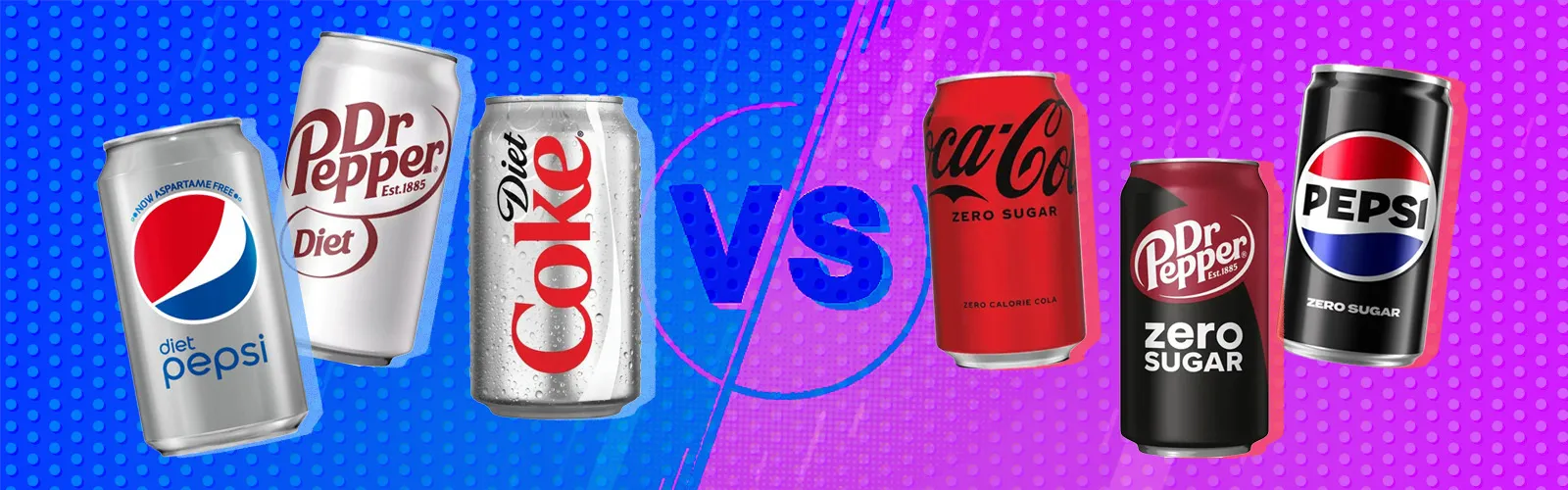
Landmark lab study finds sweeteners aren't the passive, inert additives we've been told — and one common combo with a top-selling antidepressant knocked out gut bacteria linked to healthy blood sugar
CAMBRIDGE, UK
For decades, the pitch has been simple: artificial and low-calorie sweeteners are "metabolically neutral." They pass through your body, tickle your taste buds, and vanish — unlike sugar, they supposedly leave nothing behind. It's the reason diet soda cans, sugar-free gum and thousands of "keto-friendly" products line supermarket shelves with a clean conscience.
A new study out of the University of Cambridge's MRC Toxicology Unit says that story is, at best, incomplete — and at worst, dangerously misleading.
Researchers led by Dr. Sonja Blasche and Professor Kiran Patil put common sweeteners through rigorous laboratory testing not in isolation, but in the messy, realistic combinations people actually consume them in — alongside caffeine, flavoring agents like vanillin, and eight commonly prescribed medications. What they found, published this week in the journal Molecular Systems Biology, was staggering: more than 100 distinct chemical interactions in which a sweetener behaved completely differently once another everyday substance was introduced. In 34 of those combinations, the effect on gut bacteria was amplified. In 68, it was dampened. None of it was "neutral."
THE COMBINATION THAT STOPPED RESEARCHERS COLD
Buried in that pile of 100-plus interactions was one that stood out as genuinely alarming. When isosteviol — a compound derived from stevia and widely used across the food and beverage industry — was combined with duloxetine, a blockbuster antidepressant sold under brand names including Cymbalta, the pairing strongly suppressed the growth of two specific gut bacteria: Roseburia intestinalis and Parabacteroides merdae.
These aren't obscure microbes. Roseburia intestinalis and Parabacteroides merdae are both considered beneficial residents of a healthy gut, playing documented roles in producing short-chain fatty acids, maintaining the integrity of the intestinal lining, and — critically — supporting healthy blood sugar regulation. Knocking them back isn't a cosmetic side effect; it's the kind of disruption that microbiome researchers have spent the last decade linking to everything from inflammatory bowel conditions to metabolic disease.
And duloxetine is not a niche drug. In the United States alone, more than 4.2 million patients were prescribed duloxetine in 2023, according to figures cited by the research team — meaning millions of Americans who take the antidepressant for depression, anxiety, or chronic pain conditions like fibromyalgia and diabetic nerve pain could plausibly be consuming isosteviol-containing sweeteners in their coffee, snacks or sugar-free products every single day, entirely unaware of a laboratory-documented interaction between the two.

"THEY DON'T JUST PASS THROUGH"
Professor Patil, the study's senior author, didn't mince words about what the findings mean for how we've been thinking about sweeteners. "Our study suggests that artificial sweeteners don't just pass through the body passively — they can interact with gut microbes, and these effects can be amplified or altered by other substances like medications," he said.
Dr. Blasche, the study's lead author, framed the finding as a direct challenge to the marketing language stamped on countless food labels. "Sweeteners are often marketed as metabolically neutral, but our study challenges this idea," she said. "We found that they can directly affect gut bacteria, particularly when mixed with other compounds such as medication and food additives."
Blasche also pointed to a simple, almost obvious truth that nonetheless seems to have been overlooked in prior research: nobody eats a sweetener by itself. "Understanding how sweeteners act in the body is complicated by the fact that we rarely ever take sweeteners by themselves — we take them with drinks, in snacks, or even in medication to mask bitterness," she noted, underscoring why testing sweeteners in isolation, as most previous safety studies have done, may have been missing the real-world picture all along.
HOW THE SCIENCE ACTUALLY WORKED
The Cambridge team's approach was methodical: rather than simply feeding lab-grown gut bacteria a single sweetener and measuring what happened, they systematically paired sweeteners — including well-known names like aspartame, sucralose and stevia-derived compounds, alongside less familiar ones like advantame and isosteviol — with the kinds of substances those sweeteners realistically get consumed alongside in everyday life: caffeine (think diet cola or a sweetened coffee), common food flavorings like vanillin, and a panel of eight widely prescribed drugs.
By testing these combinations against cultured strains of gut bacteria in vitro — that is, in a controlled lab setting rather than inside a living human digestive tract — the researchers could isolate exactly how bacterial growth changed when a second substance was introduced. It was this systematic, combinatorial approach that surfaced the sheer number of previously undocumented interactions: over 100 cases where sweetener behavior shifted meaningfully in the presence of another common substance.
The research was funded by the European Union's Horizon 2020 programme and the UK's Medical Research Council — a signal that European regulators and public health bodies are taking the question of sweetener safety, and its intersection with the pharmaceutical drugs millions of people take daily, seriously enough to bankroll rigorous, systematic testing.
THE IMPORTANT CAVEAT
Here's where tabloid alarm has to make room for scientific precision: this was an in vitro study. That means the interactions were observed in laboratory cultures of gut bacteria, not inside the digestive systems of living, breathing people. The human gut is a vastly more complex environment than a lab dish — populated by hundreds of interacting bacterial species, subject to individual variation in diet, genetics and existing health conditions, and buffered by digestive processes that a test tube simply can't replicate.
That doesn't mean the findings are meaningless — quite the opposite. In vitro studies like this one are exactly how researchers identify promising (or concerning) leads worth chasing into human clinical research. But it does mean nobody should be tossing out their sugar-free sweetener packets in a panic, or stopping a prescribed antidepressant, based on this study alone. What it does mean is that a research question that regulators, drug manufacturers and sweetener producers have arguably not asked closely enough — what happens when these products are combined — now has hard laboratory evidence demanding follow-up.
WHY THIS MATTERS BEYOND ONE DRUG
The duloxetine-isosteviol pairing grabbed headlines because the numbers are so large and the effect so pronounced, but the deeper finding of the study is arguably more unsettling: with more than 100 interactions identified across just a handful of sweeteners and a limited panel of eight drugs, caffeine and flavoring agents, the true scope of sweetener-medication interactions across the thousands of drug combinations and sweetened products actually in circulation could be enormous — and almost entirely uncharted.
Consider how many everyday scenarios stack sweeteners on top of medications: sugar-free cough syrups and children's medicines that use sweeteners to mask bitterness, diet sodas consumed alongside pills, sugar-free gum chewed by people on multiple prescriptions, protein powders and "healthy" snack bars sweetened with stevia derivatives and consumed by people managing chronic conditions. Each of those pairings represents a potential chemical collision nobody has systematically tested — until this study cracked the door open.
EXPERT PERSPECTIVE
Microbiome researchers outside the study have generally welcomed the combinatorial approach as overdue. The gut microbiome field has spent much of the last decade documenting associations between disrupted bacterial populations and conditions ranging from obesity and type 2 diabetes to depression and autoimmune disease. A study that specifically identifies a mechanism — a named sweetener interacting with a named, widely prescribed drug to suppress named, functionally important bacteria — offers exactly the kind of specific, testable lead that vaguer "sweeteners might be bad for you" research has historically lacked.
At the same time, regulatory and nutrition scientists will likely stress that the sweeteners tested remain approved and generally recognized as safe by agencies like the FDA and European Food Safety Authority based on decades of separate toxicology data — this study doesn't overturn that safety record, but it does add an entirely new dimension (drug-sweetener interaction) that existing safety reviews weren't designed to catch.
WHAT THIS MEANS FOR YOU
If you regularly consume sweeteners containing stevia derivatives like isosteviol and you're also taking duloxetine or another SNRI/SSRI antidepressant, this study is a reason to have an informed conversation with your doctor or pharmacist — not a reason to panic or unilaterally stop medication. Given how many products quietly contain sweeteners — not just diet drinks, but flavored medications, protein products, and "sugar-free" versions of everyday foods — it's worth actually reading labels if you take regular prescription medication and want to be cautious.
More broadly, this research is a reminder that "natural" or "zero-calorie" labeling doesn't mean a substance is inert once it enters your body, especially in combination with everything else you consume alongside it. Nutrition science has long focused on ingredients in isolation; this study is part of a growing wave of research insisting that real-world safety testing needs to account for the combinations people actually live in.
THE BOTTOM LINE
More than 100 previously undocumented chemical interactions. A widely used stevia-derived sweetener quietly undermining a top antidepressant's relationship with your gut bacteria. Millions of people potentially combining the two without knowing it. The Cambridge team's message isn't that sweeteners are secretly poison — it's that the assumption of "metabolically neutral" was always incomplete, and that the next generation of food and drug safety science needs to start testing substances the way people actually consume them: together, not alone.
Further human clinical research is expected to follow, but for now, the science has landed a clear challenge to one of the food industry's most comforting marketing claims.
Published By | Health News Editor