Libreville
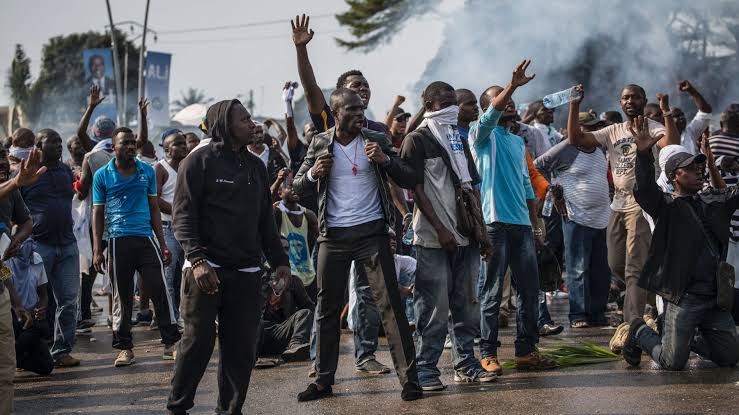
Ten years ago tonight, security forces stormed the campaign headquarters of Gabonese opposition leader Jean Ping in Libreville, hours after President Ali Bongo Ondimba was declared the winner of a knife-edge election. A decade later, nobody has been convicted, the death toll has never been officially established, and the country's current government — installed by the same institution that carried out the assault — has shown little appetite for finding out who gave the orders.
The anniversary lands at an awkward moment for President Brice Clotaire Oligui Nguema, who built his legitimacy on the promise of breaking with the Bongo era but who governs alongside men who held senior security posts in 2016. What victims are asking for this week is not compensation. It is an investigation.
"This is not an event that ended on 31 August. It continues to this day. We are haunted — sometimes even in our dreams — by those who died," Gildas-Amour Ngomba Ngomba, a member of the Réconciliation victims' association, told RFI. "Today, we are demanding the truth, and this means through an investigation, because to bring the truth to light, an investigation is necessary."
What happened in 2016
The August 2016 presidential election was extraordinarily close. Official results gave Bongo 49.8 percent to Ping's 48.2 percent — a margin of fewer than 6,000 votes. The disputed ballots came overwhelmingly from Haut-Ogooué, the Bongo family's home province, where Bongo was recorded as winning about 95 percent of the vote on a turnout reported at 99.9 percent. European Union observers, who put the province's turnout at 99.93 percent, identified the result as an anomaly.
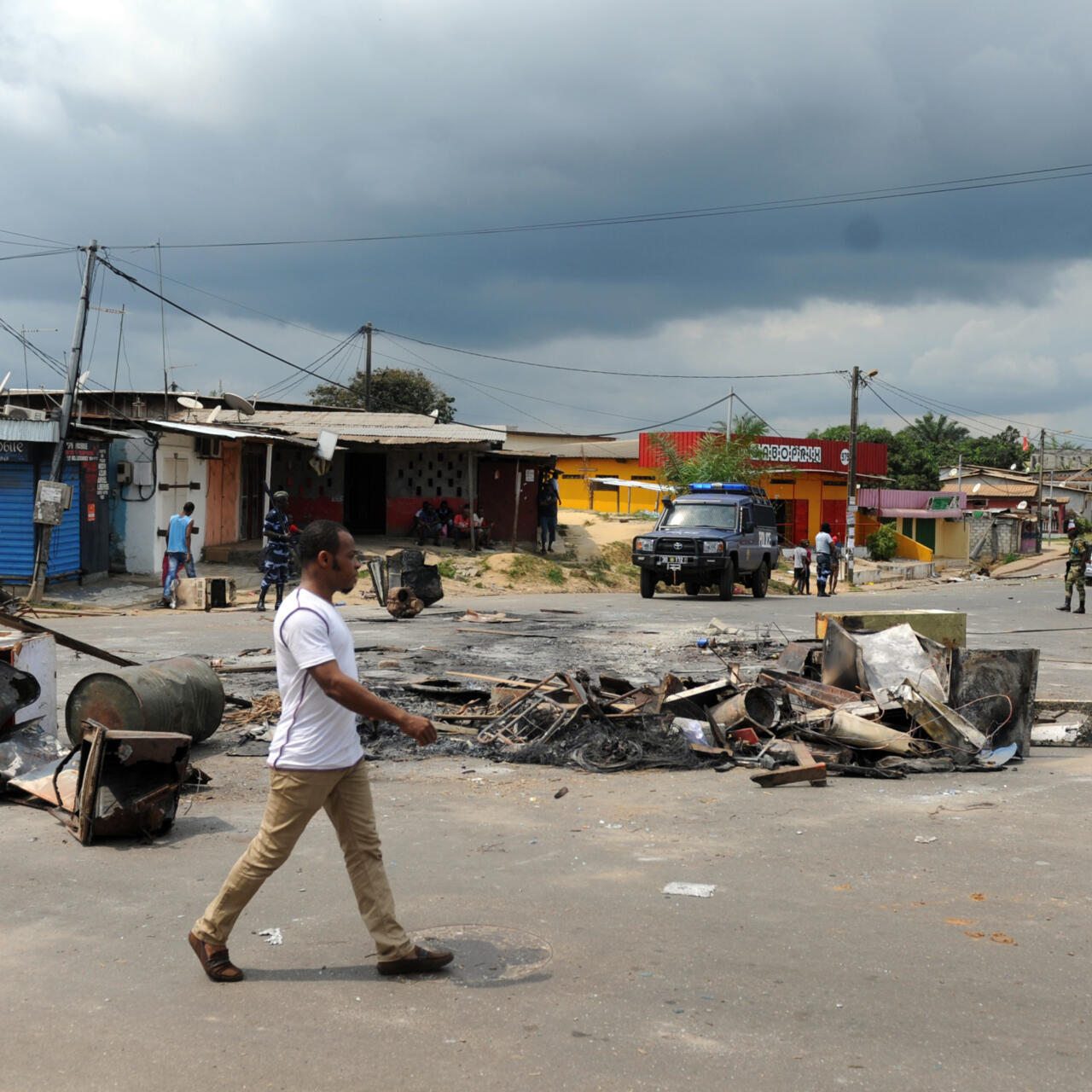
The results were announced on Aug. 31. That night, and into the morning of Sept. 1, security forces launched an armed assault on Ping's headquarters, where he and his supporters had gathered. It was the start of several days of unrest, looting and violent repression, and the government cut internet access in Libreville. The true death toll remains unknown; official and opposition accounts have never been reconciled, and no independent count was ever completed.
On Sept. 24, 2016, Gabon's Constitutional Court upheld Bongo's victory while partially revising the figures in his favor, putting him at 50.66 percent against 47.24 percent for Ping and widening his winning margin to roughly 11,000 votes. Ping rejected the ruling. Bongo was sworn in days later and governed until August 2023, when Gen. Oligui Nguema, then head of the Republican Guard, deposed him in a coup that ended a family dynasty spanning more than half a century.
Why the case has not moved
Since the fall of the Bongos, survivors have been able to speak publicly for the first time. Oligui Nguema has left the door open to providing medical care for people injured in 2016, but has stayed conspicuously cautious about reopening the question of responsibility. He was posted abroad at the time of the violence and bears no personal exposure. Several members of the security establishment who already held positions of authority in 2016, however, remain influential today.
Jean-Gaspard Ntoutoume Ayi, now a member of parliament and formerly a spokesperson for Ping's 2016 campaign, argues that this is precisely the obstacle. The forces that removed Bongo in 2023, he suggests, are uncomfortable examining why they did not protect the population seven years earlier. "I think that in 2023, the defence and security forces did what they should have done in 2016," he said, adding that there remained considerable reluctance among both the political class and the wider public to assign them responsibility.
That formulation captures the bind neatly. The 2023 coup was widely framed inside Gabon as a corrective — a restoration carried out by the army on behalf of a public whose votes had been stolen. Prosecuting the army for 2016 would complicate that story, because it would establish that the same institution was the instrument of the theft before it became the instrument of the correction.
Not everyone accepts the trade-off. "There are passive players, there are active players; some are still here, some are no longer here, and some at least hold the truth about this case," Senator Marc Ona Essangui told RFI. "Who gave the orders? Who carried them out? These are questions we must ask ourselves. To heal these wounds, it is absolutely essential that people speak out."
There is one institutional proposal on the table. Alain-Claude Bilie-By-Nze, a former government spokesperson and one of the leading figures of the Bongo era, proposed creating a Truth, Justice and Reconciliation Commission during his 2025 presidential campaign. He finished a distant second to Oligui Nguema in the April 12, 2025, election, taking 3.02 percent of the vote to the general's 90.35 percent on a turnout of 70.4 percent. Oligui Nguema is serving a seven-year term, renewable once, under the constitution adopted during the transition. A truth commission advocated by a candidate who won 3 percent, and who is himself associated with the government that presided over the violence, has limited political momentum.
For Ngomba Ngomba, the argument for accountability is preventive rather than retrospective. "If we continue to condone this, we are setting the stage for the collective memory to relive the same kind of event," he said.
The French thread
The search for accountability extends beyond Gabon, and this is where the file has actually moved.
In September 2016, a Franco-Gabonese businessman who had been detained during the violence filed a complaint in France that included allegations of crimes against humanity. He described to RFI what he saw at Ping's headquarters: "I remember a young man; I think he'd been shot in the collarbone and the bullet was sticking out as if someone had snapped a baguette in two."
Further complaints have since been lodged in France, where investigators are examining allegations of crimes against humanity and the possible involvement of French nationals. Some French citizens were working under contract with Gabon's Republican Guard at the time of the assault, and several are named in a complaint seen by RFI. Two witnesses present at Ping's headquarters told RFI they heard soldiers speaking French with French accents, apparently issuing orders during the operation.
The conduct of the French state has itself come under scrutiny. In 2020, the French gendarmerie ordered the Foreign Ministry to hand over documents relating to the 2016 crisis. According to a senior civil servant who later reported the matter to prosecutors, the ministry's Africa Directorate initially supplied just 35 of 315 available documents. An internal email seen by RFI reportedly indicated that the documents provided should focus on French victims. The French Foreign Ministry told RFI it "does not comment on an ongoing judicial investigation and is cooperating fully with the judicial authorities."
For many Gabonese, the memory of French conduct in 2016 is of silence. Paris imposed no sanctions of its own after the disputed re-election and the violence that followed, pointing instead to the European Union's position. Ten years on, the French judicial investigations remain open — which is, for now, the strongest remaining prospect that any of the unanswered questions will be addressed at all.
The analysis: an inconvenient anniversary
Three forces are working against accountability in Gabon, and they reinforce one another.
The first is institutional continuity. The Republican Guard that assaulted Ping's headquarters in 2016 is the unit Oligui Nguema commanded before he took power. Any credible investigation would run through personnel and chains of command that overlap with the current security architecture, and no government voluntarily prosecutes its own praetorian guard.
The second is the legitimacy narrative. Oligui Nguema's mandate rests on the claim that the 2023 intervention rescued Gabon from a corrupt dynasty. A formal reckoning with 2016 would recast the army as a participant in that dynasty's worst abuses rather than the agent of its removal. His 90.35 percent result in 2025 gives him enormous latitude to act; it also removes any electoral pressure obliging him to.
The third is the international dimension. The most active investigative track runs through Paris, not Libreville — and Gabon's relationship with France has been warming rather than cooling, with mineral and military cooperation continuing even as French influence has collapsed across the Sahel. Neither government has an obvious incentive to accelerate a case that could implicate French contractors in a crimes-against-humanity inquiry.
Set against that is a simple fact of Gabonese politics: the country's electoral cycle now runs to 2032 for the presidency, and the security forces' behavior during a disputed count remains an untested variable. The victims' central argument — that unpunished election violence is a template rather than an aberration — is not a moral abstraction in a country where the last close presidential election ended with soldiers storming a candidate's headquarters.
What to watch
Watch the French investigative track first. If magistrates in Paris move to formally examine named French nationals, or if the reported document-disclosure irregularities at the Foreign Ministry produce a separate proceeding, the pressure on Libreville rises sharply and from an angle Oligui Nguema does not control.
Watch, second, for any movement on the truth-commission idea. The proposal is currently associated with a marginalized opposition figure. If it is picked up by parliamentarians such as Ntoutoume Ayi or senators such as Ona Essangui — figures with standing inside the post-2023 order rather than outside it — it becomes considerably harder to dismiss.
Watch, third, what the government does with the narrower promise it has already made. Oligui Nguema has signaled openness to caring for those wounded in 2016. Delivering medical support without conceding any question of responsibility is the cheapest available gesture, and also the clearest signal of where the ceiling on this file currently sits.
Published By | News Editor