Written By | Staff Writer
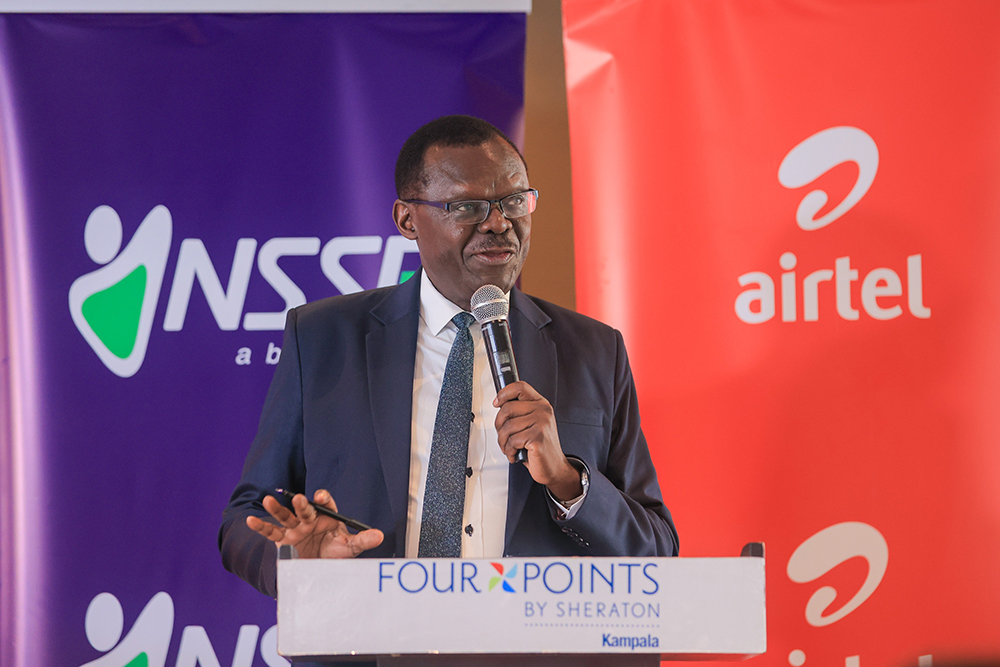
NSSF Managing Director Patrick Ayota pointed to three contributing factors: economic growth, the performance of East African stock markets, and currency appreciation.
BUSINESS AND ECONOMY
The biggest payout in the Fund's history
Uganda's National Social Security Fund (NSSF) has declared a record interest rate of 22.53 percent for the 2025/2026 financial year, crediting about Shs5.44 trillion to members' accounts. The figure is the highest in the Fund's roughly 40-year history and a sharp step up from the 13.5 percent declared for 2024/2025. It has dominated Uganda's business news over the past week, prompting celebration among savers and a wider debate about how the returns were generated and whether they can be repeated.
The numbers
Finance Minister Henry Musasizi announced the rate at the Fund's 14th Annual Members' Meeting, attributing the result to the good performance of the Fund. According to reporting by The Independent and others, the Fund's assets grew from about Shs26 trillion to about Shs32 trillion. Annual revenue rose 86 percent to Shs6.51 trillion. Member contributions increased 13 percent to Shs3.4 trillion, while payouts to qualifying savers reached Shs1.5 trillion.
The previous year's 13.5 percent rate translated into roughly Shs2.5 trillion in interest, so this year's interest bill is more than double. The Monitor reported that the rate significantly outperforms the 12 to 15 percent typically offered by competing pension schemes, and gave a striking example of the scale involved: the Fund's single biggest beneficiary received Shs2.14 billion in interest, which at 22.53 percent implies a balance of about Shs9.5 billion.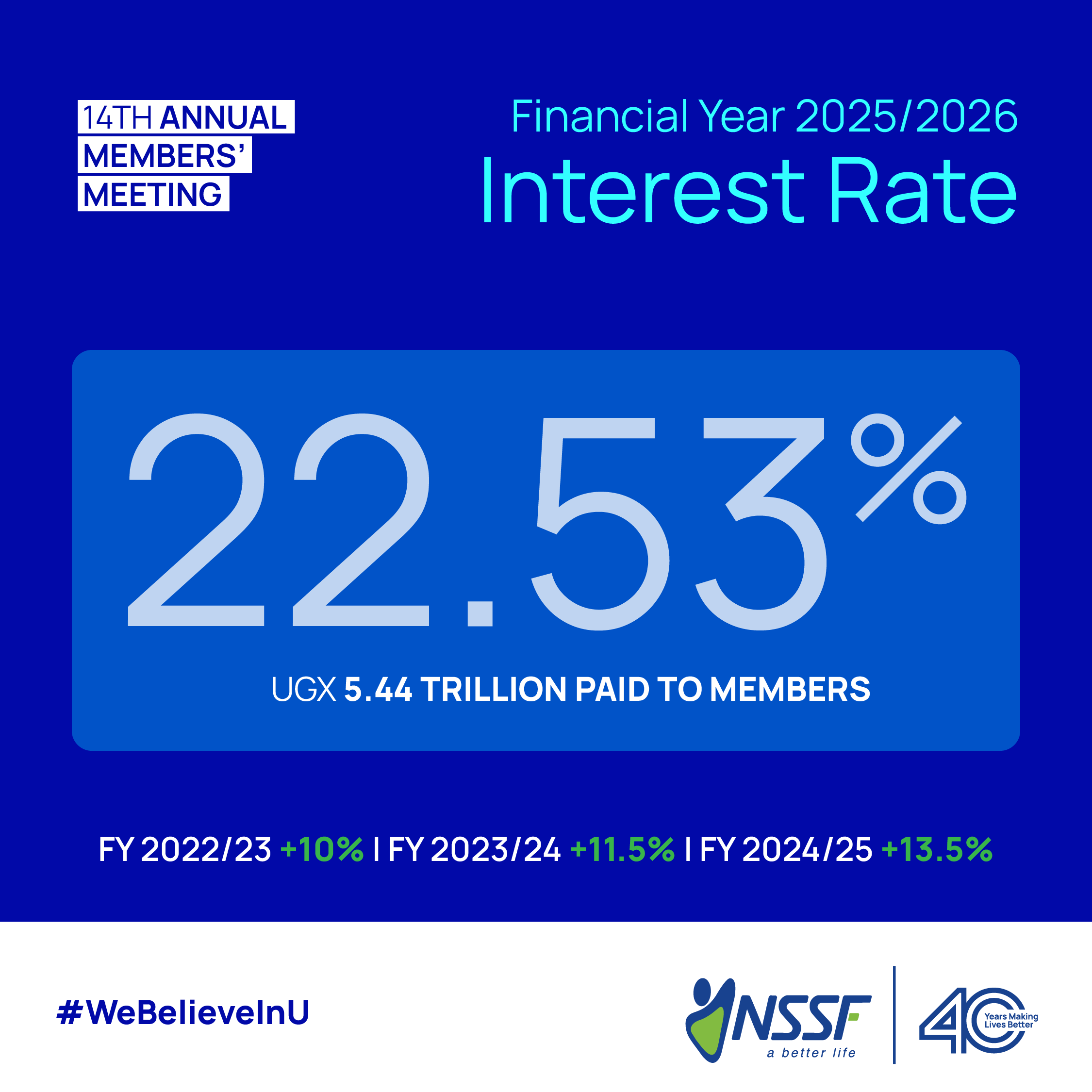
What management says drove it
NSSF Managing Director Patrick Ayota pointed to three contributing factors: economic growth, the performance of East African stock markets, and currency appreciation. Those explanations fit a year in which regional equities rallied, although they deserve some unpacking, as the next section shows.
The Fund also used the announcement to restate its long-term ambitions. It aims to expand active membership to 15 million by 2030, grow assets to Shs50 trillion by the same year, and reach Shs80 trillion by 2035. Given that assets now stand at roughly Shs32 trillion, the 2030 goal implies a further increase of more than half in four years.
Where did the money come from?
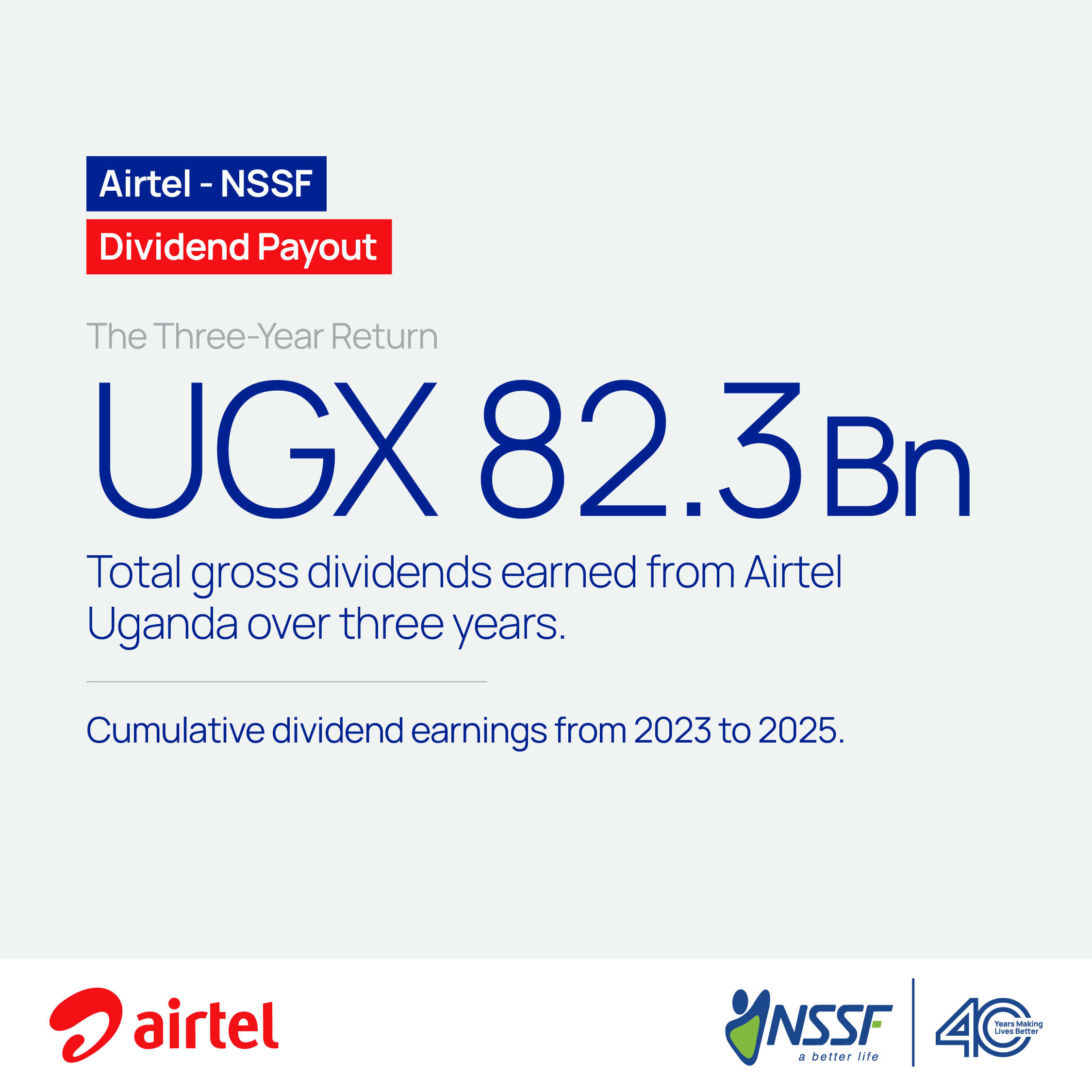
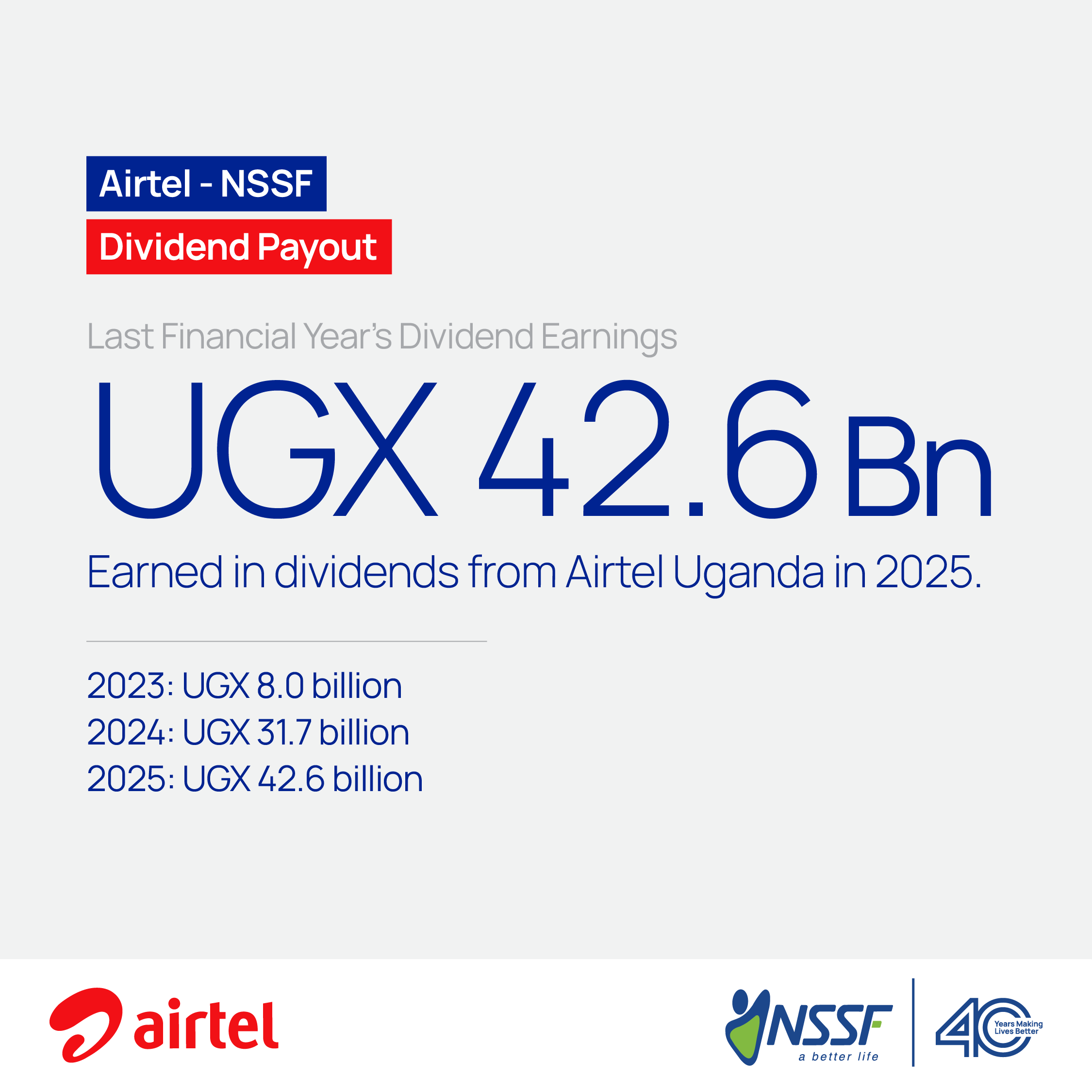
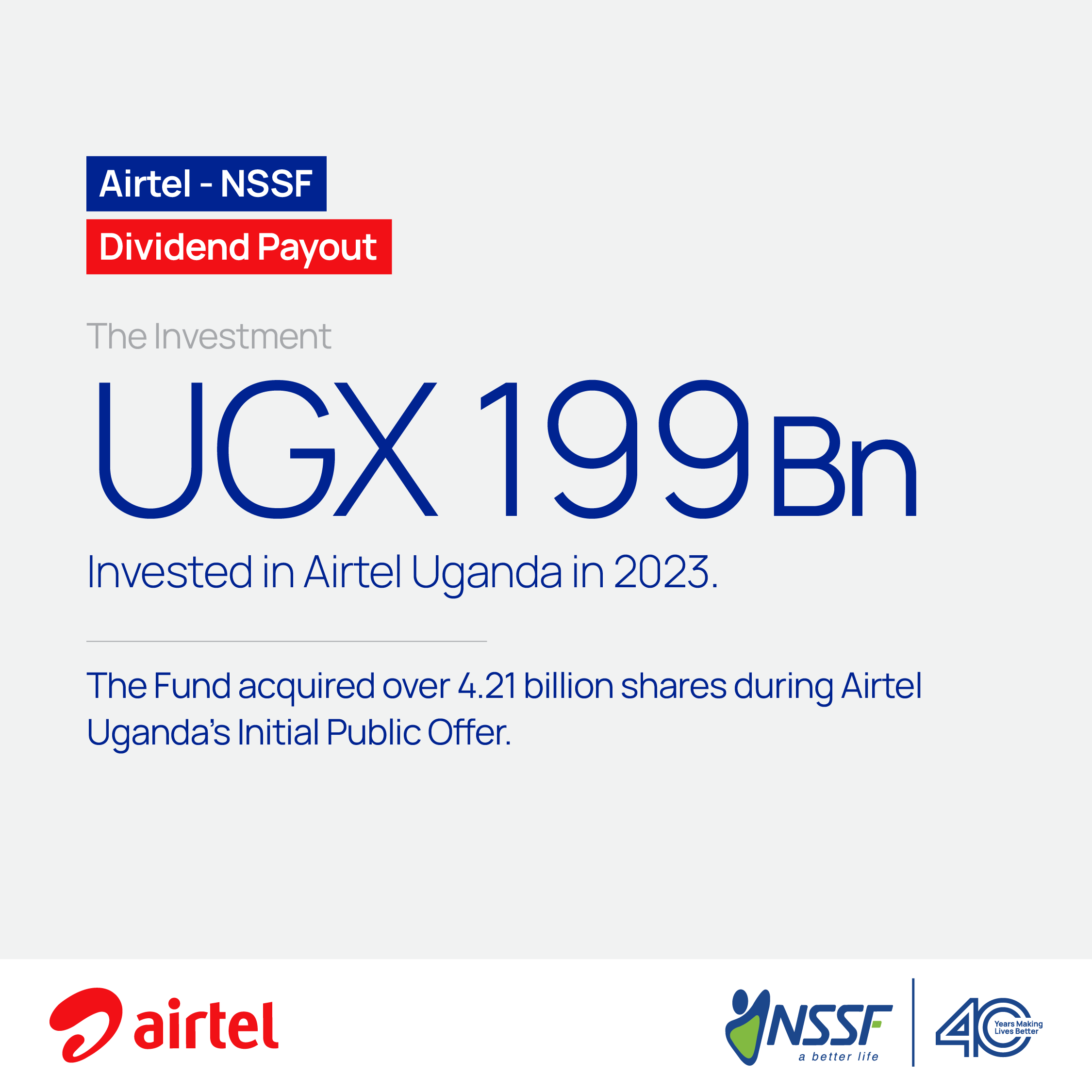
A widely shared analysis published by Pan African Visions, written by commentator Morrison Rwakakamba, breaks the Shs6.51 trillion in revenue into two parts. Roughly Shs3.9 trillion, it says, was realised cash income, generated mainly from sovereign bonds across East Africa and dividend-paying stocks such as MTN and Airtel. The remaining Shs2.6 trillion or more came from unrealised valuation gains, driven by regional stock market rallies and by a weaker Ugandan shilling that inflated the local-currency value of offshore holdings.
That split matters. Realised income is money the Fund actually received, while unrealised gains are paper profits that depend on market prices and exchange rates on the valuation date. The author warns that paper profits "can vanish as rapidly as market sentiment shifts or exchange rates rebalance," and argues that the Fund's future stability depends on its realised cash engine. He also highlights a paradox: a weaker shilling raises costs and inflation pressure for ordinary Ugandans while, at the same time, boosting the Fund's foreign assets on paper.
It should be noted that this breakdown comes from an opinion analysis rather than from the Fund's own audited statements as reviewed here, and its precise figures should be read as that author's interpretation. Note also that the management explanation of currency appreciation and the analyst's reference to a depreciating shilling appear to point in different directions, which is a reminder that the currency effect is one of the less clear parts of the story and will need scrutiny when full financial statements are published.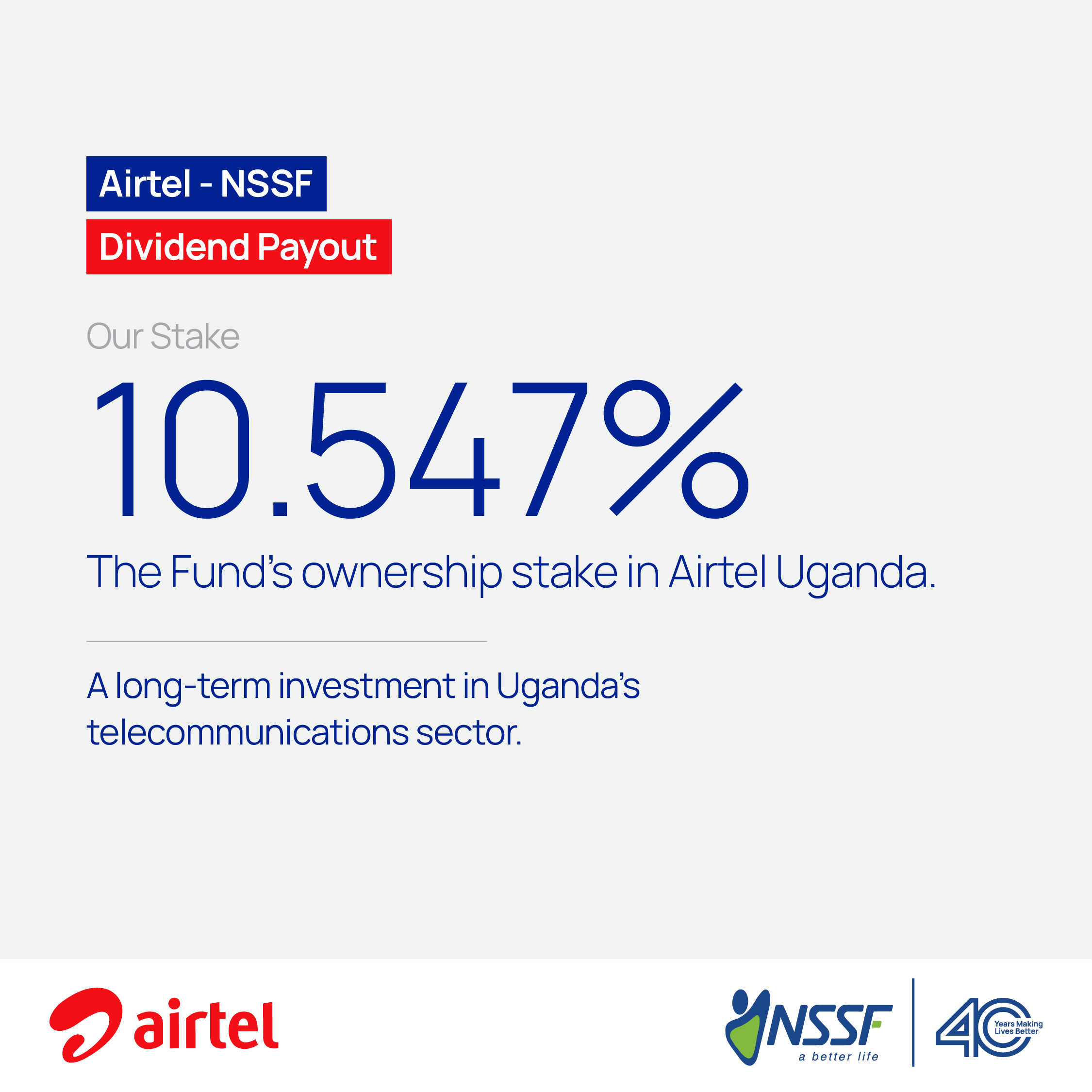
Who is affected
The most direct beneficiaries are the Fund's members, whose balances have been credited at the higher rate. Because the rate is applied to balances, the largest gains go to long-standing savers with big accounts, as the Shs2.14 billion example shows. Members who joined recently or contribute small amounts will see smaller absolute gains, although the percentage is the same.
Wider effects are possible. A 22.53 percent return sets a high benchmark for competing retirement schemes and for other savings products. It may also increase public interest in formal savings and support the Fund's goal of widening membership, particularly if it encourages workers in the informal sector to see NSSF as a worthwhile place to save. The Fund is also one of the largest institutional investors in Uganda's capital markets, so its asset allocation decisions influence government bond yields and listed company valuations.
Why it matters
For households, the headline is simple and welcome: retirement savings grew by more than a fifth in a year when many Ugandans faced cost-of-living pressure. For policymakers and investors, the more interesting question is sustainability. A rate of 22.53 percent is exceptional by any standard, and the 13.5 percent of the previous year shows how much returns can vary from one year to the next. If a large share came from market rallies and currency movements, then next year's declared rate could be much lower without any failure of management. Savers who plan around this year's figure may be disappointed.
There is also a governance dimension. Because the Fund's declared rate is determined by the minister on the basis of the Fund's performance and is closely watched politically, the gap between realised and unrealised income is important for how much of the surplus is distributed and how much is retained as a buffer. The analysis quoted above recommends reinforcing fixed-income anchors, disciplined hedging of foreign-exchange exposure, new savings vehicles for the informal sector, and channelling reserves into infrastructure through inflation-linked bonds rather than direct equity risk. These are the author's recommendations, not Fund policy, but they frame the debate.
What to watch next
Observers will be looking for the Fund's detailed annual report and audited accounts, which should confirm the split between realised and unrealised income and the asset-class breakdown. They will also watch regional equity markets and the shilling, since both feed directly into next year's performance. Another point is how the Fund pursues its target of 15 million active members and Shs50 trillion in assets by 2030, and whether it does so while maintaining a prudent investment mix. Finally, the reaction of competing pension schemes and of regulators to the new benchmark will show whether this record rate reshapes expectations across the sector.
For the moment, the record rate is a real benefit to millions of savers. Whether it is a one-off or the start of a new normal will depend on factors largely outside the Fund's control.