Written By | Business Experts
Ownership of Chad’s upstream oil assets remains contested in ways that add further uncertainty
N’Djamena has spent the past eighteen months trying to prove that Chad can be more than a cautionary tale about oil dependence, debt distress, and fragility. A political transition that concluded in early 2025 gave way to a new National Development Plan running through 2030, a fresh four-year International Monetary Fund program, and a cautious return of donor confidence. Yet the country’s macroeconomic story is now inseparable from a humanitarian one: the civil war in neighboring Sudan has pushed more than a million people across Chad’s eastern border since April 2023, straining a state that was already among the world’s poorest and most climate-exposed. Chad’s 2026 trajectory illustrates a broader Sahelian pattern — modest hydrocarbon-driven growth on paper, undercut by demographic shocks, fiscal fragility, and a widening gap between resource wealth and household welfare.
A Modest Growth Path Built on Oil and Fragile Non-Oil Activity
According to World Bank projections aligned with African Development Bank assessments, Chad’s GDP growth is expected to average 3.9% (about 1.2% per capita) over 2026–27, while non-oil GDP — the segment that actually reaches most households — is forecast to grow more slowly, around 3.5% in both 2026 and 2027. The World Bank attributes the softening of non-oil activity to global headwinds and reduced public spending, itself a function of lower fiscal oil revenues. Oil remains the dominant swing factor in Chad’s public finances: crude production, anchored by the Doba basin fields developed originally under the Chad-Cameroon pipeline consortium, is expected to rise gradually and peak around 2030, but oil-related revenues are assumed to follow a U-shaped price trajectory, declining through 2025 and 2026 before a partial recovery. That volatility leaves the budget exposed to global price swings at precisely the moment the country is trying to rebuild fiscal buffers.
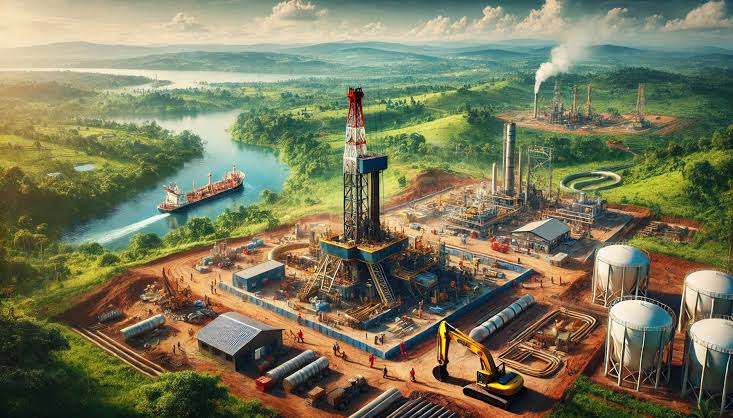
Ownership of Chad’s upstream oil assets remains contested in ways that add further uncertainty. After ExxonMobil sold its 40% stake in the Doba project — spanning seven producing fields with combined output around 28,000 barrels per day, plus the export pipeline and terminal infrastructure — to UK-based Savannah Energy in a deal that closed in 2022, the Chadian government moved to nationalize the acquired assets, triggering international arbitration that has kept a meaningful share of the country’s oil infrastructure in legal limbo. TotalEnergies, China National Petroleum Corporation, and Chevron remain the other principal operators in a sector analysts expect to grow at a compound annual rate of roughly 5% through the early 2030s, even as the Savannah dispute underscores the political risk still attached to Chad’s single most important export.
A New IMF Program and the National Development Plan
On July 25, 2025, the IMF Executive Board approved a new 48-month arrangement under the Extended Credit Facility worth SDR 455.65 million — about US$625 million, or 325% of Chad’s quota — with an immediate first disbursement of SDR 28.04 million (roughly US$38.5 million). The Fund had reached staff-level agreement two months earlier, in May 2025, and framed the program around three pillars: restoring sustainable fiscal policy and creating space to finance the government’s National Development Plan 2025-2030; increasing targeted social spending to support inclusion; and improving governance and the business climate to underpin more balanced, private-sector-led growth. The IMF was explicit about the backdrop: Chad faces “substantial financing pressures from more volatile oil prices, unprecedented refugee and food security crises, in the context of diminishing donor support,” even as the authorities have pledged macroeconomic stability following the conclusion of the political transition.
That new ECF arrangement sits on top of an older and still-unresolved debt overhang. A November 2022 restructuring agreement covered roughly US$3 billion of Chad’s external debt, more than a third of it commercial debt owed predominantly to commodity trader Glencore. The IMF’s debt sustainability analysis continues to rate the risk of external debt distress as “high” until the government fully implements its economic program and builds adequate buffers. A particular pressure point lies ahead in 2027 and 2028, when debt service is set to rise again because of a postponed Glencore repayment schedule baked into the 2022 restructuring — a reminder that the relief Chad negotiated three years ago bought time rather than a permanent fix.
The Sudan Crisis Has Become an Economic Shock, Not Just a Humanitarian One
The single largest disruption to Chad’s 2026 outlook is not commodity prices but conflict next door. As of January 2026, estimates put the number of refugees who have crossed from Sudan into Chad above 1.5 million; as of September 2025, more than 1.2 million displaced people — Sudanese refugees, Chadian returnees, and other nationals fleeing the war — had sought refuge in eastern Chad, a region that was already hosting roughly 400,000 Sudanese refugees before the current conflict began. The International Organization for Migration’s Chad Crisis Response Plan for 2025-2026 and parallel UNHCR operations describe an influx that has overwhelmed public services, disrupted local markets, and cut into agricultural production in the areas most affected — precisely the kind of shock that converts a humanitarian emergency into a measurable drag on GDP and household income.
The welfare numbers reflect that strain. The World Bank projects Chad’s poverty rate will rise by 0.8 percentage points to 45.4% in 2026, with roughly 9.5 million people living in extreme poverty; extreme poverty is projected to climb further, to 47.6%, in 2027. Food insecurity compounds the picture: almost one in six people in Chad — about 3 million — were expected to face severe food insecurity during the June-to-August 2026 lean season. Chad also ranks among the seven most climate-vulnerable countries globally, and along with Niger it is projected to see the sharpest poverty increases among the G5 Sahel countries as rainfall variability and desertification erode already-thin agricultural margins.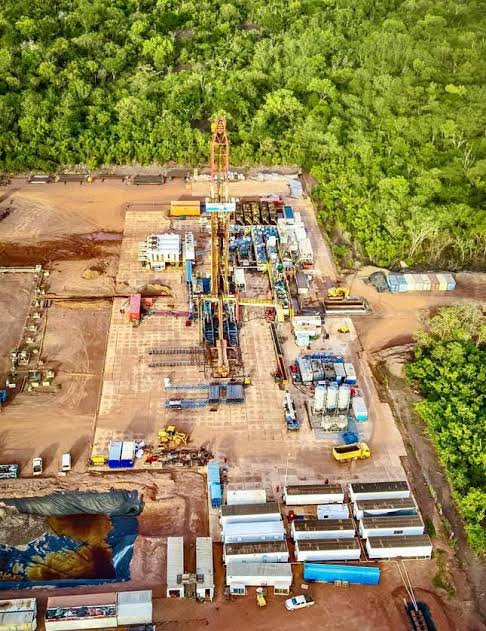
A Regional Response Through the World Bank’s Sahel Push
Multilateral institutions have responded with an unusually large regional financing push. In April 2026 the World Bank Group launched a new Country Partnership Framework covering Burkina Faso, Chad, Mali, and Niger jointly, explicitly designed around jobs, growth, and resilience in a cluster of fragile Sahelian states. That framework builds on the Sahel Adaptive Social Protection Program, which channels support into productive-inclusion and shock-responsive safety-net programs in Chad and its neighbors, and sits within a wider envelope the World Bank describes as a record US$8.5 billion in Sahel financing aimed at addressing the deep-seated causes of regional fragility rather than treating each national crisis in isolation. Whether that scale of financing translates into measurable poverty reduction will depend heavily on implementation capacity in a government still consolidating from its 2025 political transition.
Outlook
Chad’s 2026 story is one of institutions trying to outrun events. The IMF program, the National Development Plan, and the new regional Country Partnership Framework all represent a coherent policy response to fiscal fragility and debt overhang. But growth of under 4% and a rising poverty rate mean that on current trends, ordinary Chadians are not getting materially better off even as oil output edges toward its 2030 peak. The country’s near-term trajectory will likely be decided less by Doba’s output curve than by two variables largely outside N’Djamena’s control: how long the Sudan war continues to push refugees across the eastern border, and whether global oil prices recover enough to ease the fiscal squeeze before the deferred Glencore repayments come due in 2027.