Written By |
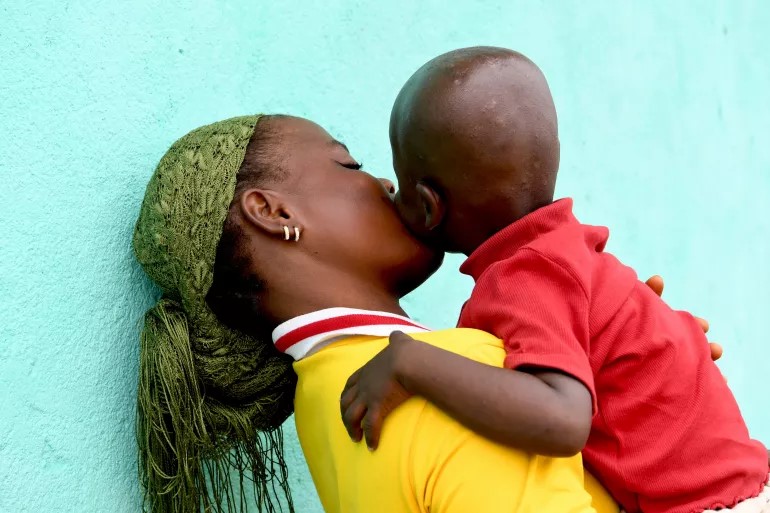
In 2013, about 120,000 children aged 0-14 years were infected with HIV. (UNICEF Photo)
Uganda is making remarkable strides in protecting children from HIV, according to a new report by the Global Alliance for Ending AIDS in Children by 2030. The report, titled "Transforming Vision into Reality," applauds Uganda for ensuring that all babies are born HIV-free and that children living with HIV receive treatment.
The report highlights Uganda's nearly 100% coverage of antiretroviral therapy (ART) for pregnant and breastfeeding women living with HIV. Tanzania follows with 98% coverage, and South Africa with 97%. Other countries with significant coverage include Mozambique (90%), Zambia (90%), Angola (89%), Kenya (89%), Zimbabwe (88%), and Côte d'Ivoire (84%).
Despite these advancements, the report underscores gaps in pediatric HIV treatment. It notes that programs targeting vertical transmission of HIV have prevented four million infections among children aged 0-14 years since 2000. Globally, new HIV infections among children in this age group have declined by 38% since 2015, and AIDS-related deaths have decreased by 43%.
UNAIDS Executive Director Winnie Byanyima praised the progress in rolling out HIV services to protect babies and children from HIV. She emphasized the importance of increasing treatment and prevention efforts to reach all children. "We cannot rest on our laurels. The death of any child from AIDS-related causes is a tragedy and an outrage," she said.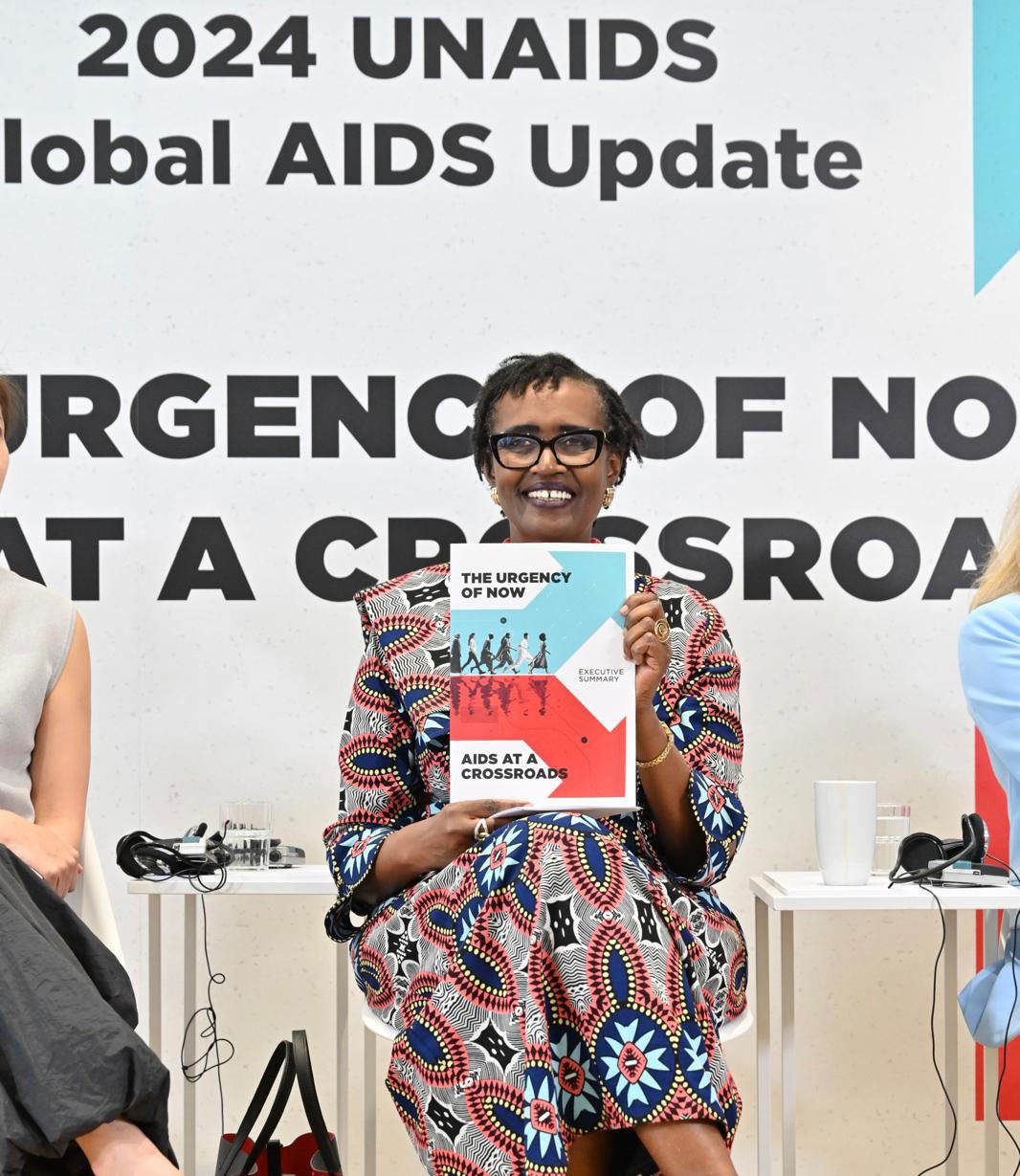
Winnie Byanyima praised the progress in rolling out HIV services to protect babies and children from HIV
(UNAIDS Global Photo)
The Global Alliance for Ending AIDS in Children by 2030, which includes 12 member states such as Uganda, is working to overcome barriers and accelerate progress. However, the world and the Alliance countries are not yet on track to achieve HIV-related commitments for children and adolescents. The progress in preventing new HIV infections and AIDS-related deaths among children has slowed in recent years.
WHO Director-General Tedros Adhanom Ghebreyesus acknowledged the commitment of the 12 countries to overcoming HIV but stressed the need for further collaboration and focus. In 2013, about 120,000 children aged 0-14 years were infected with HIV, with 77,000 of these new infections occurring in Global Alliance countries. AIDS-related deaths in this age group totaled 76,000 globally, with 49,000 occurring in Global Alliance countries.
In Uganda, efforts to address mother-to-child HIV transmission have been intensified. In 2023, an estimated 4,700 children were infected, mainly by their HIV-positive mothers. The Ministry of Health statistics show that most new infections occur among children of mothers who acquire HIV during pregnancy or breastfeeding and remain unaware of their status. To address these challenges, the government and partners launched a national campaign in July 2023 to end mother-to-child HIV transmission.
The campaign includes repeated HIV testing for mothers throughout pregnancy and breastfeeding, offering HIV prevention options such as pre-exposure prophylaxis (PrEP), and increasing HIV testing and prevention information and services for adult men.
Dr. Vincent Bagambe, the Director of Planning and Strategic Information at the Uganda AIDS Commission (UAC), highlighted the national HIV and AIDS Strategic Plan's aim to have 95% of all people living with HIV tested and those identified as HIV-positive initiated on treatment. Priority is given to children and other population groups not benefiting maximally from advances in HIV treatment, prevention, and care.
As of December 2023, there were 72,000 children (0-14 years) living with HIV in Uganda, with only 83% aware of their status, 77% accessing ART, and 63% achieving viral load suppression. Key gaps remain in pediatric HIV care, including identifying all HIV-positive children and linking them to treatment, and having sufficient skilled health workers to manage pediatric HIV.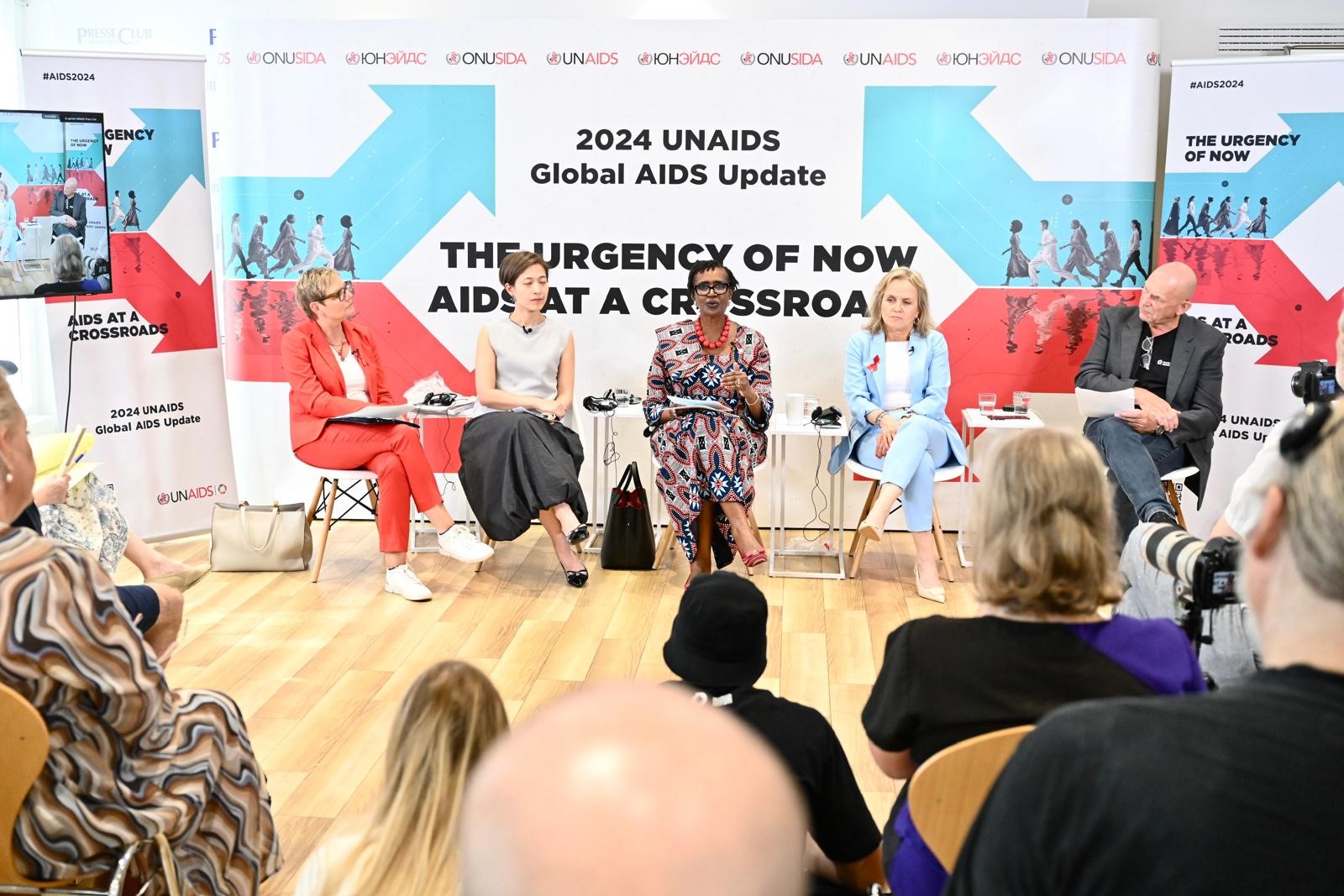
Byanyima emphasized the importance of innovative technologies like lenacapavir to save lives
(UNAIDS Global Photo)
Various initiatives have been launched to ensure early HIV testing and access to treatment for children. These include better formulations and medications for children, multi-modality HIV testing programs, and training health workers in lower health facilities to manage pediatric HIV. The UAC is working with the Ministry of Health and other partners to roll out the 'Munonye' children's HIV Campaign, aiming to identify 80% of the unrecognized children and adolescents and link 95% of them to care and treatment.
Peter Sands, Executive Director of the Global Fund to Fight AIDS, Tuberculosis, and Malaria, emphasized the importance of doing better for children in the fight against HIV. The Global Fund supports national programs by procuring the latest pediatric treatment regimens and investing in laboratory systems to ensure rapid testing and treatment initiation.
UNICEF Associate Director for HIV/AIDS, Anurita Bains, highlighted the need for innovative testing approaches and ensuring children and adolescents receive treatment. She noted that only 57% of children living with HIV receive lifesaving treatment compared to 77% of adults.
In 2023, there were 210,000 new infections globally among young women and girls aged 15-24 years, with 130,000 in Global Alliance countries. This is four times higher than the 2025 goal of 50,000. Preventing new infections in this age group is critical to protecting their health and reducing the risk of new infections among children. Gender inequalities and human rights violations increase women's vulnerability to HIV and hinder their access to essential services.
The Global Alliance for Ending AIDS in Children by 2030, launched in 2022 by WHO, UNICEF, and UNAIDS, aims to reinvigorate the pediatric HIV agenda.
Torch Media Africa



