Written By | Fashion and Design Desk
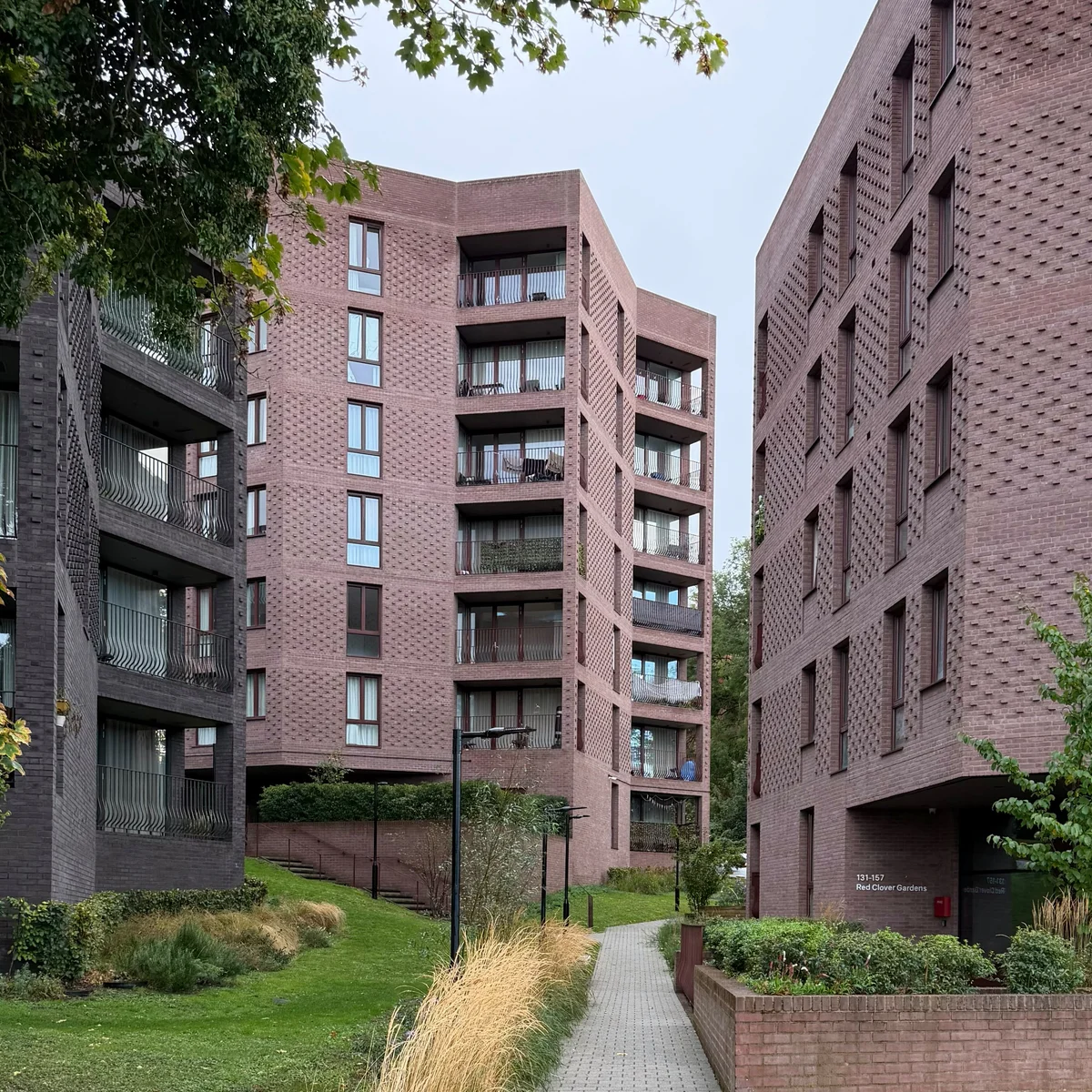
A 157-home scheme on a former car park in Coulsdon beat Renzo Piano, Haworth Tompkins and Clare College to become the UK's best new building.
LONDON
In a year when the shortlist included a Renzo Piano tower-and-plaza complex and a new wing at an ancient Cambridge college, the winner of the 2026 RIBA Stirling Prize is, by design, modest in ambition and generous in intent: council housing on a former car park in south London.
Lion Green Road in Coulsdon, designed by Mary Duggan Architects with RUFF Architects, was named the UK's best new building on October 15, 2026. The Architects' Journal called it a 'council-built long shot,' and Dezeen described it as 'welcoming and inclusive.' The jury chair, RIBA President Chris Williamson, said the scheme proves that 'density can be achieved without compromising the quality of the places we create,' and called it a 'living landscape,' according to RIBA.
What was built
The project replaces a former car park on a sloping site that varies in height by eight metres. It comprises 157 homes across five blocks, mixing private and social rented housing, and is home to about 635 residents. Commissioned by the London Borough of Croydon, it is a reminder that local authorities, long written off as housebuilders, can still deliver ambitious architecture.
The five blocks share the same construction specification but are rotated and positioned to respond to the terrain and the views, including toward the Surrey Iron Railway, an early public railway. Every home is dual-aspect, meaning it has windows on at least two sides, which improves daylight and cross-ventilation. Balconies are placed to limit overlooking between neighbors. Outside, the scheme includes shared outdoor space, a public pathway, play areas, a sensory trail and allotments.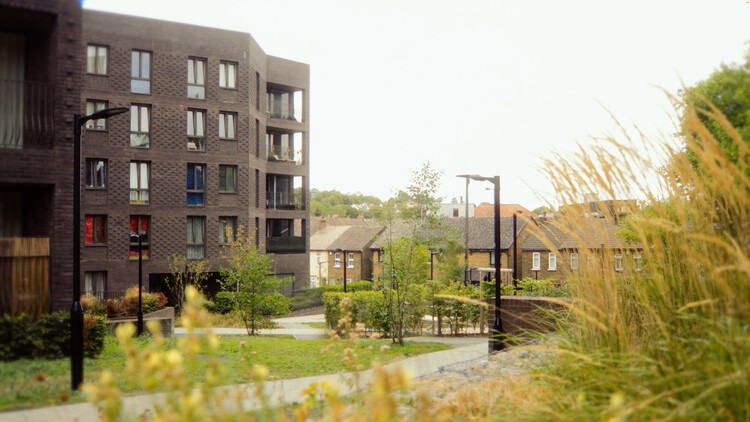
The competition
The shortlist was formidable. It featured a house at Fairmead in Epping Forest by Sergison Bates; BEAM in Hertfordshire by Bennetts Associates; Paddington Square by Renzo Piano Building Workshop with Adamson Associates; Pembroke, Mill Lane by Haworth Tompkins; and River Wing at Clare College by Witherford Watson Mann Architects.
Against that field, a housing scheme could look like the underdog, and the trade press said as much. Construction Enquirer noted that the scheme was built by CField. Yet the Stirling Prize has a history of rewarding projects that shift conversations, and few conversations in British architecture are more pressing than how to build more homes without building worse places.
Why the jury's language matters
Williamson's emphasis on density is pointed. In the UK, the word often triggers resistance, associated with cramped flats and tall blocks. Lion Green Road is an argument that compactness and quality are compatible when form, landscape and circulation are carefully considered. Rotating identical blocks to suit a slope, ensuring every home has two aspects, and giving residents allotments and a sensory trail are design decisions rather than extras; they are what turns units into neighborhood.
The phrase 'living landscape' also points to a shift in how housing is judged. A good scheme is no longer only about the apartments; it is about the spaces between buildings, how they are used and who feels welcome in them. A public pathway threaded through a development, rather than a gated perimeter, is a statement about openness.
A council win in context
Councils building directly at scale has been a recurring theme in housing policy debates. A prize-winning council project gives advocates something concrete to point to: evidence that public clients can commission, and architects can deliver, housing that is both affordable in tenure and ambitious in design. It does not erase the funding and planning challenges that local authorities face, but it changes the tone of the argument.
The mix of private and social rented homes also deserves attention. Mixed-tenure schemes are sometimes criticized when the tenures are visibly segregated. Based on the jury's praise for inclusivity, Lion Green Road appears to have avoided that trap, though the sources reviewed here do not detail how tenures are distributed across the blocks.
What this means for you
The prize also lands at a moment when the profession is reflecting on its social role. Winners are judged on architectural quality, the contribution to the local environment, and the experience of those who use the building, which gives a housing scheme as legitimate a claim as any gallery or campus. That the jury chose homes for around 635 people over a landmark commission is, in itself, a statement of values.
You do not need to live in Coulsdon to feel the effects. If you rent or buy in a new development, the Stirling Prize offers a checklist for what to look for: dual-aspect homes, usable outdoor space, a layout that responds to the site instead of ignoring it, and public routes that connect rather than wall off. These qualities affect daily life far more than finishes.
If you follow local politics, the result is also a useful reference point when your own council discusses brownfield sites such as car parks. The question becomes not only whether to build, but what a high-quality scheme could look like.
The bigger picture
Awards reflect the moment in which they are given. The Stirling Prize has gone to museums, libraries, schools and, occasionally, housing. This year's choice signals that the profession sees housing delivery and place quality as its central challenge. Mary Duggan Architects and RUFF Architects have shown that a constrained, sloping, formerly car-dominated site can become a landscape-led community.
Whether other councils and developers follow is the real test. Prizes provide visibility, but replication requires clients with patience, budgets with room for quality, and planning systems that reward the same. For now, Lion Green Road stands as proof of concept, and as a reminder that the best new building in the country this year is, above all, somewhere people live.



