Written By | Our Reporter

Igara West Contestants
Bushenyi
Despite sitting on vast tea estates, rich forests, and gold deposits, Igara West remains one of Bushenyi District's most underdeveloped constituencies. From Bitooma to Kakanju, residents speak of broken roads, collapsing health centres, and schools with little to offer their children—conditions they blame on years of weak political representation and unfulfilled promises. As the 2026 elections approach, frustration is steadily turning into a demand for accountability.
In Bitooma Town Council, one of the poorest areas in the district, long lines of trucks ferry green leaf to more than six tea factories scattered across the hills of Igara West. Just a few kilometres away, artisanal miners descend into shallow gold pits, hoping for a rare strike. Yet, despite the wealth above and below the ground, Igara West remains trapped in poverty, underdevelopment, and what many residents describe as "decades of political abandonment."
"Igara West has everything it needs to prosper, but people here remain poor," says Muhwezi Katuramu, a resident in Kyamuhunga Town Council. "The problem is not the land; it is leadership."
A Land of Tea, Gold, and Forests With Little to Show
Igara West is among the few constituencies in western Uganda endowed with both gold deposits and expansive tea plantations. Several factories in the area buy millions of kilograms of green leaf from smallholder farmers each month. Beyond tea and gold, the constituency hosts significant forest resources. Parts of Kyamuhunga Town Council border Karinju Forest, while the Kasyoha–Kitomi Forest Reserve stretches into Bitooma. These forests offer biodiversity, timber, and eco-tourism potential, yet communities say the benefits rarely reach them.
But for farmers, the rewards no longer match the sacrifice. The farm-gate price for green leaf has dropped to Shs 320 per kilogram, down from about Shs 600 in 2023, even as costs of fertilizers, labour, and transport continue to climb. "Things are getting worse," says a farmer in Kyamuhunga. "A farmer cannot survive on Shs 320. Factories are making money, but we are not."
During the recent Bushenyi District Budget Conference, it was revealed that the district's overall poverty level stands at 12.8 percent. Bitooma leads with 22.2 percent, followed by Kakanju at 21.3 percent and Kyamuhunga at 16.3 percent—all within Igara West.
Muramuzi Cryton, a tea harvester in Bitooma, laments the mismatch between industry growth and community welfare. "We have more than five factories here, but you don't see development," he says. "A harvester earns about Shs 140 per kilogram. Our children study in poorly equipped schools, and the roads are terrible."
Across Bitooma, Kyamuhunga, and Kakanju, residents describe a "paradox of plenty": wealth all around, yet households remain poor.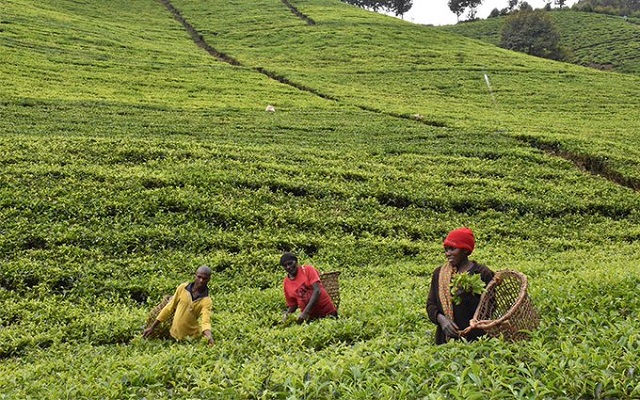
Gold With No Community Benefit
Igara West is also rich in gold, particularly in Kyanyamugiira, Nyakazinga, and Mirambi villages in Kashambya Ward. Yet many residents say this mineral wealth has not translated into local development.
"There is gold here, but nothing has changed in our lives," says a miner in Bitooma. "No jobs, no compensation, no better roads. We only hear about investors, but we don't see benefits."
Adrine Ainomugisha, a resident of Mirambi, accuses some investors of exploiting the area.
"They extract gold from our land, but they don't support the community in any way," she says. "The pits they leave behind are dangerous. Children have fallen into some of them."
Local leaders accuse both investors and government agencies of failing to regulate the mining value chain to ensure communities benefit.
In parts of Bitooma and at Kahungye in Nyabubare Sub-county, electric poles have stood for years without power lines—a visible reminder of development promises that never materialized.
Some community members blame their Member of Parliament, Louis Gaffa Mbwatekamwa, for weak representation and failing to secure essential services such as electricity, roads, safe water, and health facilities. He did not seek another term in Parliament.
Local leaders say Igara West has suffered from "years of weak parliamentary advocacy," widening the development gap between it and other constituencies in Bushenyi.
A High-Stakes Political Contest Ahead of 2026
As the 2026 elections draw near, Igara West has become a high-stakes battleground.
In the NRM primaries held on 17 July 2025, the main contenders were Amanya Cohen Kyampene and Tugume Boniface, among others. Amanya won the party flag with 24,097 votes (47.4%), while Tugume came second with 18,362 votes (36.1%). Tugume has since filed a petition with the NRM Tribunal, alleging bribery and voter intimidation.
During his campaign, Amanya Cohen promised to improve access to clean water, expand rural electrification, and "restore confidence in leadership."
Another aspirant, Horas Muhabuzi (Independent), pledged to prioritize education by upgrading school infrastructure and providing adequate learning materials. He also vowed to extend electricity to underserved villages. Meanwhile, Tugume Boniface, now running as an independent, emphasized the urgent need for a national tea policy to regulate quality, stabilize prices, and protect smallholders. During door-to-door campaigns in Kyanyamugiira, Bitooma Town Council recently, he also raised concerns about deteriorating health services in the constituency, especially in Nkanga Sub-county and Kizinda-Kigoma.
He says he previously constructed a health facility in Nkanga, "but the government has not staffed or stocked it," rendering it non-functional.
In Kanyegyero Village, Nkanga Sub-county, residents travel long distances for medical care.
"We walk 10 kilometres to Nyabubare or 15 kilometres to Ishaka for basic treatment," says resident Kyogabirwe Angelika. "When a child falls sick at night, it becomes a matter of life and death."
Farmers also complain of delayed payments from some factories.
"Sometimes you deliver tea and wait weeks or even months to be paid," says a farmer in Kakanju. "How can we survive like that?"
Torch Media Africa



