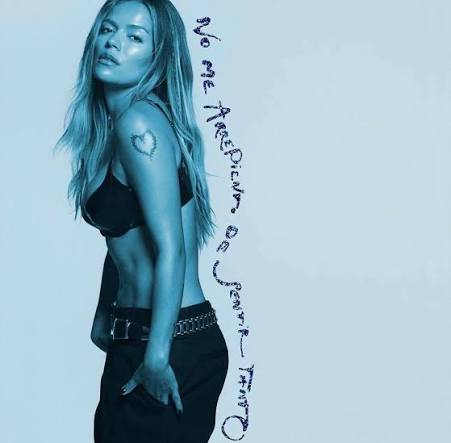
Karol G has built a career on turning big feelings into bigger hits, but her newest album asks listeners to sit with the feelings a little longer before the beat drops. "No Me Arrepiento de Sentir Tanto" — roughly, "I Don't Regret Feeling So Much" — arrived on streaming platforms August 7 via Bichota Records and Interscope, and it has already become the week's most talked-about Latin music release, topping Billboard's reader poll for best new music with more than 62 percent of the vote.
The album's title doubles as its thesis statement. Where past Karol G eras have often processed heartbreak on the way to triumphant reinvention — think the empowerment anthems that made her one of the biggest global pop stars of the decade — this project does something different. It lingers. It's about choosing to wallow, deliberately and without apology, in the aftermath of a relationship ending, and finding a strange new kind of power in that choice rather than rushing toward the next chapter.
A Solo Trip, A New Sound
Karol G has said the record was written partly during a solo trip to Hawaii, a detail that shapes the album's emotional geography as much as its sound. Across 14 tracks, the Medellín-born artist moves between heart-wrenching balladry, dreamy glam pop, reggaetón, electronic textures and Afrobeats influences — a genre-hopping approach that has become something of a signature for an artist who has never confined herself to a single lane. It's the sound of someone processing in real time rather than performing a tidy emotional arc for the listener's benefit.
The featured artists reinforce that sense of range. Drake and Bruno Mars both appear on the tracklist, alongside a trio of rising names — Judeline, Rusowsky and Greg Gonzalez — whose inclusion signals Karol G's continued interest in cross-pollinating with artists outside the mainstream Latin pop circuit. She revealed the project, cover art included, during a concert stop at Toronto's Rogers Stadium, turning the announcement itself into a moment for her touring fanbase before the wider public had heard a single note.
Chart Performance and Early Reception
The commercial signals arrived fast. "Matadora," one of the album's key tracks, debuted at No. 3 on the Billboard Hot Latin Songs chart dated August 8 — a strong first-week showing that suggests the record's more intimate approach hasn't cost Karol G any of her chart-topping instincts. Critics have largely framed the album as her most vulnerable to date. Rolling Stone's review highlighted the record's willingness to sit in discomfort rather than resolve it, while outlets like Billboard have praised the production's emotional range, noting how the album swings between devastating ballads and moments of defiant, danceable release without ever feeling disjointed.
That combination — critical acclaim paired with immediate chart traction — is not a given in an era when streaming numbers and critical consensus often diverge sharply. For Karol G, whose 2023 album "Mañana Será Bonito" became the first all-Spanish-language album by a woman to hit No. 1 on the Billboard 200, the stakes were always going to be high. "No Me Arrepiento de Sentir Tanto" doesn't chase that same commercial blueprint. Instead, it bets that audiences are ready to follow her into quieter, harder emotional territory — and early numbers suggest that bet is paying off.

What Makes This Album Different
What distinguishes "No Me Arrepiento de Sentir Tanto" from the broader wave of post-breakup records that flood the market every year is its refusal to offer easy catharsis. Pop music has a long tradition of turning heartbreak into triumph — the empowerment anthem that arrives at the end of the album to reassure listeners that everything worked out fine. Karol G's new record resists that impulse. It treats sadness not as a phase to be survived on the way to something better, but as a legitimate, even valuable, state to inhabit. That's a subtly radical position for an artist operating at her level of visibility, where the commercial incentives typically push toward uplift and resolution.
It also reflects a broader shift happening across Latin pop, where artists increasingly draw on genre elements — from electronic production to Afrobeats rhythms — without treating those influences as novelties. Karol G has long positioned herself at the center of that shift, and this album continues to expand her range rather than settle into a formula.
Why This Matters Beyond the Charts
For casual listeners, the appeal is straightforward: a major pop star with global reach putting out an album stacked with A-list collaborators and radio-ready singles. But there's a broader cultural note worth flagging here too. As one of the most streamed artists in the world, Karol G's choices about what stories to tell — and how honestly to tell them — carry outsized influence on what mainstream pop music is allowed to sound and feel like. An album that explicitly refuses to "get over it" quickly, released by an artist with her commercial power, sends a signal to the rest of the industry about what audiences will actually embrace.
It's also, on a simpler level, a genuinely good listen for anyone processing their own version of the same feeling — the sense that healing doesn't move in a straight line, and that sitting with sadness isn't a failure of resilience but sometimes just the honest thing to do.
The Road Ahead
With "Matadora" already charting and the album racking up streams since its August 7 release, Karol G shows no signs of slowing her pace as one of the defining pop stars of this decade. Whether "No Me Arrepiento de Sentir Tanto" produces the kind of monster crossover single that defined earlier eras of her career remains to be seen, but its early reception suggests she didn't need one to make an impact. Sometimes the boldest move a pop star can make isn't chasing the biggest hit — it's trusting that honesty will find its own audience.
Published By | Entertainment Editor