ADDIS ABABA
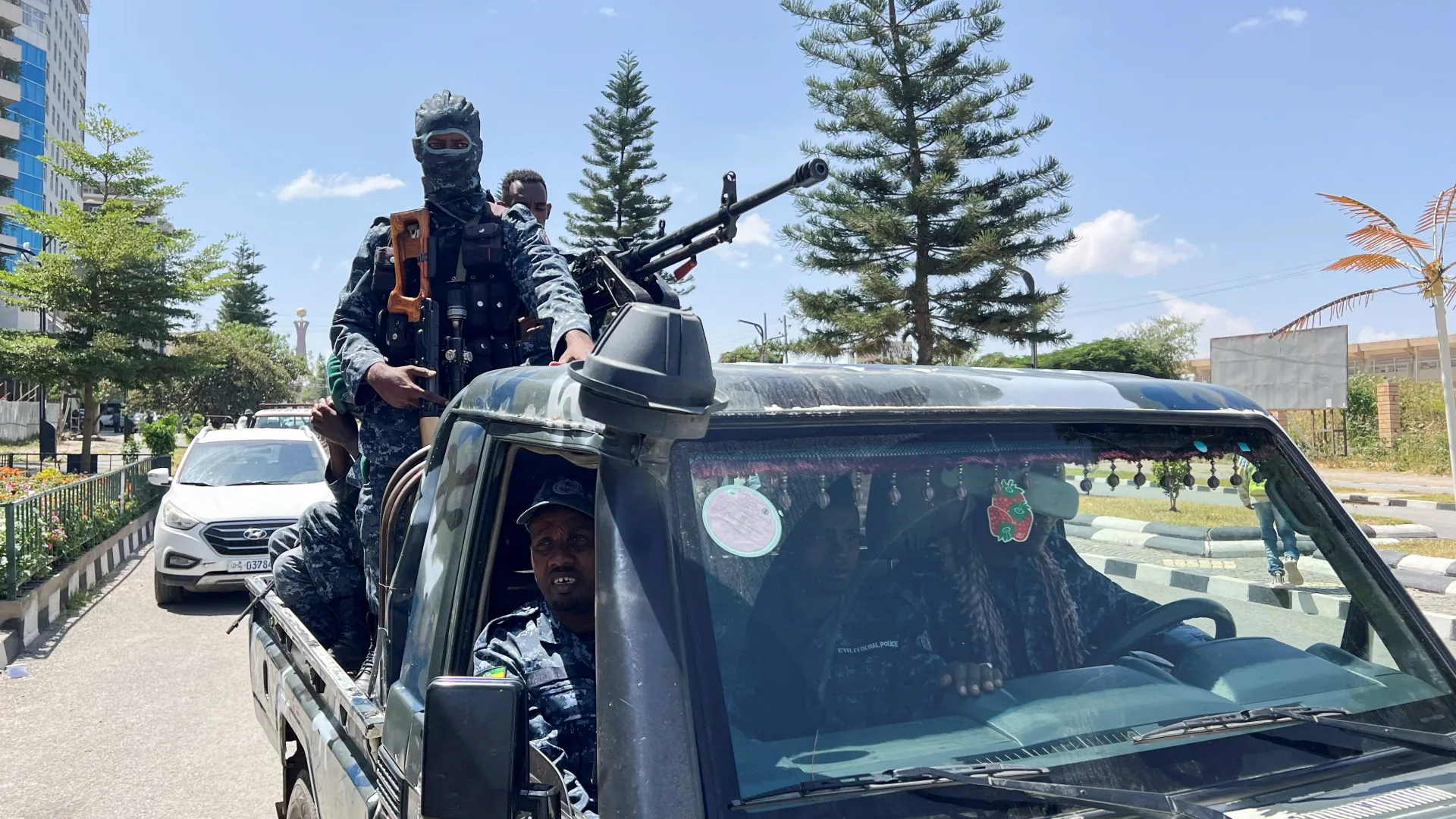
Four weeks after fighting resumed in northern Ethiopia, the federal government has moved from battlefield advances to political engineering. On Oct. 16 it named a six-month caretaker administration for Tigray, and on Tuesday the senior United Nations official in the country urged an immediate ceasefire and the restoration of civilian government in the region. The caretaker body is meant to replace the Tigray People's Liberation Front (TPLF), which ruled the region for decades and which Addis Ababa now calls a "rogue administration." Whether it can govern a region still partly contested, with Eritrean forces reportedly entrenched near the border and the TPLF's leadership at large, will shape the stability of the Horn of Africa.
What happened this week
The UN Resident and Humanitarian Coordinator in Ethiopia, Ozonnia Ojielo, said on Tuesday that "the fighting must stop, the looting must stop, the shooting must stop," according to a report in the Ethiopian weekly The Reporter, relayed by the Rio Times. He called for an immediate Tigray ceasefire, the restoration of civilian government and the rule of law, unhindered access for food, medicine, clean water and protection services, the safe return of displaced people, and accountability for past abuses. Ojielo met Assefa Abraha Hagos, who holds the title of chief executive for administration and public services in the new caretaker body, and said: "The people of Tigray are tired of war and they want normalcy." He urged Ethiopians to back the caretaker administration and pledged continued UN support.
The caretaker administration was named on Friday, Oct. 16, for six months. On Oct. 11, Getachew Reda, an adviser to the prime minister, a former TPLF spokesperson and a former head of the Tigray Interim Administration, said the federal government would rule Tigray directly through a command post for six months before regional elections, according to the Critical Threats Project's Oct. 13 security review. Its stated aim is to create administrative and security conditions for recovery, with federal forces and an allied Tigrayan militia, the Tigray Peace Force, providing security and humanitarian aid allowed into federally controlled areas. No date has been set for those elections, and it is unclear whether the TPLF or its fighters will accept a ceasefire.
US Ambassador Ervin Massinga said in an interview published Oct. 19 that conflict should never be the first option and that the moment allows displaced people to go home and restart farms, businesses and schools. He added that US assistance was never meant to be permanent and that most of it will now flow through government channels.
How the Pretoria peace unraveled
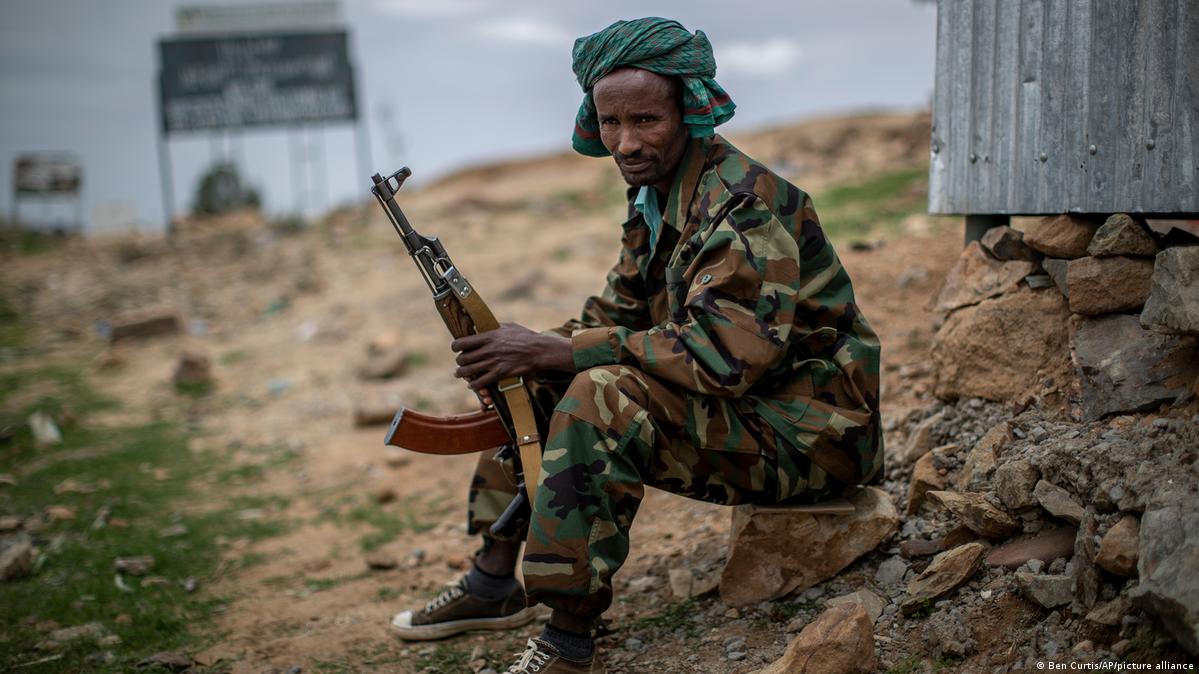
The current war is the collapse of a settlement. The 2022 Pretoria Agreement ended a 2020–22 war between federal forces and the TPLF. Analysts Ahmed Soliman and Abel Abate Demissie argued in a Chatham House commentary published Oct. 1 that the deal was undermined by zero-sum thinking on both sides, weak implementation and weak oversight.
The decisive blow came in May 2026, they write, when the TPLF reinstated the pre-war regional legislative council and named Debretsion Gebremichael regional president. That ended the Tigray Interim Regional Administration, one of the Pretoria agreement's main outcomes. The interim president, Tadesse Werede, was removed, following the 2024 ouster of his predecessor, Getachew Reda. The authors cite the containment of Tigray, the non-implementation of Pretoria, the TPLF's weakened legitimacy and federal drone attacks as pushing the party toward confrontation.
Days before fighting resumed, the TPLF and six other armed opposition groups, including Amhara's Fano and Oromia's Oromo Liberation Army, formed a coalition called the Alliance for Survival, whose stated goal is to remove Prime Minister Abiy Ahmed and his Prosperity Party and install a transitional government. Chatham House's authors doubt its cohesion: senior Fano leaders have opposed it, the OLA is divided, and Fano and the OLA have a violent history.
A rapid federal advance
Chatham House reports that on Sept. 23 TPLF forces seized three airports in Tigray, which the party described as "defensive combat." Ground offensives followed along Tigray's southern and eastern borders with Amhara and Afar. The TPLF and its allies captured parts of Afar but lost key areas of southern Tigray, including the town of Alamata. The authors also cite reported drone strikes on Addis Ababa and on government-controlled airbases.
By Oct. 9, Al Jazeera reported, federal forces had entered Mekelle, the regional capital, as the TPLF and its allies withdrew, after nearly two weeks of fighting. Critical Threats' Oct. 13 review traces what followed: the capture of Abiy Addi on Oct. 8; Shire on Oct. 8; Adwa on Oct. 11 after an advance of about 50 miles; Axum on Oct. 12; and Adigrat, entered without resistance on the night of Oct. 9–10. Federal forces then advanced about 23 miles north from Adigrat to Zalambessa on the Eritrean border on Oct. 11–12. The review cautions that several claims remain unverified, including a pro-government report that five senior Tigray Defense Forces commanders surrendered near Enticho and TPLF-linked media claims of ambushes on Oct. 12.
The war has also produced a notable defection of detainees. On Oct. 12, Tadesse Werede and three imprisoned TPLF figures escaped custody near Rama and reached federally controlled Mekelle, according to Critical Threats. One of them, Col. Tewolde Gebrettonsa, told BBC Tigrinya that the detainees were being moved with plans to take them to Eritrea, and that they had been held for opposing the TPLF's rejection of the federal extension of Tadesse's term and its restoration of the pre-war government.
The TPLF has not conceded. Its leader, Debretsion Gebremichael, said: "We will confront the enemy on our terms and where we choose." Al Jazeera notes the parallel with 2020, when federal forces also took Mekelle, only for Tigrayan forces to regroup and fight for nearly a year and a half.
The Eritrean dimension
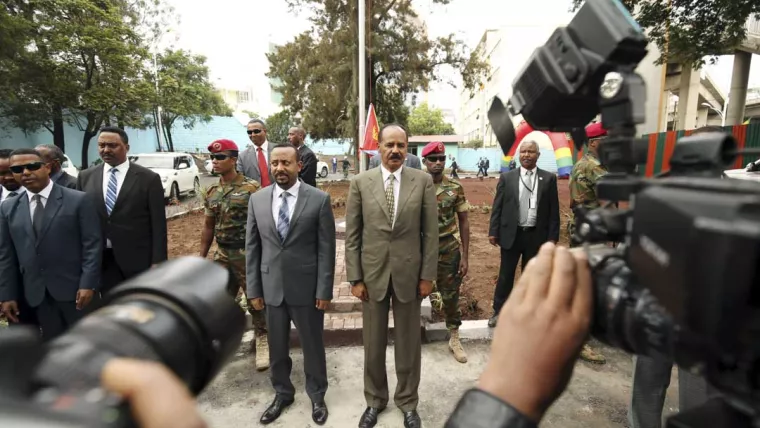
The most dangerous thread is Eritrea. Ethiopia closed its embassy in Asmara and expelled Eritrean diplomats on Oct. 1, accusing Eritrea of hostile acts and involvement in the fighting. Eritrea severed diplomatic ties and denied backing the opposition alliance. Ethiopia wrote to the UN Security Council on Oct. 8 accusing Eritrea of invading; on Oct. 10 Eritrea replied that Ethiopia's accusations and what it called defensive measures amounted to a declaration of war, and asked the Council to take "deterrent measures" under Chapter VII of the UN Charter, a provision that Critical Threats notes can range from sanctions to military action.
The Associated Press reported Eritrean troops entering Adigrat and Idaga Hamus; Eritrea has neither confirmed nor denied this. Critical Threats, citing ACLED, reports Eritrean forces withdrew into Eritrea through Zalambessa on Oct. 12, while an open-source analyst says they have entrenched north of the town. In Afar, isolated and unverified reports describe an Ethiopian buildup along the A1 highway toward the Eritrean port of Assab, although some reports of clashes have been denied by local sources.
Eritrea and Ethiopia fought together against the TPLF in 2020–22, but relations between Abiy and Eritrean President Isaias Afwerki have since deteriorated. Al Jazeera notes that Abiy has made Red Sea access a strategic priority since 2023, and that he told parliament at the start of his second five-year term, which followed his party's win in the June 1 election: "Based on the principle of give and take, we will work diligently to ensure that Ethiopia has an outlet to the sea." Etana H. Dinka of the University of Miami told the outlet that the Ethiopian advance "directly threatens" Isaias and the Eritrean state.
A regional web
Regional alignments are hardening. On Oct. 4, the leaders of Egypt, Eritrea, Sudan and Somalia met in New Alamein, Egypt, and issued a joint declaration calling for respect for sovereignty, territorial integrity, non-interference and peaceful dispute resolution. Al Jazeera stresses it is not a formal military alliance and that the participants' interests differ. Hossamaldeen Ibrahim of the Bloomsbury Intelligence and Security Institute said Egypt views the Grand Ethiopian Renaissance Dam and any Ethiopian move toward the Red Sea as strategic threats.
Ethiopia accuses Egypt and Sudan's army of backing the TPLF; both deny it. Chatham House describes a reported transnational alliance, called Tsimdo, linking the TPLF, Eritrea and Sudan's army. Sudan, for its part, accuses Ethiopia of supporting the Rapid Support Forces, an accusation reported by Chatham House; Ethiopia's ally the UAE, accused of backing the RSF, denies it.
Analysis: a political win that is not yet a settlement
The federal government has taken the region's towns faster than many expected, and its messaging is more disciplined than in 2020, Chatham House's authors observe, casting the TPLF as a rogue actor colluding with insurgents and external powers. The caretaker administration is the logical next step: an attempt to convert military control into legitimate governance and to peel Tigrayans away from the TPLF, whose grip, according to Chatham House, was already weakening amid economic hardship, protests, rival parties, defections and forced recruitment of young men.
But three weaknesses stand out. First, legitimacy. The caretaker body is appointed, not elected, and it is led by figures associated with the federal side, including Getachew Reda and the Tigray Peace Force; Hiiraan Online reported that the TPLF rejects the new administration as illegitimate. Tigrayans who were exhausted by the 2020–22 war may welcome a return of services, as Ojielo suggested, but a six-month command post without an election date invites suspicion.
Second, territory. Fighting continues in parts of Tigray, and the TPLF leadership reportedly relocated to the Afferom district after leaving Mekelle. A force that withdraws into rural terrain, as Tigrayan fighters did in 2021, can outlast a conventional occupation.
Third, the Eritrean border. Chatham House warns that Ethiopia may be weighing bolder options against Eritrea, including toward Assab, and that the TPLF is reportedly quietly allied with Asmara. The mediation landscape is far harder than in 2022, the authors write: the TPLF has discredited the African Union-led process, the Pretoria framework no longer seems viable for either side, and regional rivalries and limited Western support constrain a settlement. They expect the conflict to continue "for some time."
Ethiopia is simultaneously fighting insurgencies in Amhara and Oromia, as Al Jazeera notes, which stretches the army and complicates the claim that the Tigray campaign is a clean victory.
What to watch
- The ceasefire question. Whether the TPLF and its fighters respond to the UN's call, and whether Addis Ababa, which holds the advantage, has any incentive to pause.
- The Eritrean border. Reports of troop concentrations near Zalambessa, Badme, Sheraro and Bure, and any move toward Assab, would signal a shift from civil conflict to interstate war.
- An election date. The caretaker administration is time-limited to six months; a published timetable for regional elections would be an early test of the federal government's intentions.
- Humanitarian access. The UN says it needs unhindered access, but there is still no public figure for how many people in Tigray need aid, nor any stated funding commitment from the UN or the United States.
- Regional diplomacy. The Security Council, the African Union, Egypt, the Gulf states and the Oct. 4 New Alamein grouping will determine whether the war is contained.
Published By | News Editor