Written By | Health News Agencies
No approved vaccine. No approved cure. Nearly half of those infected are dying — and the world's second-largest Ebola outbreak is still growing.
HEALTH NEWS
It started with four health workers dead in four days. Six months later, it is the second-largest Ebola outbreak in recorded history — more than 10,300 confirmed cases, close to 5,000 confirmed deaths, and a virus that has now been detected in five countries.
The Bundibugyo strain of Ebola, which has no licensed vaccine and no licensed treatment, has torn through eastern Democratic Republic of the Congo since May. This week, US health officials confirmed the grim milestone: as of 28 October, the Centers for Disease Control and Prevention (CDC) counts 10,305 confirmed cases and 4,996 confirmed deaths, all but a few of them in the DRC.
And the clock is ticking on new US travel rules. After 11:59 pm Eastern on 3 November 2026, every international passenger flying to America must attest they have not been in the DRC in the previous 21 days.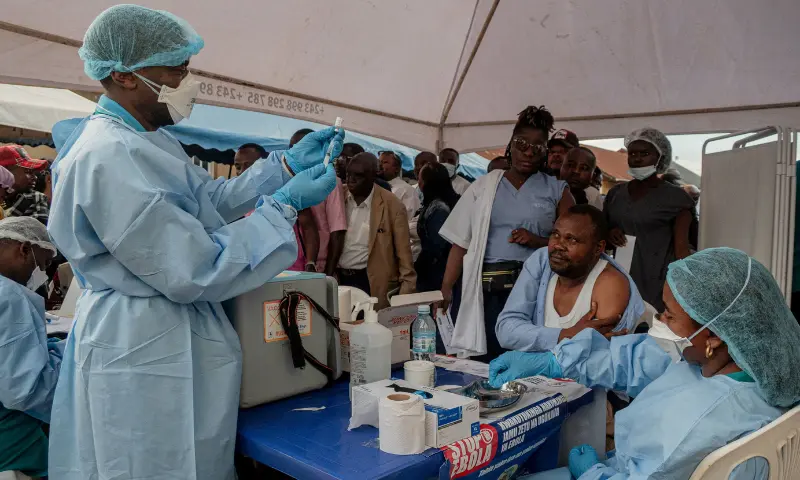
How it began: a mystery illness in Ituri
On 5 May 2026, the World Health Organization (WHO) received an alert about an unknown, high-mortality illness in the Mongbwalu Health Zone of Ituri Province in the northeast of the DRC. Four health workers had died within four days.
Ten days later, on 15 May, the National Institute for Biomedical Research (INRB) in Kinshasa confirmed the cause: Bundibugyo virus disease. The same day the DRC declared its 17th Ebola outbreak, initially spanning the Rwampara, Mongbwalu and Bunia health zones. Uganda confirmed two imported cases within 24 hours. And on 16 May, the WHO Director-General declared the outbreak a Public Health Emergency of International Concern — the organisation's highest tier of alarm under the International Health Regulations.
Bundibugyo is a cousin of the Zaire-strain virus that killed more than 11,000 people in West Africa a decade ago, but it is far less well studied. Fruit bats are the suspected natural reservoir. The incubation period is anywhere from two to 21 days, and people are not contagious until symptoms appear — which is why contact tracing is the front line of defence. Earlier Bundibugyo outbreaks, in 2007 and 2012, had fatality rates of roughly 30 and 50 percent.
The numbers that should worry you
The scale of the current outbreak is difficult to overstate. According to WHO's Disease Outbreak News update dated 23 October, the DRC had 9,704 confirmed cases as of 20 October, including 4,687 deaths — a crude case fatality rate of 48.3 percent — and 2,595 recoveries. The virus had reached 66 health zones across eight provinces, and 50 of those zones reported new cases in the previous 21 days alone.
In the two weeks since the previous update on 8 October, there were 976 new confirmed cases and 482 deaths. Of those deaths, 307 happened in communities rather than in treatment centres — meaning people are dying at home, where they can infect relatives and the neighbours who wash and bury their bodies. On a single day, 67 new confirmed cases were logged: 37 in Ituri, 29 in Nord-Kivu and one in Tshopo.
Ituri remains the epicentre with 7,040 cases and 3,271 deaths; 28 of its 36 health zones have reported infections. Nord-Kivu has 2,146 cases and 1,199 deaths, with the highest provincial fatality rate in the country at 55.9 percent. Haut-Uélé has 421 cases and 183 deaths, and Tshopo 76 cases and 27 deaths. The most recently affected province, Nord-Ubangi, reported three confirmed cases including one death.
The CDC says the outbreak passed 1,000 confirmed cases within 40 days of response activation. In the 2018 DRC outbreak, that took about 235 days. WHO describes this as the largest Ebola outbreak ever recorded in the DRC, regardless of virus species.
The leak in the net: contact tracing falling short
Ebola is stopped by finding every person who touched a patient, then watching them for three weeks. WHO's target is to see 95 percent of listed contacts every day. The latest figures show the response falling short: of 30,130 contacts being followed, only 79.7 percent were seen in the last 24 hours. Nord-Kivu was worst, at 73.3 percent. Two provinces, Bas-Uélé (98.9 percent) and Sud-Ubangi (97.3 percent), did hit the mark.
The CDC points to a brutal combination of obstacles: limited health infrastructure, ongoing conflict, violence against health workers, shortages of personal protective equipment, and deep distrust of government that fuels misinformation. Health workers themselves are being infected while treating patients — the same pattern that marked the first deaths in Mongbwalu.
Five countries and counting
The virus is no longer a purely Congolese problem. Uganda reported 21 confirmed and probable cases and three deaths, according to the CDC, though its last confirmed case dates back to 21 June.
Kenya is the newest worry. An adult man travelled from the DRC via Uganda and arrived in Nairobi on 3 October. He was confirmed positive on 6 October and died. Eight secondary cases followed, forming a single cluster of four family members and four health and care workers, bringing Kenya's total to nine. WHO reports one death in its 23 October update; the CDC's later figure, as of 23 October, is two. All 135 contacts have been traced and quarantined, and there is so far no evidence of spread beyond the cluster. Kenya has screened more than 709,000 travellers.
Then came Nigeria. On 20 October, health authorities in Abuja confirmed an imported case in a traveller who had come from Uganda and developed symptoms on 7 October. The patient is in isolation, 44 contacts are being monitored and the source of infection is still under investigation. Nigeria's National Centre for Disease Control has activated its incident management system. WHO counts Nigeria as the fifth country to detect the virus in this outbreak, after the DRC, Uganda, France and Kenya.
A revised WHO rapid risk assessment is in progress. The last published version, from 14 August, rated the risk as very high in the DRC, high in neighbouring countries sharing a land border, and low for the rest of the African region and globally.
Racing to find a vaccine
The most hopeful development in weeks arrived on 23 October, when a vaccine trial launched in Bunia, the capital of Ituri. Named Tumaini — Swahili for "hope" — it is a single framework designed to test the safety, efficacy and immune response of several vaccines at once, using ring vaccination: immunising the contacts and contacts-of-contacts of confirmed cases. It will include pregnant women and children aged 12 and older.
The first shots used Ervebo, the licensed vaccine against the Zaire strain, to see whether it offers cross-protection against Bundibugyo. Two Bundibugyo-specific candidates, both funded by the Coalition for Epidemic Preparedness Innovations (CEPI), are expected to join "shortly": a ChAdOx1 viral-vector vaccine from the University of Oxford and an mRNA vaccine from Moderna. Both are still in earlier, smaller studies.
WHO Director-General Tedros Adhanom Ghebreyesus said on X: "This trial will help us understand whether any of the vaccine candidates designed for Bundibugyo virus work." WHO's emergencies director, Chikwe Ihekweazu, said the trial is meant to generate the rigorous evidence needed to show whether the vaccines can protect people at risk.
The caution matters. Nobody yet knows whether any of these vaccines works against Bundibugyo, and WHO states plainly that there are no approved vaccines or specific treatments. Patients today get supportive care — fluids, oxygen and treating complications — which improves survival but is not a cure.
Travel bans and border checks
Washington has responded with some of the toughest travel measures in years. Travellers who were in the DRC within 21 days of their flight are temporarily barred from entering the US and from boarding commercial flights to American destinations. US citizens and nationals who have been in Uganda or South Sudan within 21 days must enter through designated airports for enhanced screening. From 11:59 pm EST on 3 November, all international passengers must attest they have not been in the DRC in the previous 21 days.
The CDC advises avoiding all travel to Ituri and Nord-Kivu, and nonessential travel to Haut-Uélé and Tshopo. Travellers to other parts of the DRC or to Uganda should take enhanced precautions and monitor for symptoms during the trip and for 21 days afterwards.
The WHO takes a different line. It "advises against any restriction of travel to, or trade with, affected countries," arguing that bans push people onto informal routes, damage economies and make outbreaks harder to track. Temporary recommendations issued on 24 August stress coordinated control, cross-border collaboration and surveillance.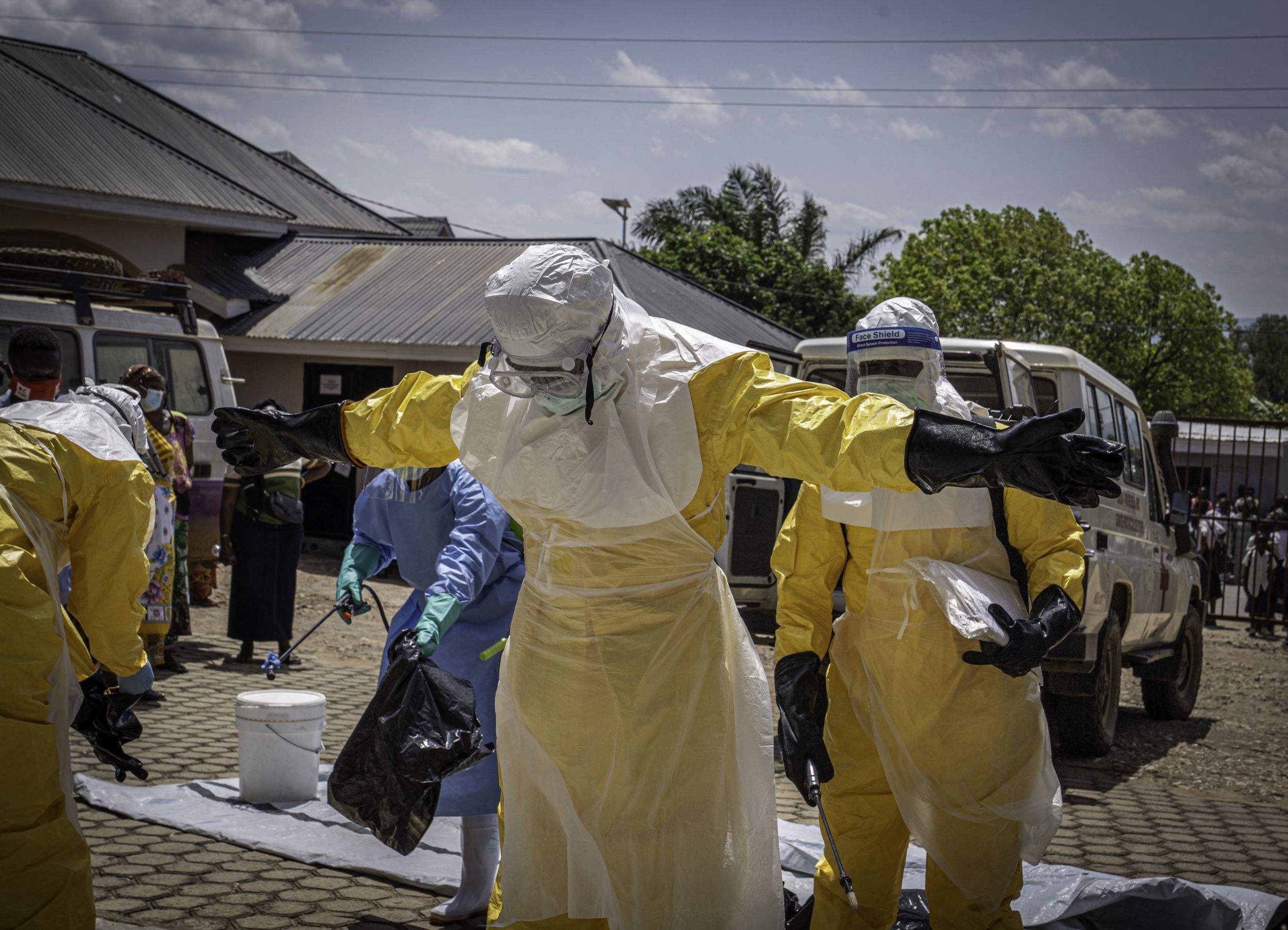
What the experts are watching
Three numbers will tell the story over the coming weeks. The first is the share of new cases that arise among known, already-listed contacts; the higher that is, the more under control the outbreak. The second is community deaths: 307 of the last 482 deaths happened outside treatment centres, a sign that many sick people are not reaching care or are avoiding it. The third is contact follow-up, which must climb from nearly 80 percent to the 95 percent target.
The CDC also warns that cross-border movement raises the risk of spread to Uganda, South Sudan, Rwanda and elsewhere. The agency says the risk to the US public and travellers is low, and that no cases linked to this outbreak have been confirmed in the United States. WHO rates the global risk as low, though that assessment is under review.
What this means for you
For the vast majority of readers, the direct risk is very low. Ebola does not spread through the air like flu or Covid. It spreads through direct contact with the blood or body fluids of a person who is sick or has died, and people are not infectious before symptoms start.
If you are planning travel to central or eastern Africa, check the CDC's current travel notices and your airline's requirements before booking, as rules are changing quickly. If you have been in an affected area, watch for fever, severe headache, muscle pain, vomiting, diarrhoea or unexplained bleeding for 21 days afterwards — and if any appear, call ahead to a health provider before turning up in person so they can prepare.
Beware of misinformation. The same distrust that is hampering the response on the ground also spreads online. Rely on WHO, the CDC and your national public health agency rather than viral posts.
The bottom line
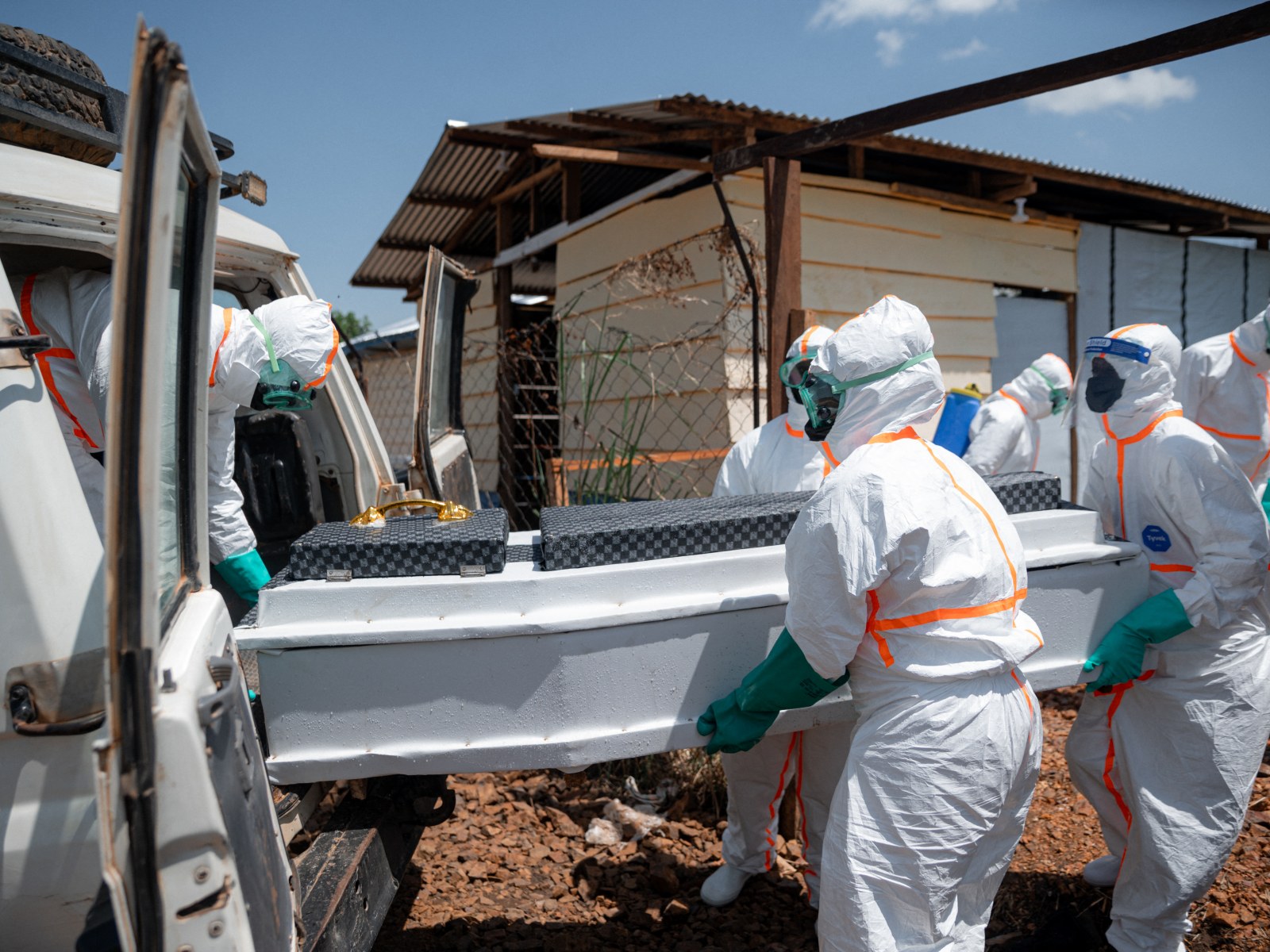
This outbreak is no longer a story of one remote province. It is a multi-country emergency with a fatality rate near 50 percent, running into a shortage of vaccines, drugs, protective gear and trust. The launch of the Tumaini trial offers a real chance of finding out which tools work, but results will take time, and in the meantime the old methods — finding contacts, isolating patients, burying the dead safely and protecting health workers — are all that stands between the virus and the next border.
The world has seen Ebola at this scale only once before. How the next few weeks go in Ituri and Nord-Kivu may decide whether this becomes the biggest outbreak in history.