Written By | Peter Luzinda
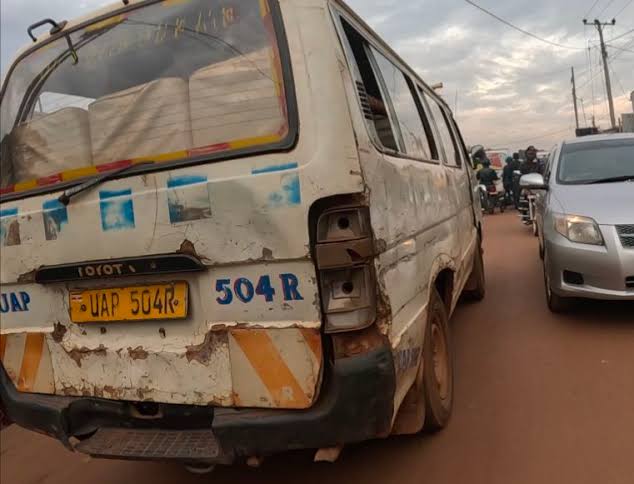
The minister said some vehicles currently carrying passengers have defects that could result in serious crashes or injuries
KAMPALA, Uganda
The government has drawn the line on the continued operation of badly worn-out taxis in the Greater Kampala Metropolitan Area, ordering police to remove vehicles considered dangerously unsafe from the roads beginning Monday.
Works and Transport Minister Fred Byamukama announced the 100-day enforcement operation on Thursday, saying the campaign would focus on taxis popularly known as “ganyegenya” — vehicles that have deteriorated to a level authorities consider unacceptable for public transport.
The first phase will cover Kampala, Wakiso and Mukono, with the government planning to extend the enforcement to other parts of Uganda.
Byamukama said the directive should not be interpreted as a ban on taxi services. Rather, he said, the government wants operators to use vehicles that meet minimum safety and roadworthiness requirements.
“We have not banned the business of taxis. No. We love the business of taxis, and we are supporting them, but we have banned ‘ganyegenya’ taxis in Greater Kampala and the surrounding areas for the first phase,” he said.
From Monday, police will be authorised to impound taxis found to be in a dangerous mechanical condition. The vehicles will be taken to a parking yard provided by Kampala Capital City Authority (KCCA) around Nakawa.
“With effect from Monday, don’t bring back these ganyegenya cars in Kampala and surrounding areas,” Byamukama said.
Government cites safety concerns
The minister said some vehicles currently carrying passengers have defects that could result in serious crashes or injuries.
He cited worn-out tyres, defective brakes, faulty steering, damaged seats and doors that cannot properly close.
Byamukama said some drivers have to hold vehicle doors while driving because the doors are no longer functioning properly.
“Some of these taxis are DMCs and are not acceptable on the roads,” he said. “At some point, you find a driver driving while holding the door, which is risky for passengers and the driver himself.”
The government also suspects that some ageing taxis are rebuilt from vehicles that were previously involved in accidents.
Byamukama said such vehicles are sometimes purchased cheaply from garages after being abandoned by their original owners, given basic repairs and returned to passenger service.
“These are cars which are worn out. These are cars which got accidents some time back, and the owners abandoned them in the garages,” he said.
“But our own Ugandans buy them from these garages at a very cheap cost. They just put tyres and bring them on the road.”
Voluntary inspections
The minister said authorities had already subjected some ageing taxis to voluntary inspections during the past 60 days, and the results strengthened the government's decision to move from voluntary compliance to enforcement.
“If you are proving to government your car is not ganyegenya, take it for inspection. It will not pass. We have tested some voluntarily for the last 60 days, but none of them has passed,” Byamukama said.
Reports indicate that between 30 and 60 vehicles participated in the voluntary inspection exercise.
The latest operation follows an earlier government directive issued in March, when taxi owners were given 20 days to repair or remove vehicles deemed unroadworthy.
Taxi operators raise concerns
The directive was met with concern from sections of the taxi industry. The Uganda Taxi Operators Federation, led by chairperson Rashid Ssekindi, asked for more time, citing the high cost of repairing old vehicles and the potential impact on the livelihoods of thousands of people.
Taxi operators also called for greater consultation and argued that poor roads contribute significantly to the wear and tear of public transport vehicles.
Despite those concerns, the government has now opted for a wider enforcement campaign.
The Greater Kampala Metropolitan Area relies heavily on taxis, with an estimated 15,000 vehicles operating in the region.
The government has urged owners of roadworthy taxis to continue operating, while those with dangerous vehicles are expected to repair or replace them.
Commuters face possible disruption
The immediate concern for commuters is whether removing large numbers of taxis from the roads will create shortages, particularly during peak hours and on busy routes connecting Kampala with Wakiso and Mukono.
Passengers have consequently been advised to plan their journeys ahead of Monday's operation.
The crackdown comes at a time when road safety remains a major concern in Uganda. Authorities continue to face pressure to address crashes associated with mechanical failures, overloading, reckless driving and other violations.
Byamukama's directive puts the responsibility firmly on taxi owners to ensure their vehicles are fit for public transport.
The success of the 100-day operation will ultimately depend not only on how many unsafe taxis are removed from the roads, but also on whether enforcement is sustained and affected operators can transition to safer vehicles without leaving commuters without affordable transport.



