Written By | Peter Luzinda
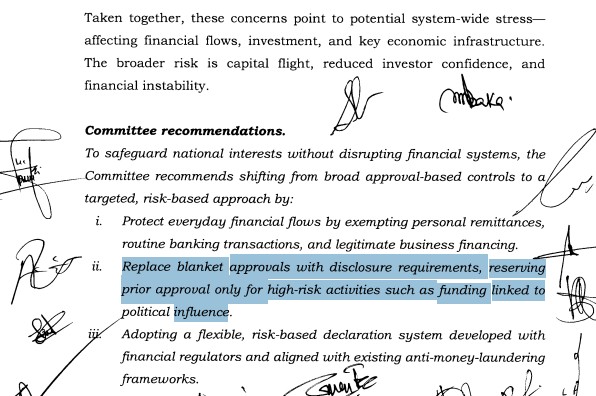
The report proposes the introduction of a UGX 400 million threshold on foreign funding
Kampala
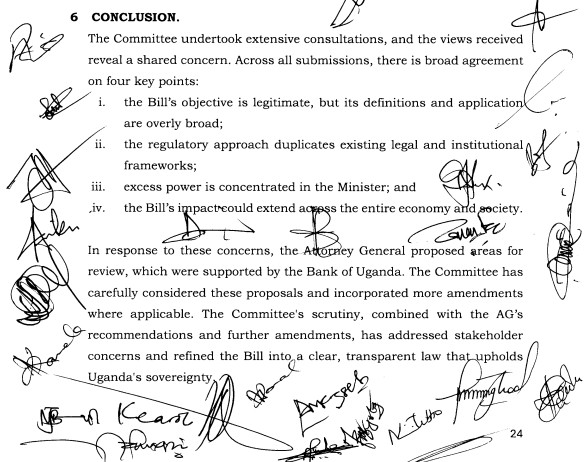
A leaked report from Parliament’s Joint Committee on Defence and Internal Affairs and the Committee on Legal and Parliamentary Affairs has recommended the passing of The Protection of Sovereignty Bill, 2026, despite acknowledging that its implications could stretch across the entire economy and overlap with existing legal and regulatory frameworks.
The report indicates that at least 60 stakeholders appeared before the joint committees to present their views on the controversial legislation, which has sparked intense national debate over its potential impact on governance, civil liberties, and economic activity.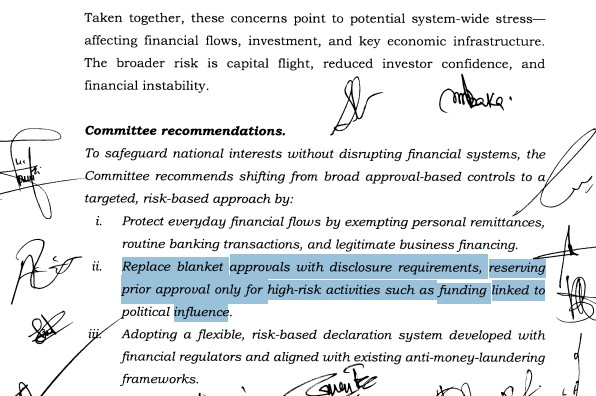
Key Amendments Proposed
In its recommendations, the joint committee proposes narrowing the definition of a “foreigner” to strictly non-citizens and foreign-registered companies. It also suggests refining the term “agent of a foreigner” to apply only to individuals who formally and knowingly act on behalf of foreign interests in matters related to public policy, elections, or national security.
The committee further recommends exempting individuals and institutions already regulated under existing laws from the Bill’s provisions, in a bid to avoid duplication of oversight roles.
However, legislators rejected a controversial clause that would grant the Minister of Internal Affairs sweeping powers to declare individuals as foreigners. The committee warned that such authority would undermine the principle of separation of powers, weaken institutional checks and balances, and expose individuals to arbitrary decisions due to the absence of clear procedures, timelines, and appeal mechanisms.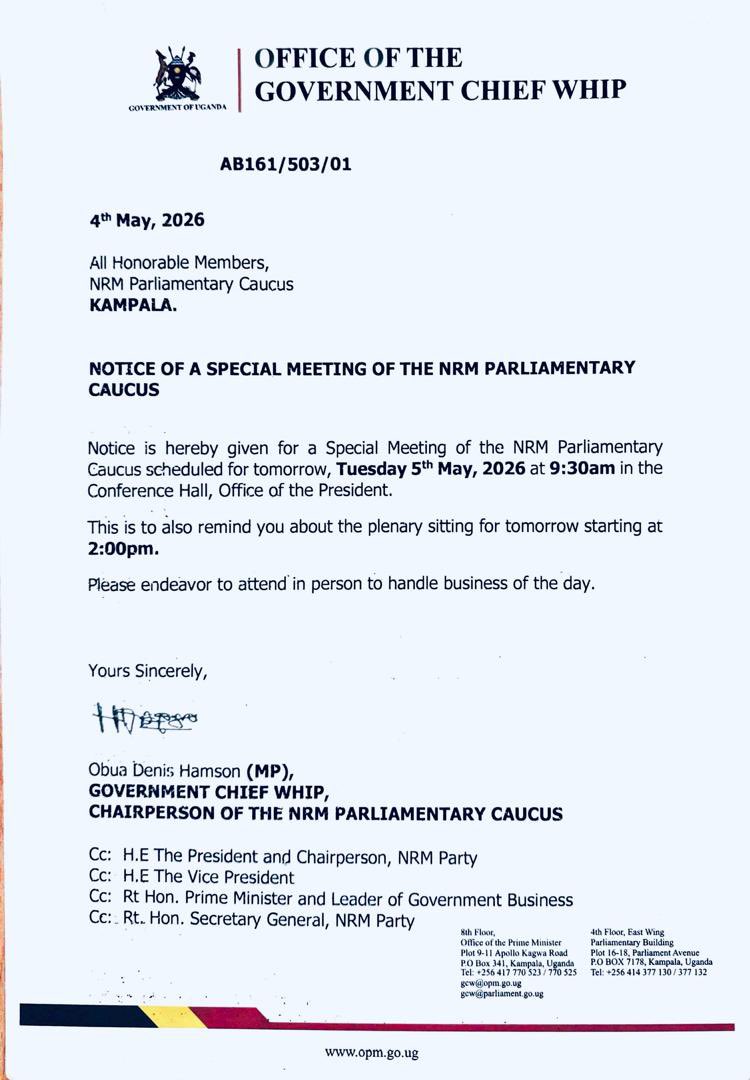
Foreign Funding and Economic Concerns
The report proposes the introduction of a UGX 400 million threshold on foreign funding. Instead of requiring blanket prior approval from the Minister, the committee suggests adopting a disclosure-based system, with prior approval reserved only for high-risk activities, particularly those linked to political influence.
Despite these proposed safeguards, concerns persist among stakeholders. Lawyer Karim Masaba cautioned that the Bill’s effects could extend far beyond its intended targets.
“While the Bill may appear to target specific actors, its impact could ripple across the entire economy,” Masaba said, warning that restrictions on foreign funding could undermine critical sectors such as health, education, and medical services.
Masaba also criticized the legislative process, arguing that the Bill should be scrutinized clause by clause, with stakeholder input carefully considered at every stage, rather than adopting amendments wholesale from the Attorney General.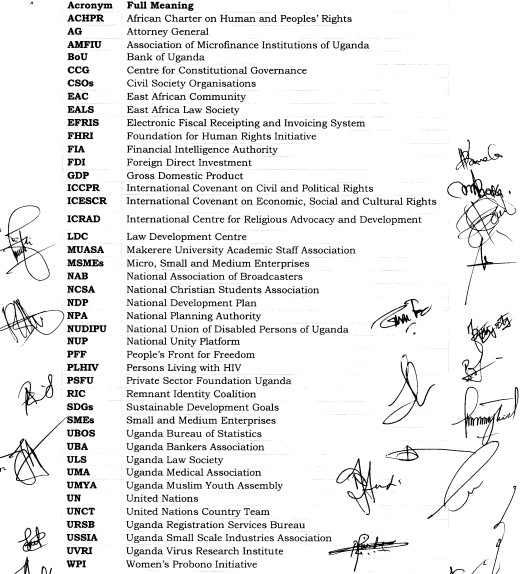
Division Among Lawmakers
The Bill has exposed sharp divisions among legislators. Denis Onekalit Amere voiced strong opposition, questioning the legitimacy of advancing a Bill that appears to lack public support.
“Out of the 60 stakeholders who appeared, only two supported the Bill while 51 opposed it. Can we truly call this a Sovereignty Bill when the majority of Ugandans are against it?” Amere asked.
He argued that sovereignty should reflect the will of the people, not the position of a select few.
In contrast, Simon Peter Okwalinga, MP for Kanyum County, defended the proposed law, describing it as critical to Uganda’s independence and broader African self-determination.
“This Bill is about guaranteeing total independence and promoting economic sovereignty, not just for Uganda but for the Black race globally,” Okwalinga said, expressing confidence that Parliament will pass the legislation.
Safeguards for Key Sectors
In response to widespread concerns, the committee recommended exemptions for legitimate activities, including business operations, journalism, research, advocacy, and civic engagement, from being classified as economic sabotage.
It also proposed reducing the maximum sentence for related offences from 20 years to 10 years.
Additionally, academic institutions, research bodies, and health facilities operating legally in Uganda are set to be exempted from the Bill, following warnings that restrictions on foreign funding could disrupt education systems, research initiatives, and public health services.
Political Mobilisation Ahead of Debate
As Parliament prepares to debate the Bill this afternoon, Government Chief Whip Hamson Obua has summoned all NRM MPs and NRM-leaning independents for an emergency caucus meeting scheduled for 9:00 a.m. The meeting is expected to forge a unified position on the contentious legislation.
The matter now heads to the floor of Parliament, where lawmakers are set for a heated debate that will determine the fate of one of the most contentious bills in recent years.
Torch Media Africa



