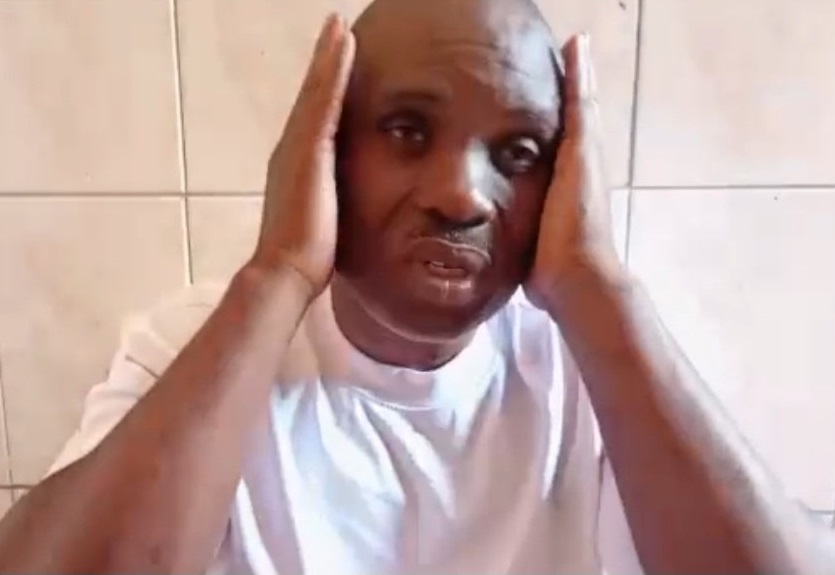
Uganda's already tense political climate has been thrown into fresh turmoil after security operatives detained veteran opposition lawyer and former Kampala Lord Mayor Erias Lukwago, in an episode that has drawn condemnation from legal associations, opposition parties and international observers. The arrest, which took place in mid-June at Lukwago's home, has become one of the most closely watched political stories in the country as Uganda heads toward Local Council elections later this month.
According to reporting from the Monitor, Africanews and Watchdog Uganda, security personnel stormed Lukwago's residence as he was preparing to serve court documents on Gen. Muhoozi Kainerugaba, Uganda's Chief of Defence Forces and the son of President Yoweri Museveni. The legal papers were connected to a case involving detained opposition leader Dr. Kizza Besigye, who has faced treason-related charges alongside his aide. Lukwago, who serves on Besigye's legal defense team, was also representing him in a separate suit against Gen. Muhoozi over social media posts that allegedly threatened Besigye's life.
The arrest quickly escalated into a public spectacle when Gen. Muhoozi took to social media platform X to comment on the operation. In a post that was widely interpreted as referring to Lukwago, the general wrote that he had "captured a FOOL and taken him to the basement," and separately vowed to inflict "hurt and pain" on his detractors. In a further post, he declared that "Lukwago will be in prison for a minimum of 10 years," a statement that alarmed legal observers given that no court had yet heard the case. Lukwago was ultimately charged with misprision of treason, becoming the latest figure swept into a broader prosecution that has already ensnared Besigye and his aide.
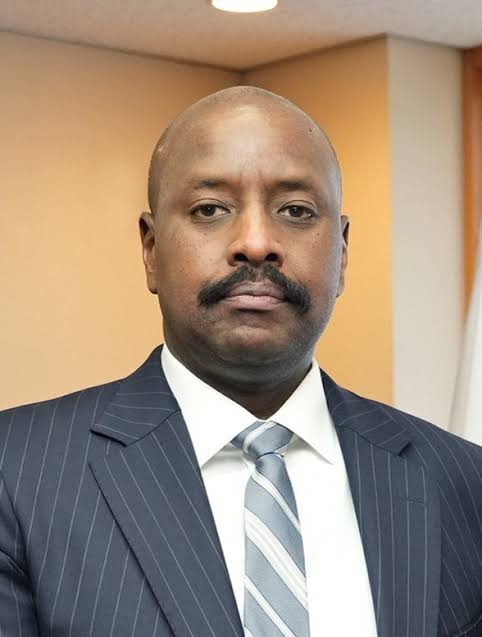
The fallout from the arrest has not been confined to Lukwago alone. In the days that followed, Gen. Muhoozi used his social media accounts to issue a string of warnings directed at other opposition politicians, government critics, and even traditional cultural leaders, according to reporting by the Observer and Monitor. This pattern has fed a growing narrative, described by rights groups and independent media, of a military establishment increasingly willing to operate outside conventional legal and political channels, using direct threats rather than formal charges to intimidate critics. Journalists and independent media houses have also reported facing heightened pressure, with several outlets describing an atmosphere of self-censorship taking hold in the run-up to local elections.
The political stakes surrounding the case are considerable. Uganda's Electoral Commission has scheduled nationwide Local Council One (LC1) elections for July 28, 2026 — the first such grassroots polls held in years — with registers and resident verification exercises now underway across the country. LC1 elections matter disproportionately in Uganda's political system because local council chairpersons and committees form the backbone of the ruling party's mobilization structure, and are often the first point of contact between citizens and the state. An atmosphere of fear and intimidation targeting opposition figures just weeks before these elections raises serious questions about how freely opposition-aligned candidates and voters will be able to participate.
The Lukwago affair also lands amid a broader reckoning over the legitimacy of Uganda's political institutions following the contested presidential election held in January 2026, in which President Museveni secured what would be a seventh term in office. International observers, including the Africa Center for Strategic Studies, have flagged growing electoral violence and shrinking space for dissent as recurring themes of that election cycle, and the treatment of opposition figures like Besigye and now Lukwago has become a touchstone for critics who argue that Uganda's democratic institutions are increasingly subordinate to informal exercises of power by security elites.
Gen. Muhoozi Kainerugaba's expanding public profile is itself a significant thread in this story. As Chief of Defence Forces and the president's son, he occupies a position that fuses military authority with dynastic political ambition; he has previously used social media to comment on succession politics and his own presidential aspirations. His willingness to publicly claim credit for detaining a prominent lawyer, and to threaten a decade-long prison term before any trial had begun, has been read by many commentators as a sign that political power in Uganda is increasingly personalized and unconstrained by ordinary legal process. The Uganda Law Society and other legal bodies have raised alarm over what they describe as an erosion of due process, warning that the arrest of a practicing advocate for undertaking legitimate legal work — serving court papers — sets a chilling precedent for the legal profession.
Under domestic and international pressure, including from legal advocacy groups tracking attacks on lawyers, Gen. Muhoozi reportedly signaled he would allow Lukwago's release, according to Monitor reporting, even as the treason-related charges against him remained in the judicial pipeline. This partial climbdown illustrates the volatile, personality-driven nature of the standoff: decisions on detention and release appear to hinge as much on public pressure and the military chief's own social media pronouncements as on formal judicial proceedings.
There have been other significant political developments alongside the Lukwago case. The National Unity Platform (NUP), Uganda's largest opposition party, has said it will formally join the Inter-Party Organisation for Dialogue (IPOD) and sign its memorandum of understanding — a shift driven in part by new legislative requirements tying government funding for parties to participation in such dialogue forums. Analysts see this as a pragmatic, if uneasy, accommodation by NUP with a political system it has otherwise accused of persecuting its leadership, including its own presidential candidate, Robert Kyagulanyi (Bobi Wine).
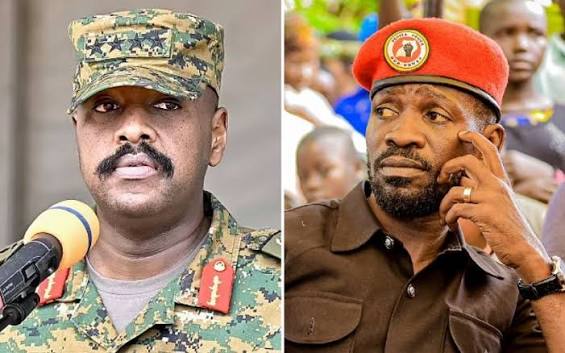
What happens next will be closely watched on several fronts. First, the outcome of Lukwago's misprision of treason case will test whether Ugandan courts can act independently of the pressure exerted through public threats from senior military figures. Second, the conduct of the July 28 LC1 elections will serve as an early indicator of whether the intimidation seen around the Lukwago case translates into suppressed turnout or contested results at the grassroots level. Third, continued statements from Gen. Muhoozi — who has shown no signs of moderating his public rhetoric — are likely to keep testing the boundaries of acceptable conduct for a serving military chief, with implications for Uganda's international standing and its relationships with donors and diplomatic partners who have expressed concern over press freedom and treatment of the opposition.
For ordinary Ugandans, the immediate significance of the episode is less about constitutional theory than about a lived sense of risk: opposition supporters, lawyers representing government critics, and journalists covering these stories are now operating in an environment where a social media post from a powerful figure can precede — or substitute for — formal legal action. Whether that dynamic hardens into a permanent feature of Ugandan politics, or provokes a stronger pushback from civil society, the judiciary, and international partners, will shape the country's political trajectory well beyond the current news cycle.
Published By | Political Editor