Written By | International News Desk
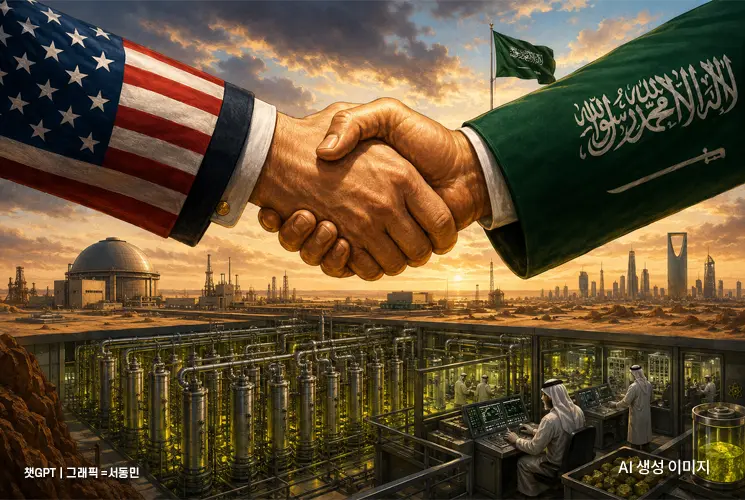
Trump administration delinks civil nuclear cooperation from Israeli normalization, alarming Israeli officials and nonproliferation experts who warn of a regional arms race
Background
Saudi Arabia's ambition to build a civilian nuclear power program is not new, but for two decades it has been entangled with a much thornier geopolitical question: whether the kingdom should also be allowed to enrich its own uranium fuel, a capability that sits uncomfortably close to the technology needed to build a weapon. Riyadh has framed its nuclear ambitions around energy diversification and prestige, but Crown Prince Mohammed bin Salman has also been explicit for years about the deal's deeper logic. In a widely cited 2018 interview with CBS News, he said Saudi Arabia 'does not want to acquire any nuclear bomb, but without a doubt, if Iran developed a nuclear bomb, we will follow suit as soon as possible' — a statement that has hung over every subsequent round of US-Saudi nuclear diplomacy.
Under the 1954 Atomic Energy Act, any US civil nuclear cooperation agreement with a foreign government — known as a '123 agreement' after the relevant section of the law — requires congressional notice and a review period before it can take effect, precisely because these deals can determine whether a partner country gains a legal pathway toward the fuel cycle technologies that underpin both power plants and weapons. Washington's gold standard for such agreements, set by the United Arab Emirates in 2009, has partners forswear enrichment and reprocessing entirely. The Biden administration had spent years negotiating a Saudi nuclear deal explicitly as one leg of a three-part bargain that also included a US-Saudi defense pact and Saudi normalization with Israel under the Abraham Accords framework — an effort that stalled after Hamas's October 7, 2023 attack on Israel and the war in Gaza that followed.
The Trump administration inherited that unfinished diplomacy but has pursued it on very different terms. Rather than linking nuclear cooperation to normalization with Israel, the administration chose to decouple the two tracks entirely, pursuing a nuclear agreement with Saudi Arabia as a stand-alone commercial and strategic matter. That decision, confirmed this week, came against the backdrop of an even more urgent regional nuclear backdrop: the ongoing US-Iran war, now in its sixth month, in which American and Iranian forces have traded strikes across the Gulf for weeks and in which Iran's own uranium stockpile and enrichment program remain a central point of dispute.
Key Developments
On July 22, US Energy Secretary Chris Wright and Saudi Minister of Energy Prince Abdulaziz bin Salman signed a peaceful nuclear cooperation agreement — the formal 123 agreement — alongside a companion bilateral safeguards agreement, in a signing the Department of Energy characterized as a 'historic' step laying the groundwork for a multibillion-dollar, decades-long partnership. Under the deal, American companies, with Westinghouse Electric Company named as a lead prospective partner, would supply the technology, fuel and expertise for Saudi Arabia's nascent civil nuclear sector, giving US firms priority access to a program expected to be worth billions of dollars over its lifetime.
The most consequential — and contested — element of the agreement is what it says about enrichment. Rather than requiring Saudi Arabia to renounce enrichment and reprocessing outright, in the manner of the UAE's 2009 deal, the new agreement provides a legal pathway for cooperation across the full nuclear fuel cycle, including a two-year joint study of whether enrichment on Saudi soil is 'feasible and necessary.' US officials have stressed that the agreement does not itself transfer enrichment technology to Saudi Arabia and that any future enrichment activity on Saudi soil would, at least initially, be operated and controlled by US companies using technology not shared directly with Riyadh. Even so, arms-control specialists note that the framework leaves the door open in a way the Emirati precedent explicitly closed, and Senator Ed Markey of Massachusetts was among the most vocal critics in Congress, describing the pact as 'potentially enabling nuclear proliferation in Saudi Arabia and igniting an arms race' across the Middle East.
The agreement now moves to Congress, which under the Atomic Energy Act has roughly 90 days of continuous session to review and, in theory, block it — though doing so would require a two-thirds majority in both chambers to override an expected presidential veto, a high bar that most observers believe makes congressional rejection unlikely even amid vocal opposition. Notably, the deal announced this week makes no mention of Saudi normalization with Israel, a marked departure from the Biden-era approach and, according to reporting from the Jerusalem Post and other outlets, a source of real disappointment among officials who had hoped nuclear cooperation would remain conditioned on progress toward the Abraham Accords.
Reactions
Israel's response has been one of unusual public alarm for a government that has otherwise worked to align itself closely with the Trump administration's regional agenda. Israeli officials and commentators, including former minister Avigdor Liberman, warned that any civilian nuclear infrastructure in Saudi Arabia risks eventually producing weapons-capable material and igniting a cascading regional arms race, a concern rooted in Israel's decades-long status as the Middle East's only, if undeclared, nuclear-armed power. The Jewish Telegraphic Agency and Newsweek both reported deep unease inside the Israeli security establishment, while some Israeli commentary — including in the Jerusalem Post — argued the deal actually strengthens the case for expanding the Abraham Accords, on the theory that Israel now has a fresh incentive to formalize ties with Riyadh in order to gain visibility and influence over how the Saudi program develops.
Arms-control and nonproliferation experts have been similarly split between resigned acceptance and sharp criticism. Analysts convened by the Atlantic Council noted that the deal's two-year study period on enrichment feasibility gives Washington a mechanism to slow-walk or ultimately constrain any Saudi enrichment capability, and that keeping enrichment technology and operational control in the hands of US companies is a meaningful, if imperfect, safeguard relative to Saudi Arabia developing an indigenous enrichment capacity outright. Critics, however, including several quoted in Middle East Eye and Barchart's coverage of the announcement, argue that any legal opening for enrichment — however hedged — represents a retreat from the nonproliferation standard the US itself set with the UAE less than two decades ago, and that a two-year study period can just as easily become the first step toward eventual Saudi enrichment as a barrier against it.
In Washington, reaction has broken down largely along the same lines as the broader debate over the administration's Middle East strategy amid the Iran war. Supporters, including figures within the Department of Energy and congressional Republicans, have framed the deal as a strategic and commercial win: it locks in American industry — rather than Russian or Chinese state nuclear firms, both of which have separately courted Riyadh — as Saudi Arabia's nuclear partner of choice for the coming decades, while keeping the kingdom's program under a degree of US oversight. Democratic critics in Congress, led by voices like Senator Markey, have focused on the proliferation risk and the political optics of extending sensitive nuclear cooperation to Saudi Arabia even as the administration wages an active war with Iran explicitly justified in part by concerns over Tehran's own enrichment program.
What's Next
The formal congressional review clock is now the most concrete near-term marker to watch. Barring a highly unlikely two-thirds vote to block the agreement in both chambers, the 123 agreement is expected to enter into force within roughly three months, after which US firms including Westinghouse can begin more formal engagement on Saudi Arabia's planned power reactors. Separately, the two-year joint feasibility study on enrichment will effectively function as a slow-rolling second negotiation, one in which Washington retains substantial leverage over whether, and on what terms, any Saudi enrichment capability ultimately proceeds.
The deal's decoupling from Israeli normalization leaves the Abraham Accords track in a genuinely uncertain state. Saudi officials have long indicated that a US-Saudi defense treaty and normalization with Israel remain linked to progress on a Palestinian state or, at minimum, a credible pathway toward one — a bar that has become harder to clear given the state of the Gaza ceasefire and Israel's expanded territorial control described in recent reporting. Whether this week's nuclear agreement becomes, as some Israeli commentators hope, a fresh lever to pull Riyadh back toward normalization, or instead removes one of the last remaining incentives for Saudi Arabia to formalize ties with Israel at all, is likely to be one of the more closely watched second-order effects of the deal in the months ahead.
Regionally, the agreement is unlikely to be read in isolation from the US-Iran war still raging in the Gulf. Gulf capitals watching Washington extend a legal pathway toward nuclear fuel-cycle cooperation to Saudi Arabia, even as it bombs Iranian nuclear and military infrastructure on the grounds that Tehran's enrichment program is illegitimate, are likely to draw their own conclusions about the durability of US nonproliferation red lines — a dynamic that arms-control advocates argue could shape nuclear decision-making not just in Riyadh but potentially in Ankara, Cairo and elsewhere in a region already unsettled by more than half a year of open warfare.




