BUSINESS
The decisive moment in a Ugandan cotton season is not the planting or the picking. It is the weighing.
For decades, that moment has belonged to the village middleman: the man who arrives at the roadside with a lorry and scales nobody has calibrated, names a price, weighs the sacks and hands over cash. The farmer, who has no other buyer within reach, accepts. In eastern Uganda, a growing number have stopped accepting.
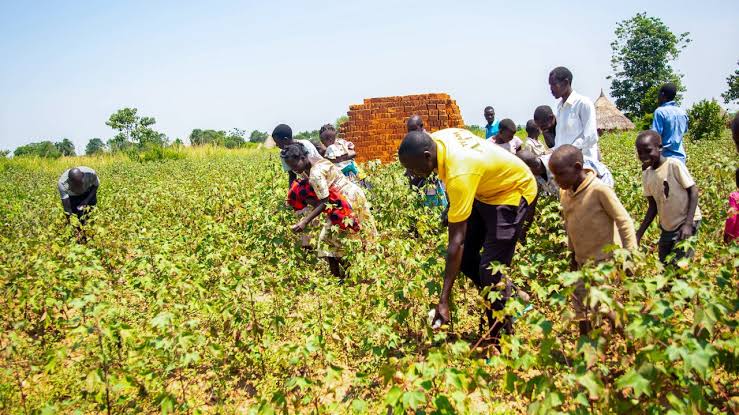
Nighty Acen, who farms at Pondwong in Kachonga Sub-county, now takes her cotton into Pallisa District and sells it directly to Iki-Iki Cotton Ginnery. In a report published by bird story agency on 29 August, she described middlemen who offered low prices and sometimes used poorly maintained weighing scales.
"Dealing with middlemen in the cotton business was frustrating, but since I started selling directly, I have built a house with an iron-sheet roof, helped my son get married, and bought oxen that have improved my farming," Acen said.
The oxen matter most. Acen uses them to prepare her fields on time and hires them out to neighbours, so a single change in how she sells has converted a once-a-year cash payment into an asset that compounds.

A big sector with a weak middle
Cotton in Uganda is not a niche. It supports an estimated 150,000 to 200,000 smallholder households across more than 75 districts. According to an African Development Bank project document from August 2025, Uganda produced roughly 1.22 million bales over the decade to 2023/24, generating UGX1.045 trillion in farmer income and more than US$348 million in lint exports. Northern Uganda remains the main production hub, with the Eastern Region second.
What the sector has lacked is a strong middle. Between hundreds of thousands of growers and a small set of processors sits a thin, informal, largely unregulated layer of village traders. The AfDB document identifies market access and price stabilisation through cooperatives as key incentives for smallholder participation. That is what is now being built, farm by farm, in Bukedea and Pallisa.
The Wawot-Anyim Cotton Farmers Group has 90 members, of whom 28 grow cotton — 10 women and 18 men — according to its storekeeper, Lalam Sabina, who has farmed cotton since 2010. It markets members' harvests together and has built a working relationship with Lukonge Cotton Company Ltd.
"Wawot-Anyim has helped to strengthen collective bargaining to have a better market for cotton farmers," Lalam said.
The Pallisa Farmers Association has gone further, entering a formal agreement with Lukonge; its chairperson, Hellen Acham, says the arrangement gives participating farmers certainty about where they can sell. In Bukedea, the Bukedea Cotton Farmers Association has organised along similar lines.
The logic is simple aggregation economics. One farmer with six bags has no leverage; thirty farmers with 180 bags have a consignment worth a ginnery's attention and a collective interest in a scale that reads correctly.
The credit problem behind the shift
Certainty of buyer matters for a reason easy to miss from outside the sector. Cotton is rain-fed, grown once a year and picked by hand over several weeks; a household spends months on land preparation, planting, weeding and pest control before it earns a shilling. Worse, farmers have frequently not been paid at the point of sale at all.
"This new development shall help members of the cooperative to be sure of a ready market and price stability for the cotton being produced, because before we have been selling cotton on credit, which is the most hurting," said Moses Stephen Opedule, who has farmed for more than a decade.
"Selling on credit" here means handing over the crop against a promise, with the farmer carrying the risk of a trader who does not return. A formal agreement with a named ginnery does not eliminate that risk, but it moves the counterparty from an individual with a lorry to a company with a plant and a reputation in the district. Knowing the buyer before planting also changes production decisions: how much land to commit, how much hired labour to budget for, whether to plant cotton at all.
Women moving from the field to the negotiation
The most striking feature of the shift is who is driving it. Women have always supplied much of cotton's labour — land preparation, planting, weeding, picking, carrying, sorting — while marketing and price negotiation were typically handled by men. In organised group marketing, that division is breaking down.
"We thank women because they have spearheaded this initiative and included their husbands to help in growing cotton, unlike before, when women did the donkey work," said Jude Ongota, principal agricultural officer in Bukedea District.
Aleje Modesta, a commercial farmer in Bukedea, has grown cotton for nearly 30 years, starting on a small plot to feed her family and expanding through a relationship with Lukonge, which supplied improved seed, technical support and a market. "I never imagined cotton growing would become the crop that would transform our life and my family," she said.
The distributional consequence is significant: where a woman takes part in the sale, she is more likely to influence how the proceeds are spent — and the spending patterns these farmers describe run heavily to school fees, land, roofing and productive assets.
What direct marketing cannot fix
A guaranteed buyer cannot buy a crop that was never planted. Hellen Ongaya, who farms in Malera Town Council, normally plants between mid-March and April. This year the rain did not come. "Much as we sell cotton directly to the ginnery, this year my plan for growing cotton has been affected because up to now I have not planted cotton because the rain has not been there," she said. Some neighbours planted into poor moisture and gambled; others waited.
That is the same drought-then-deluge whiplash that has run through Uganda's 2026 season — a harsh dry spell from around April, followed by a Ministry of Water and Environment advisory warning of above-normal rainfall from August to December under weak-to-moderate El Niño conditions. Cotton, rain-fed and single-season, has no buffer against either half of that.
Yields are the second constraint. Florence Kadega, who has grown cotton in Kachumbala Sub-county since 2008, once earned more than UGX12 million — roughly US$3,150 — from a single harvest. Her earnings have since fallen, and she attributes the decline to poor-quality seed, high production costs and price fluctuations, adding that poor roads make moving cotton to buyers harder and more expensive. Seed quality is being addressed, slowly: Henry Kodaki Ojaro, secretary manager of the East Acholi Cooperative Union, says the Cotton Development Organisation has been multiplying the BP-15 variety after concerns about planting-seed performance.
And then there is the price, which is not set in Bukedea at all.
"Cotton is like gold, where the price is determined by the international market, depending on production from world-leading cotton-producing countries like China, Egypt and the United States of America," Ojaro said.
Commodity trackers put the Ugandan cotton price at around US$1.77 per kilogramme in July 2026, down close to 20 percent year on year. A farmer group can improve the terms on which it sells into that price. It cannot change the price.

Ninety-three percent, unprocessed
The structural fact underneath all of this is that Uganda barely touches its own cotton. In 2023/24, according to the AfDB document, 93 percent of the crop was exported as raw lint and only about 7 percent processed domestically. The document counted 18 ginners operating 26 ginneries, 13 cottonseed processors, six cotton-wool producers and just two vertically integrated textile mills.
That ratio is why a good season in Bukedea still translates into a modest cheque. Ginning captures a slice of value; spinning, weaving and garment manufacture capture far more, and almost all of it happens elsewhere. It is also why quality discipline on the farm matters: lint sold into a global commodity market is graded ruthlessly.
Farmer groups could do more than negotiate. They are a plausible channel for distributing certified seed, delivering agronomic advice, assembling volumes and enforcing quality standards — the functions cooperatives performed before their collapse, and which the state has spent two decades trying to rebuild from the top down.
The test ahead
The obvious risk is substitution rather than transformation. An association that becomes the sole channel to a single ginnery can, over time, start behaving like the middleman it replaced — controlling information, delaying payment, taking its own cut. Guarding against that requires what the eastern Uganda groups do not yet reliably have: independently verified weighing, published prices, prompt payment terms and audited books ordinary members can read. Uganda has no contract-farming law to fall back on — the Contract Farming Bill 2023 was introduced, reviewed and then withdrawn in March 2026, and nothing has replaced it. What protects a Bukedea farmer today is the internal governance of her own group.
Even so, the direction of travel is right, and it is coming from the farmers rather than from a ministry. Acen intends to keep growing cotton despite pests, poor soils and low prices, because she has seen what a season's earnings can become when she controls the sale.
The question for Uganda's cotton sector is whether the state and the ginners build on that — with roads, seed and a transparent pricing framework — or leave several hundred thousand households to reorganise a broken market on their own.
Published By | Business News Editor