Written By | Fashion and Design Desk
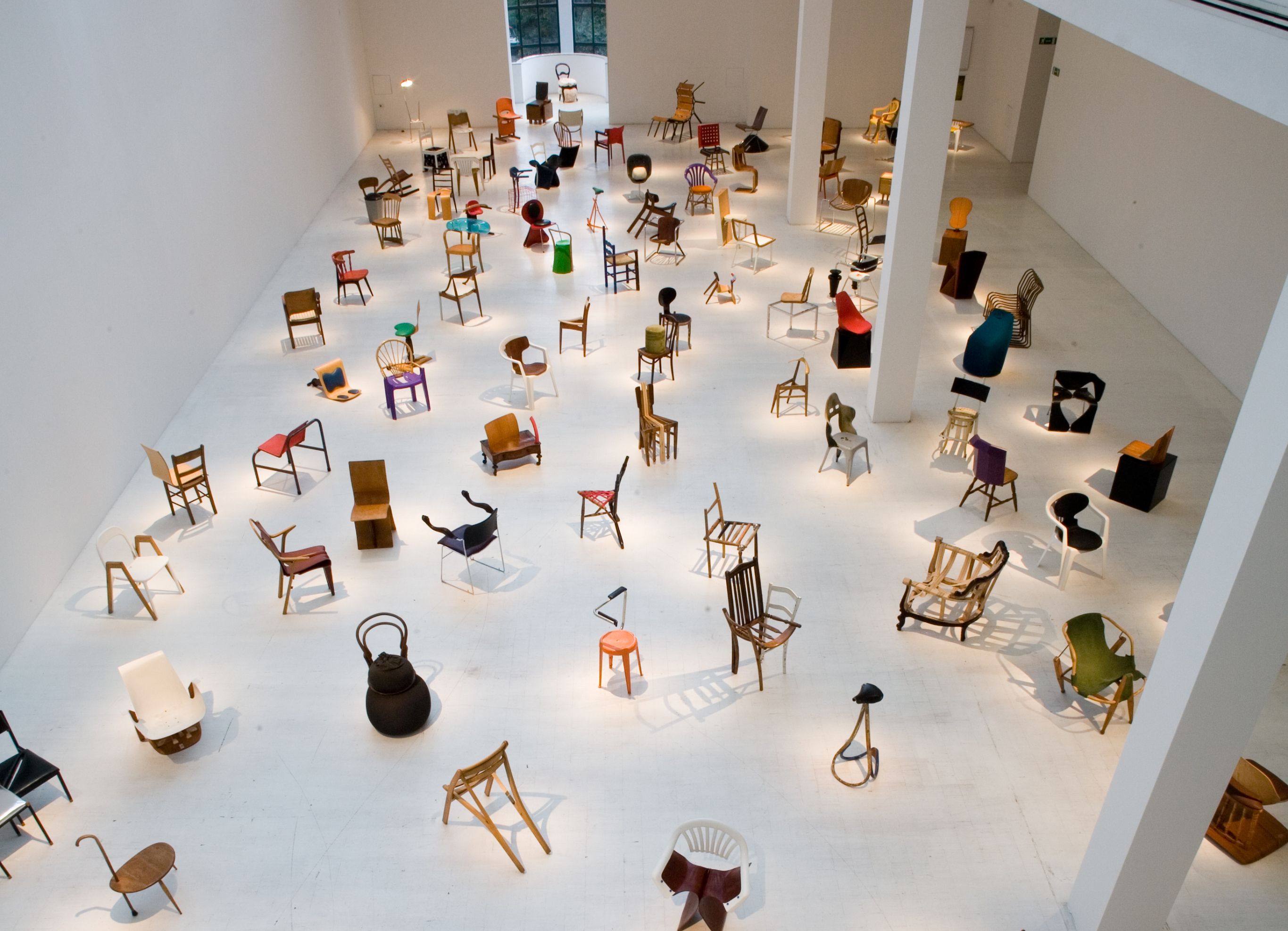
Before Martino Gamper's scavenged masterpiece leaves Milan for a major museum collection, gallerist Nina Yashar is throwing open her warehouse for a final, intimate goodbye.
MILAN
On Tuesday, in a warehouse on the outskirts of Milan, a hundred chairs that were never meant to last this long will be reassembled in one room for what is likely the final time before they disappear into an institution's permanent collection. Most of the people who walk through Nilufar Warehouse that day will be looking at furniture. What they're actually looking at is one of contemporary design's most influential arguments about what a chair — or any object — is allowed to be. The project is “100 Chairs in 100 Days,” made by Italian-Austrian designer Martino Gamper nearly two decades ago in London, and its journey from scrappy studio experiment to museum-grade artifact says as much about how design history gets written as it does about Gamper himself.
A Chair a Day
The premise, in 2007, was almost absurdly simple: make one new chair every day for a hundred consecutive days. The constraint Gamper imposed on himself was the more interesting part. Rather than building from scratch, he collected discarded chairs and chair fragments — found on the street, donated by friends, scavenged from skips around the city — and collaged them together, fusing legs from one chair to a seat from another, a backrest from a third, generating what one retrospective described as “perverse, poetic, and humorous hybrids.”
The result wasn't a hundred individual designs so much as a hundred-part argument: that authorship in design doesn't have to mean working from a blank page, that discarded materials carry their own latent value, and that process — visible, improvisational, occasionally clumsy — can be as legitimate a subject as a finished, polished object. Those ideas have only gained currency since 2007, as sustainability and material reuse have moved from design-school footnote to industry mandate.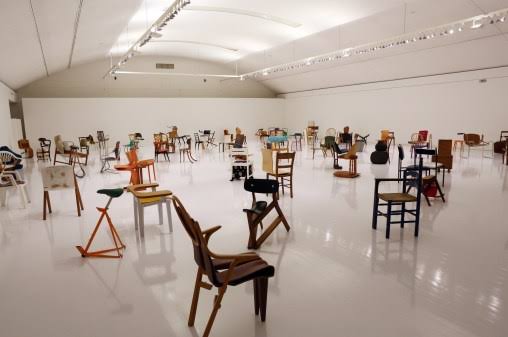
The Gallerist Who Wouldn't Let It Be Split Up
The chairs' survival as a single body of work owes almost everything to Nina Yashar, founder of the Milan design gallery Nilufar, who acquired the entire series in 2009 and made a decision that shaped its legacy: she would not sell the chairs individually. Yashar treated the hundred objects as a narrative whole — a story that, in her view, loses its meaning if separated — and oversaw their presentation at the Triennale di Milano, ensuring that institutions and collectors encountered the project as Gamper had made it, rather than as a hundred desirable, sellable parts.
That decision is, in retrospect, the reason the project has a second act at all. Individually sold, the hundred chairs would likely have scattered into private collections and design fairs, each fragment losing the cumulative force of the whole. Kept together, they became something closer to a single artwork — and therefore something a major museum could meaningfully acquire as one unit, rather than chase down one auction lot at a time.
The Move
That acquisition is now happening. Nearly twenty years after Gamper made the first chair, the full set of one hundred is leaving Nilufar's archive to enter an international museum collection, with the institution's name to be formally announced in the coming months. Before they go, Nilufar Warehouse will host one last gathering of a selection from the series on June 30 — not simply a farewell display, but a working session, with Gamper himself carrying out a restoration intervention on the pieces ahead of the handover.
It's a fitting way to close the project's time in private hands: Gamper, the designer who built the work out of other people's discarded furniture, getting one more hands-on pass at the chairs before they become untouchable museum objects, viewed from behind a rope rather than sat in.
Why It Matters Beyond Milan
For the design world, the acquisition functions as a kind of institutional ratification — proof that a project built on collage, salvage, and visible process can be treated with the same seriousness as a singular, polished masterpiece. It arrives at a moment when questions about material reuse, designer authorship, and the ethics of consumption are far more central to design conversation than they were when Gamper started gluing chair legs together in 2007. What looked, at the time, like a clever conceptual exercise now reads as an early, scrappy answer to questions the entire industry is still working through.
It also reflects the broader role Yashar and Nilufar have played in Milan's design ecosystem over the past decade-plus — championing maximalist, eclectic, historically minded design at a moment when much of the industry chased minimalism, and treating gallery-represented designers' archives with a long-term seriousness usually reserved for fine art.
What This Means for Design Watchers
For anyone who cares about where design objects end up — and what their survival says about how we value craft, process, and reuse — June 30 at Nilufar Warehouse is a small but significant moment: the last chance to see a hundred-part argument about authorship and discarded material exist as a complete, touchable, un-roped-off body of work, before it becomes something altogether more permanent, and more distant.
It is also a useful reminder for anyone furnishing a home or evaluating a piece of design that the most interesting objects are not always the newest or the most expensive ones. Gamper built a near-legendary body of work out of other people's castoffs and a hundred days of discipline; what made it valuable, in the end, wasn't the materials, but the decision to keep going, and a gallerist's decision to keep the result whole rather than carve it up for parts.



