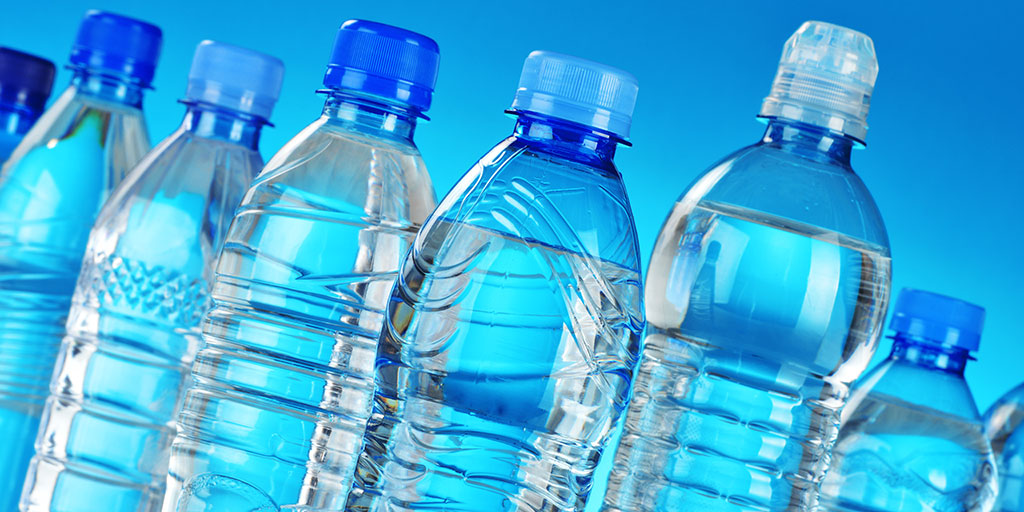
From your baby's toys to your tampons and your bottled water, a new investigation says the chemicals hiding in everyday plastics are linked to cancer, infertility and lower IQ in children, and more than half of the riskiest ones are not regulated anywhere it looked.
LONDON
Look around you. The water bottle on your desk. The food container in your fridge. The fleece you are wearing, the toothbrush by the sink, the teething toy your toddler is chewing right now.
According to a hard-hitting new report, almost every one of them could contain chemicals that pose a high risk to your health.
The investigation, titled "Poison Plastics: How Chemicals in Everyday Plastics Are Harming Your Health," was published on Wednesday 30 September by the Environmental Justice Foundation (EJF), a London-based environmental charity. Its headline finding is stark: of the plastic chemicals it was able to assess, 92.8 per cent present a high risk to human health.
The potential harms read like a medical horror list: cancer, genetic changes, hormone disruption, infertility, heart disease, organ damage and lower IQ in children.
And the report's most unsettling claim is about what we do not know. Of the 3,552 chemicals it identified in plastics people commonly use, nearly 80 per cent lacked enough data to work out whether they are toxic at all.
The five categories of plastic under the microscope
The EJF team looked at five types of plastic products that most of us touch every single day. The results, first reported by CNN, were strikingly consistent:
- Food-contact plastics: almost 92 per cent of the chemicals found were classed as high risk to human health.
- Children's toys: nearly 89 per cent contained high-risk chemicals.
- Textiles and clothing: some 93 per cent were made with chemicals deemed dangerous.
- Household products, including bottled water, kitchenware, tableware, gardening tools, toilet articles and office supplies: more than 92 per cent contained high-risk chemicals.
- Hygiene and medical plastics, including dental floss, tampons and other menstrual products, pill casings, patches and syringes: nearly 93 per cent contained dangerous chemicals.
"We looked at what these plastic chemicals can do to the body along with exposure levels to calculate overall health risk," lead author Naima Fenderl, a researcher at EJF, told CNN.

More than half are unregulated, anywhere
If the health findings are alarming, the regulatory picture is arguably worse.
The report found that 54.2 per cent of the high-risk chemicals it identified are not regulated by any international agreement, nor in any of the four places it reviewed: the European Union, Japan, South Korea and the US state of California, which often leads America on chemical safety rules.
Fenderl said many of those chemicals fall outside the major international environmental treaties too, including the Basel, Minamata, Rotterdam and Stockholm conventions and the Montreal Protocol.
"The United States has not ratified several of these international agreements that other countries have ratified, including the Basel, Rotterdam and Stockholm conventions," she said. "That actually leaves US consumers particularly vulnerable to these health risks."
The report also puts a jaw-dropping price on the damage. EJF says just three of these chemicals are estimated to have cost the global economy 1.5 trillion US dollars in a single year, through premature deaths, chronic illness and lost productivity.
"The plastic we live with every day is quietly poisoning us," said Steve Trent, EJF's chief executive and founder. "These chemicals are in our food, our homes and our children's bodies, and almost none of them are controlled. This is a public health emergency that the industry has known about for decades and chosen to ignore."
The usual suspects: BPA, phthalates and "forever chemicals"
EJF did not build its analysis from scratch. It drew on PlastChem, a major database of known plastic chemicals created in 2024 by an international team of scientists. Of the roughly 16,000 chemicals the PlastChem researchers identified, about 4,200 were considered "highly hazardous" to human health and the environment, and more than 10,000 had no available hazard data at all.
PlastChem co-author Jane Muncke, managing director and chief scientific officer of the Zurich-based Food Packaging Forum, told CNN that EJF had repackaged that data in a "policy-relevant, real-world context." She was not involved in the new report.
PlastChem sorts the most worrying chemicals into 15 priority groups. They include some names that will be familiar to health-conscious shoppers:
- Bisphenols such as BPA, which at high levels have been linked to premature death.
- Phthalates, used to soften plastics, which have been linked to thousands of deaths worldwide from heart disease.
- PFAS, the so-called "forever chemicals," which research has linked to billions of dollars in healthcare costs in the United States alone.
Many plastic chemicals are also endocrine disruptors, meaning they interfere with the body's hormones. PlastChem project lead Martin Wagner, a professor of biology at the Norwegian University of Science and Technology, has previously told CNN that they have been linked to obesity, low birth weight, gestational diabetes, birth defects and neurodevelopmental disorders, and that many of them persist in the environment and build up in the body over time.
The chemical industry hits back
Not everyone is convinced. The American Chemistry Council, the trade association representing US chemical manufacturers, told CNN that the report should be viewed with "considerable caution."
Kimberly Wise White, the council's vice president of regulatory and scientific affairs, said the analysis left out key data sources, including the International Council of Chemical Associations' publicly available plastic additives database, and ignored regulatory databases in the United States and the European Union.
"The report's selective framing misleads and dubiously characterizes chemicals as unregulated by excluding major regulatory frameworks from the analysis," she said. "Without them, this report does more to generate headlines than to advance the science."
It is worth being clear about what this report is, and what it is not. It is an analysis by a campaigning charity, built on existing scientific databases, and it is published alongside a film and a call for tougher laws. It is not a new laboratory study, and it was not published in a peer-reviewed scientific journal. A chemical being labelled "high risk" also does not mean that every product containing it will make you ill: actual harm depends on how much of a chemical gets into your body, how often, and for how long.
Expert perspective: "We simply do not have a clue"
Independent experts, however, say the report's broad message chimes with what scientists have been warning for years.
"The report does a brilliant job of presenting information on everyday plastics in a very user-friendly form," pediatrician Dr Philip Landrigan, director of the Global Observatory on Planetary Health at Boston College, told CNN. He was not involved in the work.
"All of a sudden people can get a sense of immediacy about how these plastics are infiltrating their lives in ways that they didn't realize," he said.
For Landrigan, the biggest scandal is the huge blank space in the data. "We simply do not have a clue what harm those chemicals might be causing us and our kids," he said. "We don't even know the names or composition of a lot of the chemicals that are in consumer products. The chemical industry presumably has that information, but it's not publicly available."
He compared scientists to "the drunk and the lamppost," looking for their keys only where the light is.
The scale of the problem is staggering. Landrigan says some 325,000 synthetic chemicals have been invented since chemical manufacturing took off after the Second World War, and that "at most, generously speaking, we have toxicologic information on maybe 20% of them."
Meanwhile, plastic production has exploded. In 1950, the world made roughly 2 million tonnes of plastic a year. Today it makes more than 430 million tonnes, and production is projected to more than double by 2050. More than 80 per cent of produce sold in US supermarkets comes wrapped in single-use plastic, around 60 per cent of clothing is made from plastic-based synthetic fabrics, and an estimated 90 per cent of toys are made from plastic.
The battle over a global plastics treaty
The report lands at a critical moment. Governments are still negotiating a Global Plastics Treaty, which would be the world's first international agreement to tackle plastic across its whole life cycle, from production to disposal.
EJF says the treaty must cover the chemicals inside plastic, not just plastic waste. It is calling for cuts in plastic production, bans or strict controls on dangerous groups of chemicals, transparency about what goes into products, and for human health to be put at the centre of the deal. The charity accuses "bad faith actors" in recent negotiating rounds of trying to water the treaty down.
"Protecting people from toxic harm is not a technical detail to be bargained away, it is the whole point," said Salisa Traipipitsiriwat, EJF's senior plastics campaigner. "Everyone, everywhere, should be able to take for granted that the cup they drink from and the toy their child holds will not make them ill."
What this means for you
EJF is blunt that this is not a problem shoppers can solve alone: the chemicals are invisible and rarely labelled. But there are sensible, low-cost steps that can cut your family's exposure while lawmakers argue:
- Never microwave food in plastic containers or under plastic film. Heat can drive chemicals out of plastic and into food. Use glass or ceramic instead.
- Do not pour hot drinks or hot food into plastic, and avoid leaving plastic water bottles in hot cars or direct sun.
- Switch to glass, stainless steel or ceramic for storing leftovers, especially fatty or acidic foods.
- Hand-wash plastic food containers rather than putting them through a hot dishwasher, and throw out ones that are scratched, cloudy or cracked.
- Choose fresh and minimally packaged food where you can afford to.
- For babies and toddlers, pick toys and teethers made from untreated wood, natural rubber or fabric, and be wary of soft, cheap plastic toys from unknown sellers.
- Dust and vacuum regularly and wash your hands before eating, since many plastic chemicals collect in household dust.
- Wash new clothes before wearing them, and consider natural fibres such as cotton and wool for items worn next to the skin.
None of these steps will eliminate exposure, and there is no need to panic about every plastic object in your home. But small habits, repeated daily, add up.
The bottom line
Plastic made the modern world. It keeps food fresh, medicines sterile and costs down. But this week's report is a loud reminder that we have filled our homes with thousands of chemicals we barely understand.
The chemical industry says the report is selective and alarmist. Its authors say the alarm is long overdue. What nobody disputes is the central, uncomfortable fact: for the overwhelming majority of chemicals in the plastics we touch every day, the science simply has not been done.
Until it is, the safest container in your kitchen may well be the oldest one: a glass jar.
Published By | Features Editor