Background
Russia's full-scale invasion of Ukraine is now in its fifth year, and by the summer of 2026 the war had settled into a grinding pattern that has proven resistant to repeated rounds of diplomacy: intensifying missile-and-drone barrages on Ukrainian cities and infrastructure, matched by Ukrainian long-range drone strikes deep into Russian territory targeting oil refineries, fuel depots and logistics hubs. That exchange has escalated sharply since late July, when Ukraine's sustained campaign against more than fifty Russian refineries and fuel depots began cutting into Russian crude-processing capacity by roughly a quarter and triggering fuel rationing across large parts of Russia — a squeeze severe enough that Vladimir Putin himself publicly acknowledged a "temporary deficit" for the first time in late June.
Russia's response has been to escalate its own bombardment of Ukraine, with aerial attacks intensifying through August into what Ukrainian officials describe as some of the heaviest barrages of the entire war. President Volodymyr Zelensky said that over the seven days preceding the latest strike, Russian forces had launched close to 2,000 attack drones, more than 1,600 aerial bombs, and 31 missiles — including North Korean-supplied ballistic missiles — at targets across Ukraine. This is also not the first time an ammunition-storage disaster has compounded the toll of a Russian strike: in July, a strike on a warehouse in Vyshneve triggered secondary explosions that killed nine people and damaged more than 280 homes, and a subsequent investigation found regulatory breaches in how munitions had been stored near a populated area. The Myla strike late last week repeated that pattern on a far larger and deadlier scale.
Key Developments
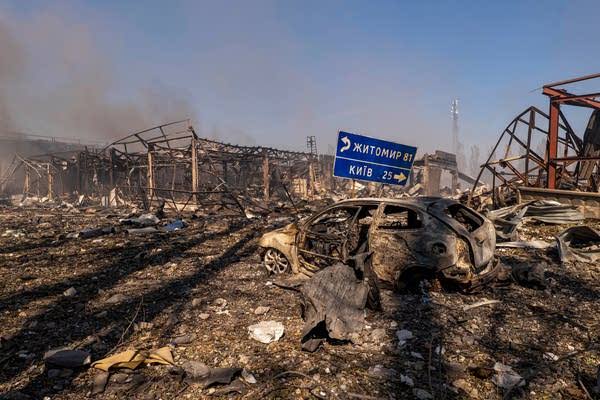
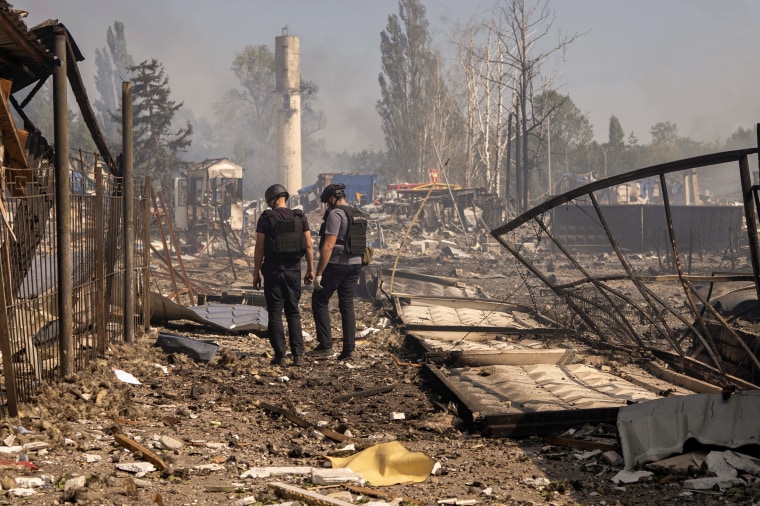
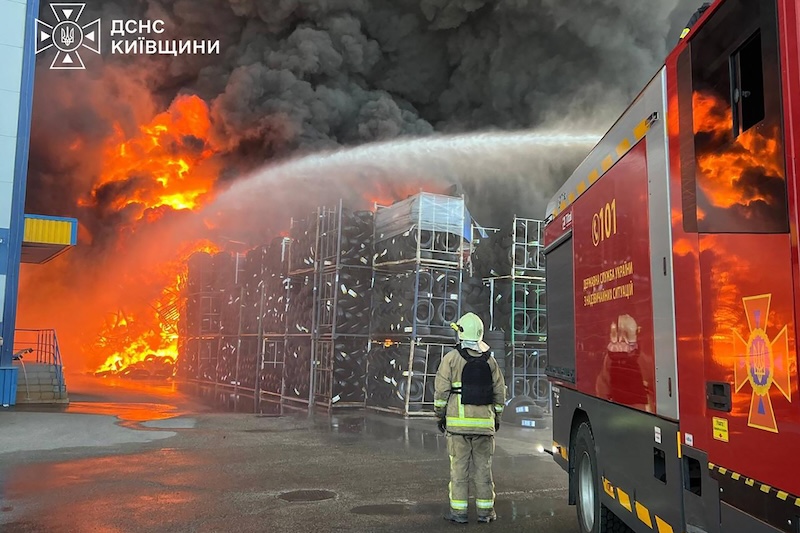
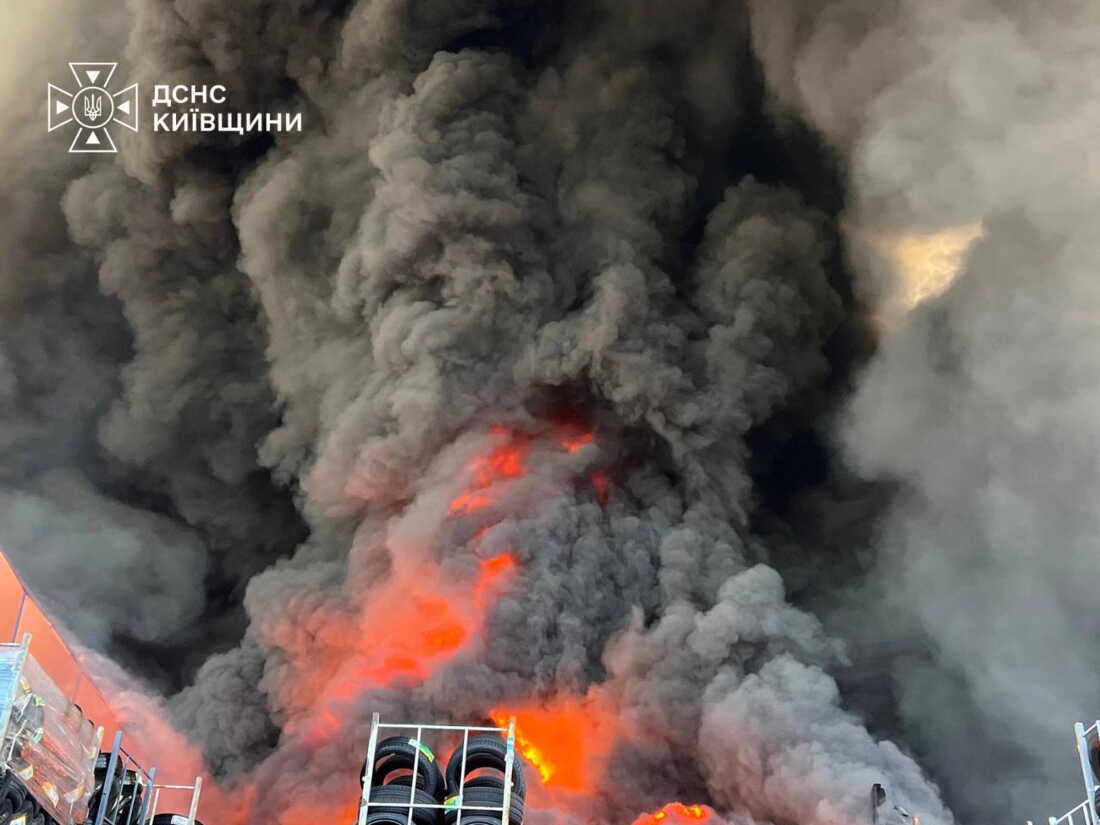
On the night of Friday, August 28, a Russian drone struck a warehouse in Myla, a village in the Bucha district just west of Kyiv, that Ukrainian officials say was being used to store shells, mines and other ammunition. The strike triggered a chain reaction of secondary explosions and fires that tore through dozens of nearby homes, a restaurant and other buildings. As of Sunday, August 30, the confirmed death toll had climbed to 38 — making it, by a significant margin, the deadliest single attack of the war so far in 2026 — with roughly 20 people injured, including two children, and four more still listed as missing. Ukraine's State Emergency Service has continued working around the clock in the days since to clear unexploded ordnance from what officials describe as a heavily contaminated site, a task complicated by the scale of the secondary detonations.
The strike did not occur in isolation. It came during a stretch Ukrainian officials described as two-to-three days of nearly round-the-clock Russian strikes, including a barrage overnight into Sunday that involved two Iskander-M ballistic missiles and roughly 130 drones of various types aimed at targets across the country; separate attacks over the same period killed at least eight more people and injured 41 others nationwide, according to Ukrainian authorities. Ukraine, for its part, continued its own campaign against Russian energy infrastructure, striking an oil refinery in northwestern Russia with drones and sparking a fire, according to local Russian officials — underscoring that the mutual infrastructure war shows no sign of slowing even as the human cost of Russia's strikes on populated areas has spiked.
What set the Myla strike apart from the war's many other deadly attacks was less the Russian strike itself than what followed: Ukrainian prosecutors opened a criminal investigation not into Russian conduct, but into potential negligence by Ukrainian officials and the company responsible for the warehouse, examining whether explosive materials had been stored near residential buildings without the required permits and safety approvals. It is an unusually candid admission of institutional failure for a government that has spent more than four years relentlessly documenting Russian war crimes, and it drew immediate, pointed criticism from within Ukraine's own political system.
Reactions
Zelensky did not soften his framing. Speaking Saturday, he called the Myla disaster "a terrible situation" and attributed much of its scale directly to "terrible negligence on the part of those who stored explosives right next to people," rather than treating it purely as another data point in Russia's bombing campaign. Ukraine's prime minister went further, calling the recurrence of such incidents — a second major ammunition-storage disaster in as many months, after Vyshneve in July — "criminal negligence" this deep into the war, a striking rebuke of Ukraine's own logistics and safety practices at a moment when public trust in wartime governance is already strained by corruption scandals that forced out senior officials, including a former chief of staff, in late 2025.
Moscow, for its part, framed the broader escalation as retaliation rather than aggression. The Russian Ministry of Defense announced on August 30 that it was preparing what it called "massive strikes" against Ukraine's energy infrastructure, explicitly justifying the planned campaign as a response to Ukraine's drone strikes on Russian refineries and logistics facilities. Kremlin spokesman Dmitry Peskov reinforced the message, saying Kyiv is receiving and will continue to receive "an even more than adequate response" for its own strikes on what Moscow describes as civilian infrastructure — a formulation that notably did not address the ammunition depot strike or its civilian toll directly. The European Union, which has steadily expanded its sanctions regime against Russia throughout 2026, including a package targeting individuals tied to Russia's military-industrial complex earlier in August, had not by early Monday issued a statement specifically addressing the Myla strike, though EU officials have repeatedly signaled intent to further tighten sanctions in response to Russia's intensified bombing campaign more broadly.
What's Next
In the near term, two parallel tracks are likely to dominate: Ukraine's domestic reckoning over munitions-storage practices, and the question of whether Russia follows through on its threatened "massive strikes" against the Ukrainian power grid as winter approaches. The Myla investigation, if it produces findings similar to the Vyshneve probe in July, could result in further personnel changes or new storage regulations, adding to a string of governance controversies that has already cost Zelensky a prime minister, a defense minister and a military commander-in-chief since mid-July. How the government balances accountability for that negligence against the need to maintain public confidence during an increasingly brutal bombing campaign will be a significant test of Zelensky's political standing heading into the war's fifth winter.
On the battlefield and in world capitals, the tit-for-tat infrastructure war — Ukrainian drones against Russian refineries, Russian missiles and drones against Ukrainian cities and now openly threatened against the power grid — shows every sign of intensifying rather than abating. With European sanctions deliberations ongoing and Washington's attention increasingly consumed by its own six-month-old war with Iran, the coming weeks will test whether Kyiv's allies can sustain both the military and diplomatic pressure needed to blunt an escalation that Moscow has now stated, in explicit terms, it intends to carry out.
Published By | News Editor