BISSAU, Guinea-Bissau
In three weeks, voters in Guinea-Bissau will decide whether to hand sweeping new powers to the presidency under a constitution drafted by the military government that has run the country since a coup nine months ago. The Aug. 30 referendum is the next milestone in a transition timeline that is also supposed to culminate in presidential and legislative elections on Dec. 6 — but it is unfolding while Domingos Simões Pereira, the opposition leader widely seen as the transitional government's most serious electoral threat, sits barred from politics under a Portuguese medical exile after months shuttling between house arrest and pretrial detention.
The referendum and Pereira's predicament are, in effect, two sides of the same question hanging over this small West African nation of roughly 2 million people: whether the transition set in motion by last November's coup is building toward genuine civilian, multiparty rule, or consolidating a military-shaped political order before voters ever get a real choice.
Background: a coup on the eve of an election
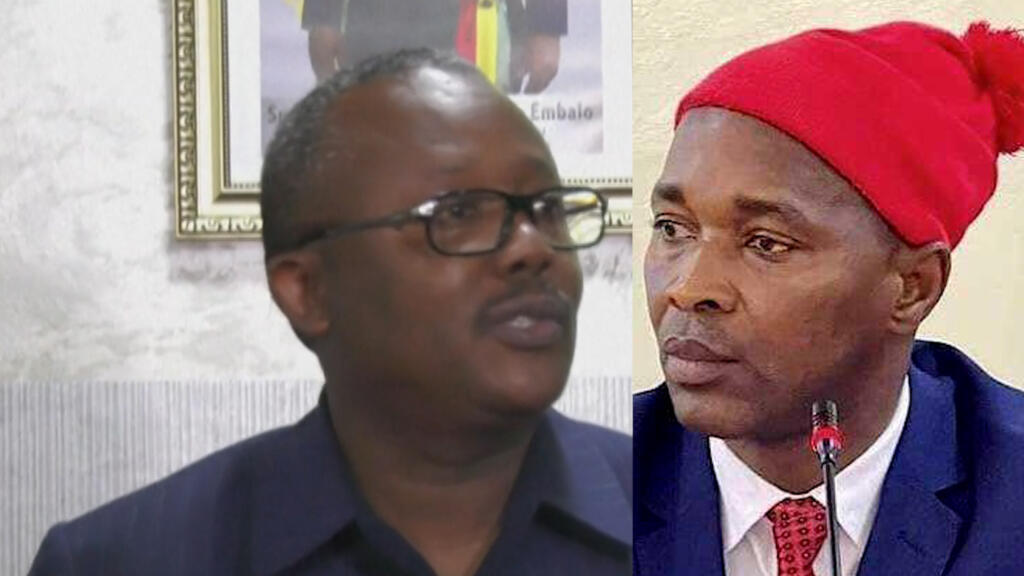
Guinea-Bissau's crisis began on Nov. 26, 2025, when army officers arrested President Umaro Sissoco Embaló just a day before the electoral commission was due to announce results from a presidential and legislative election held Nov. 23 — a vote in which Embaló had been seeking a second term against Pereira, the leader of the African Party for the Independence of Guinea and Cape Verde (PAIGC). Officers led by Brig. Gen. Dinis Incanha, head of the Military Office of the Presidency, declared "total control" of the country, and the following day the army's chief of staff, Gen. Horta Inta-A Na Man — also rendered in local reporting as Horta N'Tam — was proclaimed head of a newly formed High Military Command for the Restoration of National Security and Public Order. Embaló was flown out of the country aboard a Senegalese government charter and has remained outside Guinea-Bissau since.
The coup was the latest jolt to a country that has endured chronic instability since independence from Portugal in 1974, including a previous, less consequential coup attempt in 2023 that Embaló himself used to justify dissolving an opposition-controlled parliament and ruling substantially by decree. The Economic Community of West African States (ECOWAS) suspended Guinea-Bissau from its decision-making bodies after the November takeover and called for a swift, civilian-led restoration of constitutional order — a familiar script in a region that has seen a wave of military takeovers in Mali, Guinea, Niger, Burkina Faso and Gabon since 2020.

Key developments: a referendum to rewrite the rules
Guinea-Bissau's transitional authorities have set out a two-step path back to elected government. First comes the Aug. 30 constitutional referendum, called by decree after the country's Supreme Court issued a favorable opinion on the proposal. "Considering the proposal for a national referendum for which the Supreme Court has issued a favorable opinion, the transitional president, General Horta N'Tam, has set (the date) for August 30, 2026," the government decree stated, according to TRT Afrika, which cited AFP. Voters will be asked a simple yes-or-no question: whether to adopt a new constitution that would convert Guinea-Bissau's government from a parliamentary system to a presidential one.
The stakes of that switch are considerable. Under the outgoing parliamentary arrangement, the prime minister was drawn from whichever party or coalition held a parliamentary majority, a structure that repeatedly produced fractious cohabitation governments and, in Embaló's telling, paralyzing gridlock. The new constitution approved unanimously by the military-appointed National Transitional Council — which has functioned as the country's legislature since the coup — would instead let the head of state appoint the prime minister and the rest of the government directly, and would give the president the power to dissolve parliament. Critics of the plan note the obvious tension in a military-installed authority rewriting the rulebook to concentrate power in the very office it currently occupies, even though N'Tam has said he personally will not be a candidate when presidential elections are held; the transitional government confirmed in December 2025 that he would not be allowed to run.
Assuming the referendum passes, Guinea-Bissau is scheduled to hold presidential and legislative elections on Dec. 6, a date first announced by transitional authorities in January and reaffirmed since at ECOWAS's Freetown summit, which "noted ongoing efforts" toward the constitutional referendum and elections and urged transitional authorities "to ensure transparency and inclusion" in both processes. ECOWAS has since acknowledged what it described as "de-escalation" measures by the transitional government, including the release of some political detainees, even as it continues to press for a fully inclusive transition.
Pereira: prosecuted, paroled, exiled
That call for inclusion collides most directly with the case of Pereira, the 62-year-old PAIGC leader and a former prime minister who has run for president in three of the last four elections. Pereira is accused of financing an alleged attempted coup in October 2025 — weeks before the disputed presidential vote — as well as separate financial crimes and involvement in an earlier, 2023 coup attempt. He was released from pretrial detention in January 2026 and placed under house arrest in Bissau, but a military court ordered him returned to custody in a ruling issued in mid-July, according to Portuguese outlet Plataforma Media. His legal team and the PAIGC have dismissed the charges as politically motivated, arguing they are designed to disqualify Guinea-Bissau's most viable opposition candidate before the December vote. The Community of Portuguese Language Countries (CPLP), the bloc of Portuguese-speaking nations that includes Guinea-Bissau, "strongly condemned" what it called Pereira's "illegal detention."
By late July, Pereira had been authorized to leave Guinea-Bissau for medical treatment in Portugal, arriving in Lisbon under conditions that bar him from political activity for a 90-day period. "I cannot turn my back on my people," Pereira told reporters on arrival, according to Plataforma Media, vowing to return to Guinea-Bissau to continue what he described as his "fight." The arrangement leaves Pereira's status for the December election genuinely uncertain: the 90-day restriction, if it runs its full course, would keep him out of active campaigning well into the fall, compressing whatever window he might have to mount a serious bid — assuming the charges against him do not bar his candidacy outright.
The dispute has also spilled into regional diplomacy. Guinea-Bissau froze diplomatic ties with Cape Verde in mid-July, accusing its West African neighbor — with which it shares deep historical links through the PAIGC's shared independence movement — of interference in its internal affairs, a rupture that regional analysts have linked to the broader contest over Pereira's treatment and the transition's legitimacy.

Analysis: a transition writing its own rules
Guinea-Bissau's trajectory now sits at an uncomfortable midpoint between military rule and restored democracy. On one hand, the transitional government has kept to a published timetable, secured a Supreme Court opinion before calling its referendum, and taken steps — however grudging — that ECOWAS has credited as de-escalation. On the other, the substance of what voters are being asked to approve on Aug. 30 would materially strengthen the presidency at a moment when the military still controls the transitional apparatus, the courts prosecuting the leading opposition figure, and the timetable for elections. A "yes" vote would hand N'Tam's successor — whoever emerges from the December contest — considerably more unilateral authority than Embaló himself possessed at the height of his decree-rule period, raising the question of what institutional checks, if any, would constrain a future president.
The Pereira case sharpens that concern. Whatever the merits of the coup-financing and financial-crimes allegations against him — matters that Guinea-Bissau's military courts, rather than an independent civilian judiciary, are adjudicating — the practical effect of his in-and-out detention and now his medical exile has been to remove the PAIGC's most prominent national figure from public view during the exact months when a constitutional referendum and, soon after, a presidential campaign are unfolding. Regional bodies including ECOWAS and the CPLP have registered concern without imposing consequences that have altered the transitional government's course, a pattern consistent with the limited leverage such organizations have exercised over recent coups elsewhere in West Africa.
Outlook: what to watch before Dec. 6
The most immediate marker is the Aug. 30 referendum itself: turnout, the conduct of the vote, and whether opposition parties beyond the PAIGC campaign actively for a "no" position will signal how contested the process really is on the ground, as opposed to how it is described by transitional authorities. A second marker is Pereira's status — whether his 90-day political restriction is lifted, extended, or effectively mooted by further legal proceedings against him, and whether the PAIGC fields an alternative candidate if he remains sidelined. A third is ECOWAS's posture heading into December: the bloc's own internal report on Guinea-Bissau's transition process, expected to inform its assessment of whether the referendum and election meet its standards for restoring constitutional order, will be a key document for regional legitimacy. Finally, the diplomatic rift with Cape Verde bears watching as a proxy indicator of how the PAIGC's traditional regional allies are reading the fairness of the process. With less than four months separating today from the scheduled return to elected government, Guinea-Bissau's transition remains, by design, entirely in the hands of the same military authority that launched it.
Published By | News Editor