Written By |
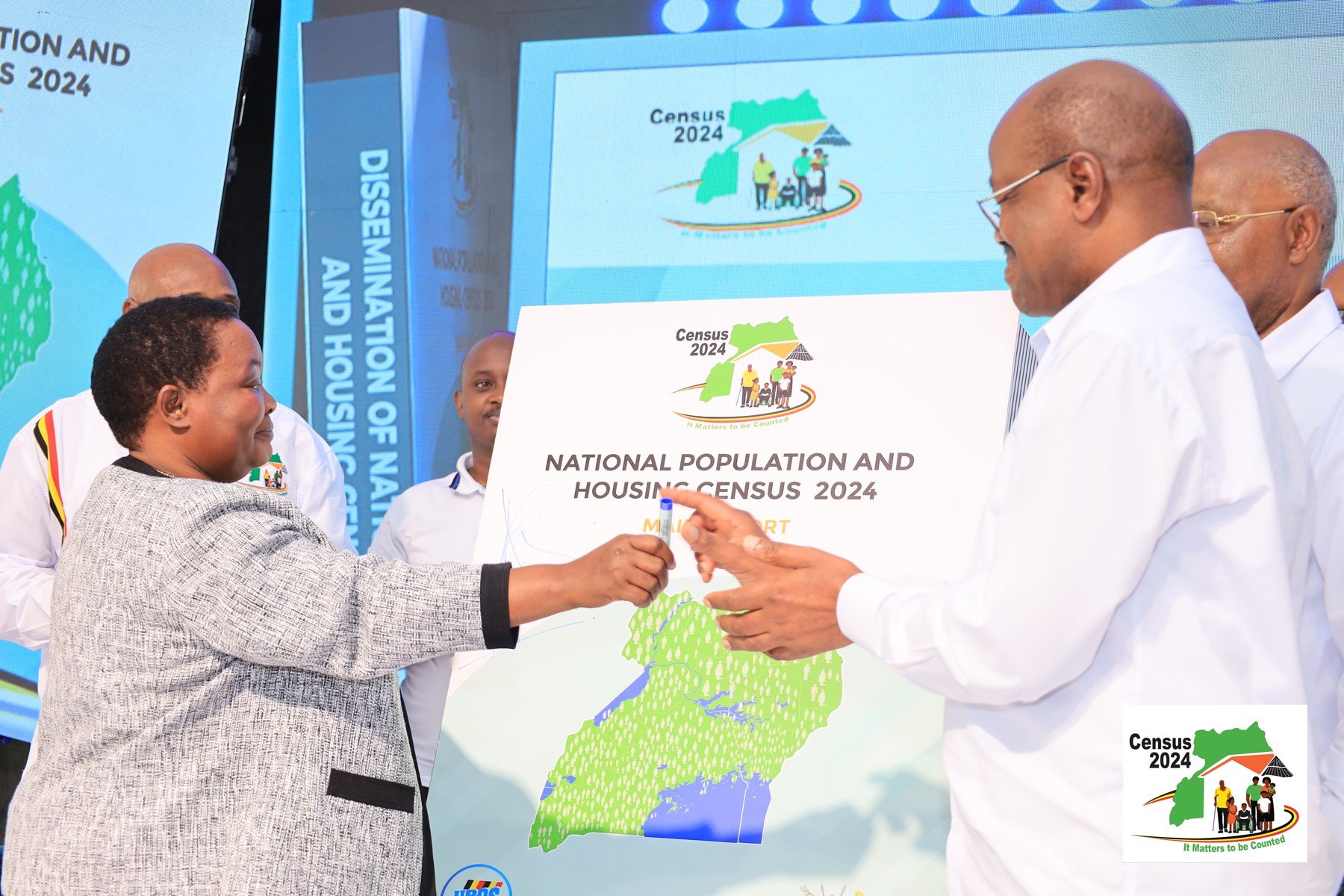
Prime Minister Robinah Nabbanja signs on the census report
By Our Reporter
A recent census report released by the Uganda Bureau of Statistics (UBOS) has revealed that 12 tribes in Uganda are experiencing a significant decline in population. The National Population and Housing Census 2024, published on Thursday, highlights a worrying trend for the Basongora, Banyabindi, Banyatumbi, Batwa, Mening, Mvuba, Soo, Vanoma, Banyala, Paluo (Chope), Babukusu, and Napore tribes, all of which have recorded a marked decrease in their numbers compared to the 2014 census.
While UBOS did not provide specific reasons for the population decline among these tribes, the report has raised concerns about the future of these minority groups.
The Basongora, traditionally pastoralists located in Western Uganda and the eastern Democratic Republic of Congo, have seen their population drop from 15,897 in 2014 to 13,837 in 2024, a reduction of 2,060 people. Similarly, the Banyabindi and Batwa, often referred to as the “Keepers of the Forest,” have also faced significant declines. The Banyabindi population decreased by 4,395, from 16,342 to 11,947, while the Batwa saw a reduction of 2,341 people, from 6,198 in 2014 to 3,857 in 2024.
Other tribes, including the Banyabatumbi, Mening, Mvuba, Soo, and Vanoma, have also experienced population drops. Notably, the Mvuba tribe, which resided in the northern foothills of the Rwenzori Mountains, saw one of the most significant declines, from 2,923 people in 2014 to just 382 in 2024.
The dissemination of the National population and housing Census 2024 final results
Causes of the decline
Former minister and Member of Parliament for Bughendera County, Christopher Kibazanga, criticized UBOS for what he described as poorly conducted data collection, particularly in hard-to-reach areas. Kibazanga claimed that faulty equipment and inexperienced enumerators failed to capture the actual population numbers in mountainous regions, where many of these tribes reside.
Derrick Kaddu, spokesperson for the Banyala chiefdom, echoed similar concerns, stating that some enumerators refused to recognize the Banyala as a distinct tribe during the census. Kaddu argued that the recorded number of 46,098 Banyala is inaccurate, estimating the population to be over 100,000.
Kaddu raised concerns about the misidentification of Banyala individuals as Baganda, which he believes contributed to the lower numbers. He emphasized that this was a deliberate attempt to alter their identity and vowed to protest, much like the Banyarwanda, if corrective measures are not taken.
General population growth
Despite the decline in minority tribes, the 2024 census report showed that Uganda's population has increased overall, from 34.6 million in 2014 to 45.9 million in 2024, reflecting a growth rate of 2.9%. However, this rate is slightly lower than the 3.18% reported in 2014.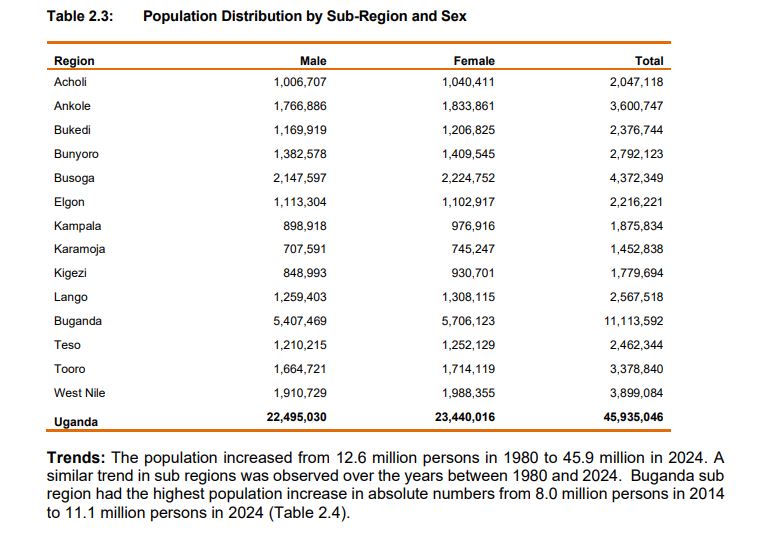
The census also highlighted a widening gender gap, with women now making up 53% of the population, up from 51% in 2014. The number of men has decreased to 47%. UBOS Executive Director Dr. Chris Mukiza attributed the gender disparity to higher life expectancy among women.
The Baganda remain the largest ethnic group in Uganda, with a population of 7,037,404, a significant increase from 5,555,412 in 2014. The Banyankore, Basoga, Iteso, and Bakiga follow in descending order.
Uganda’s population remains predominantly young, with children below 17 years making up 50% of the population, while youth aged 18-30 years account for 22.7%. Older persons aged 60 years and above represent only 5% of the population.
The report has sparked a national conversation about the need to preserve Uganda's cultural heritage and ensure the survival of endangered tribes.
Source: Uganda Bureau Of Statistics (UBOS)



