Nine days after a midterm rout that his vice president blamed on the war, Trump declares negotiations with Tehran unnecessary, leaving the Strait of Hormuz in limbo, Israel pressing for renewed strikes and Iran weighing an indefinite standoff.
Introduction
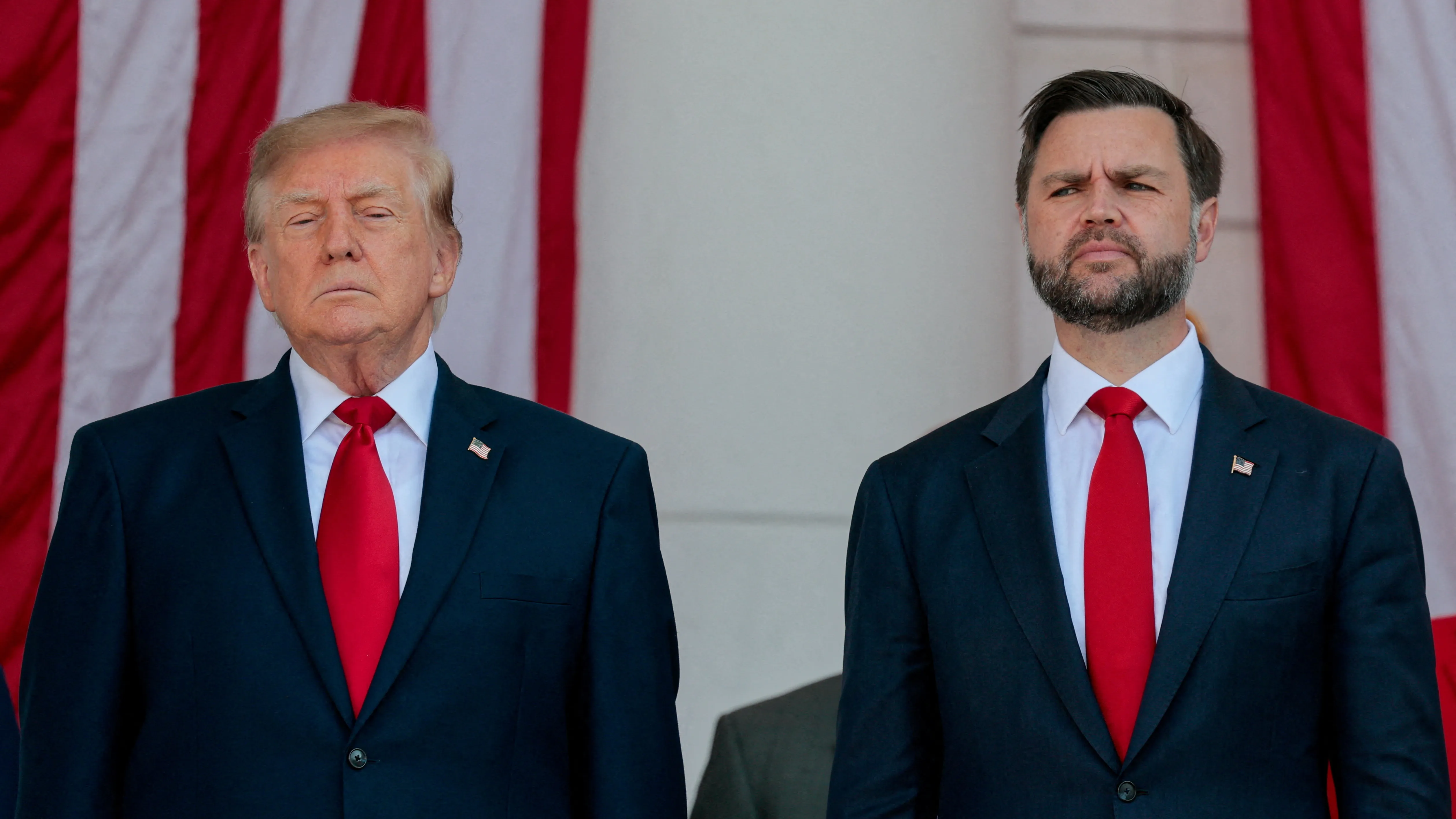
President Donald Trump on Thursday, November 12, 2026, signalled that he is winding down efforts to negotiate an end to the nine-month war with Iran, removing Vice President JD Vance from the talks and declaring in a Truth Social post that "We don't need a deal with Iran. Those days have long since passed." In the same post, Trump claimed the United States now holds "their money, Hundreds of Billions of Dollars" and "their Strait," a reference to the Strait of Hormuz, and instructed Vance to devote his "complete and total attention" to what Trump called "Massive Corruption and Crime" in Democratic-run cities and states, naming Minnesota, California and Illinois.
The announcement marks a significant shift in tone. Only days earlier, the administration had described Qatar-channelled diplomacy as progressing, and Trump had repeatedly predicted that Tehran would be ready to deal once the November 3 midterm elections were over. Instead, the post-election period has brought a Democratic takeover of both chambers of Congress, an open rift between Trump and his vice president over the war's political cost, and a policy that now appears to rest on economic strangulation rather than a negotiated settlement.
Background: A War That Shaped an Election
The conflict began in February 2026 with US airstrikes on Iran and has since grown into a prolonged confrontation centred on the Strait of Hormuz, the chokepoint for a large share of the world's seaborne oil. Iran's Revolutionary Guards have enforced restrictions on shipping through the strait, while the United States has imposed what the White House calls the "greatest naval blockade in history" on Iranian ports in the Persian Gulf and Gulf of Oman, alongside sweeping financial measures branded Operation Economic Outcast. US casualty figures differ by source: a report carried by Yahoo News puts the number of American service members killed at 23, while Trump, according to ABC News, said this week that "we lost 18 beautiful souls."
Vance had been the administration's most prominent negotiator, working alongside envoys Steve Witkoff and Jared Kushner. He helped broker a tentative deal in June that collapsed after, in Washington's account, Iran failed to follow through on several commitments. Widely seen as the most war-sceptical senior figure in the administration, Vance broke ranks after the midterms. In a November 4 post on X, he wrote, "The reason we lost is the war," blaming the conflict and the high petrol prices that came with it for Republican losses. The day before Trump's directive, The Wall Street Journal reported that Vance had been considering face-to-face talks with a senior Iranian security official; the National Iranian American Council's analysis suggested that official may have been Mohsen Rezaei, who has since denied any planned meeting.

Key Developments
Trump's post went further than earlier statements. On November 6, in a 60 Minutes interview, he said US forces could keep escorting ships through Hormuz with regional states helping to cover the cost, and on November 9 he described Iran as "militarily, effectively over," adding, "We're just keeping it the status quo," and suggesting escalation "won't be necessary." Thursday's message drops the pretence that a deal is the goal. A White House official, asked by ABC News whether talks had ended, declined to say, pointing instead to the blockade and economic pressure. The White House separately said the US was in a strong position, citing "control of the Strait of Hormuz and the Iranian economy collapsing," and announced that a new effort, Operation Iron Gate, would accompany the existing measures.
Secretary of State Marco Rubio, speaking after a G7 meeting, framed the approach as pressure without a new military campaign: sanctions and maritime restrictions were already imposing heavy costs, he said, making a major offensive unnecessary, while Washington remained open to a "genuine" agreement. He called Tehran's conditions unrealistic.
The reassignment also has a domestic dimension. Vance already chairs the administration's Task Force to Eliminate Fraud, created in March, and Trump's directive effectively returns him to that portfolio, which conservative outlets say has identified large sums in alleged fraud in several Democratic-led states. Those figures have not been independently verified. Many observers read the move as a demotion of a vice president who had publicly tied the party's defeat to the president's signature foreign policy.
Meanwhile the strait remains dangerous. On the night of November 11, the IRGC Navy said two supertankers carrying more than four million barrels had been disabled after taking an "unauthorized route" in the southern part of the waterway; Iranian state media said they struck naval mines. Those claims have not been independently verified, and the UK Maritime Trade Operations centre has in several earlier cases reported tankers hit by unidentified projectiles. A separate tanker was struck off Ras al-Khaimah in the UAE, with all crew reported safe. Oil market reports for November 12 conflict: Cornerstone Futures recorded Brent at about $92 and falling in early trading, while other outlets, including Nation Thailand and the 10 Things briefing, reported Brent rising about 3.3 percent on the day, to as high as roughly $96, amid the mine reports and claims of new attacks on Saudi Arabia. What is clear is that prices remain far above pre-war levels and swing sharply on every incident.
Israel Pushes for Strikes
Trump's turn away from diplomacy does not mean a turn toward escalation, and that has put him at odds with Israeli Prime Minister Benjamin Netanyahu. Israel's Ynet reported that the two leaders held a heated weekend phone call over whether to resume strikes on Iran, with one source describing it as "a shouting match from hell." Netanyahu's office called the report "fake news, complete nonsense," and a senior Israeli official said the call took place but was "very much not a difficult conversation." The Financial Times, as cited by Fox News, reported that Netanyahu has been calling Trump daily to press for renewed military action, and Israeli outlets reported that the security cabinet ordered the military to step up preparations for possible attacks.
The Israeli debate is complicated by the country's own political limbo. Netanyahu leads a caretaker government after last month's election, and Gadi Eisenkot, who holds the presidential mandate to try to form a new coalition, has warned against "non-urgent military action" during the transition and accused Netanyahu of withholding security briefings. After a two-hour briefing between the two men ended on November 12, Defence Minister Israel Katz said he, Netanyahu and military chief Eyal Zamir "see eye to eye on the Iranian issue," while The Times of Israel reported that Zamir had again warned against "ill-advised action" against Iran.

Iran's Response
Tehran has responded with defiance and a hardening of conditions. Parliament speaker Mohammad Bagher Ghalibaf, who heads Iran's negotiating delegation, told Al Jazeera on November 11 that Iran rejects an indefinite state of "neither war nor peace," attributing that stance to Supreme Leader Mojtaba Khamenei, and argued that ending the uncertainty did not require a deal with Washington because Iran could strengthen its own deterrence. Rezaei, Iran's security chief, called reports of progress in talks misleading and said Iran would not allow any enriched uranium to leave the country, including to Russia. He warned that renewed US attacks would prompt strikes on the military facilities involved, potentially including US bases in Europe, a capability analysts consider uncertain. Foreign Minister Abbas Araghchi denounced Rubio's suggestion that financial pressure could force concessions as "inhumane" and said it would fail.
On November 12, Iran's Assembly of Experts called for examining withdrawal from the Nuclear Non-Proliferation Treaty and reconsidering the country's defence doctrine, citing attacks on its nuclear facilities. The assembly has no power to withdraw Iran from the treaty, and the Foreign Ministry continues to affirm Iran's membership, but the statement is a warning shot. Tehran has also added a demand for compensation for environmental damage from US and Israeli strikes to its peace terms, raising the claim at an international climate forum, according to Fox News. Separately, on the sidelines of the COP31 summit in Turkey, President Masoud Pezeshkian briefed Brazil's President Lula on peace efforts mediated by Qatar and Pakistan.
What's Next
The most likely near-term outcome is the one both sides say they reject: a prolonged standoff. Washington appears content to maintain the blockade, the financial squeeze and military escort operations without either a settlement or a major offensive, with additional carrier groups rotating into the region. Tehran, for its part, retains the ability to disrupt shipping in Hormuz, keeping energy markets on edge and costs high for Gulf states and importers in Asia and Europe. Ordinary Iranians, already facing economic collapse, will bear much of the burden.
Three variables could break the stalemate. The first is Israel: if Netanyahu's caretaker government decides to act without American backing, it could drag the United States back into active hostilities. The second is Iran's nuclear posture; any concrete step toward leaving the NPT would sharply raise the stakes. The third is Washington's own politics. When the new Democratic-controlled Congress convenes in January, war-powers measures and funding fights are likely, and Vance's sidelining may deepen a Republican debate about the war ahead of the 2028 primaries, where early polling shows him and Rubio as leading contenders. For now, the president's message is plain: the United States believes it holds the leverage, and it no longer feels the need to bargain.
Published By | News Editor