DESIGN
The UAE studio founded by Sara Farha and Khaled Shalkha has won the designboom Special Prize at the Seoul Design Award 2026 for a material that makes tiles, cladding and furniture from a regional food waste.
DUBAI
In the United Arab Emirates, dates are part of everyday life. They're served to guests, eaten to break the fast and found in nearly every kitchen. Each one leaves behind a hard pit, usually thrown away. Datecrete, a UAE design studio and lab, wants those pits to become a building material.
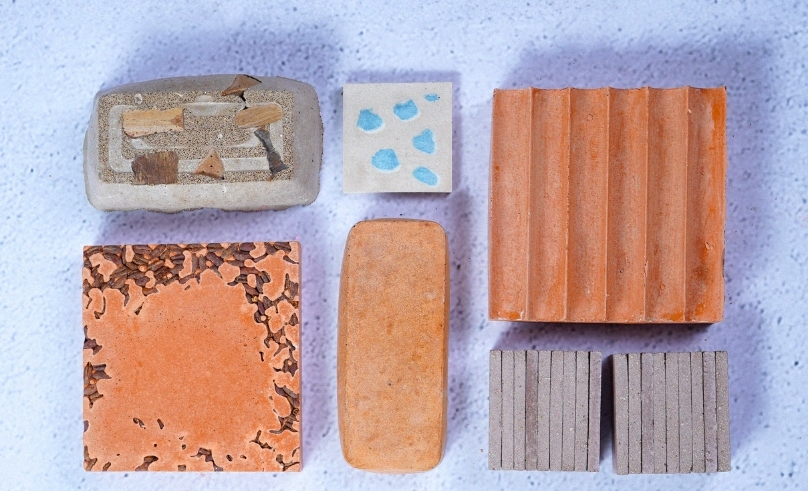
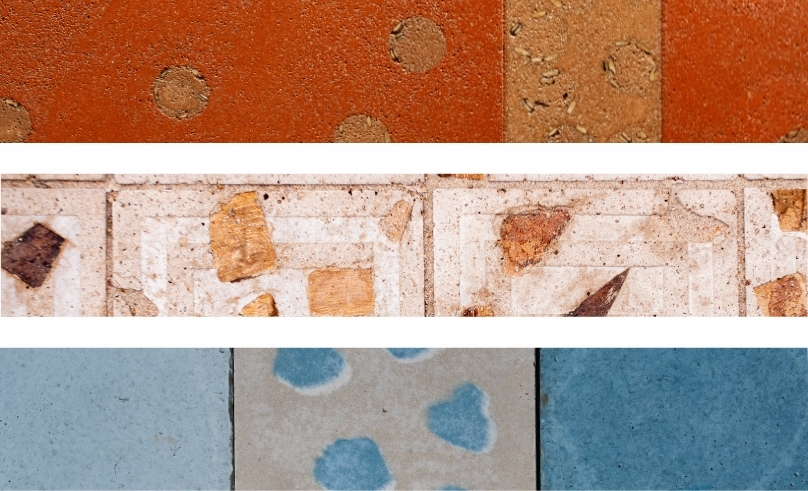
The studio has won the designboom Special Prize at the Seoul Design Award 2026 for Datecrete, a cement-free material made from discarded date pits and a patent-pending natural binder. designboom announced the win on November 11. The material is also free of resins and petrochemicals, and it can be cast into molds to make tiles, cladding, furniture, lighting and decorative objects.
Five Years From Pit to Pavement
Co-founders Sara Farha and Khaled Shalkha began researching date pits in 2021, designboom reports. The process is closer to a lab than a factory. The pits are collected, cleaned, dehydrated, graded and processed, then mixed with the binder system and cast. After curing, each piece is sanded, polished and finished for its intended use. The studio tests every batch through repeated in-house prototyping and application studies.
After about four years of development, the material had its first large-scale use in 2025. Thirty-five metric tons of Datecrete paving were laid around the UAE Pavilion at Expo 2025 Osaka, according to designboom. Using a food-waste material on an international expo site was a strong public test, and it moved Datecrete from a gallery-scale experiment toward real construction.
Because the material is cast rather than cut, it can take many forms. The same mix that made paving slabs in Osaka can be shaped into a lamp base, a side table or a decorative wall tile, and then sanded and polished to suit each. designboom describes a range that runs from small objects up to architectural surfaces. That flexibility matters for a young material: smaller products bring in income and attention while larger, more demanding uses go through testing. Many material startups have followed the same path, and Datecrete is now at the point where scaling up becomes the main challenge.
The Scale of the Opportunity
The supply is large. designboom cites International Nut and Dried Fruit Council figures, compiled by Statista, showing that the UAE consumes between 100,000 and 180,000 metric tons of dates each year. The pits from that consumption make up a large, steady and local stream of material that currently has little value. Datecrete treats it as a resource.
The bigger target is cement. Cement production is widely recognized as one of the largest industrial sources of carbon emissions, and architects and manufacturers are looking for alternatives for surfaces that don't need structural concrete. Datecrete's long-term goal, designboom reports, is large-scale architectural use, especially tiles, cladding and modular systems. Those surfaces cover huge areas of buildings and could make use of a regional waste product.
Why the Jury Noticed
The designboom Special Prize sits within the wider Seoul Design Award program. designboom says Datecrete matches three values the prize looks for: being "Intentionally Curious," willing to "Disrupt Playfully," and "Fearlessly Meaningful." Datecrete was one of several projects in the special prize category this cycle. designboom has also recognized SMALLrevolution's traceable recycled furniture, which took second place, and Lavazza's Tablì, which took third. All three show how much material and circular-design ideas dominate design awards right now.
In its coverage, designboom quoted designer and technologist John Maeda's line that "design is a solution to a problem." Datecrete takes that literally. It begins with a local problem, the waste left by a national staple, and turns it into something builders can use.
Part of a Bigger Movement
Datecrete fits a wider wave of bio-based and waste-derived materials in architecture and interiors. Designers are working with mycelium, seaweed, agricultural husks and recycled plastics. What sets this one apart is how closely it is tied to place. Date palms appear throughout the culture and history of the Gulf. The palm-frond structure of the UAE Pavilion in Osaka, designed with landscape studio SLA, was built around that same heritage. A floor or wall made from date pits uses that heritage as its raw material.
There are still open questions any new building material has to answer: long-term durability across climates, certification for structural or exterior use, and whether it can be produced at a cost that competes with conventional tiles. designboom's report describes a material still being tested and refined in-house, and the studio presents architectural scale as an ambition rather than an achievement. Thirty-five metric tons of paving in Osaka is a meaningful proof of concept, but it isn't yet an industry.
What This Means for You
For homeowners and designers, Datecrete is an early sign of where surface materials are going. Tiles, countertops and wall finishes made from food and farm waste are moving from design-fair novelties toward real products. If you're planning a renovation, ask suppliers about cement-free or waste-derived options. Interest from buyers is one of the main things that pushes these materials into the mainstream. Datecrete also shows a broader approach to sustainability: look first at the waste your own region already produces.
The Bottom Line
Datecrete takes a pit people usually throw away and turns it into a floor you can walk on. Its Seoul Design Award win recognizes five years of slow lab work, a strong showing in Osaka and a plan that reaches from small objects to whole building facades. If it gets there, cities in the Gulf could one day be clad in material made from their own dates.
Published By | Features Editor