Written By | Business Experts
A world market awash with subsidised Brazilian, Indian and Thai sugar has pushed prices to multi-year lows, while the continent's main producers are pulling in opposite directions
Economic & Social Transformation
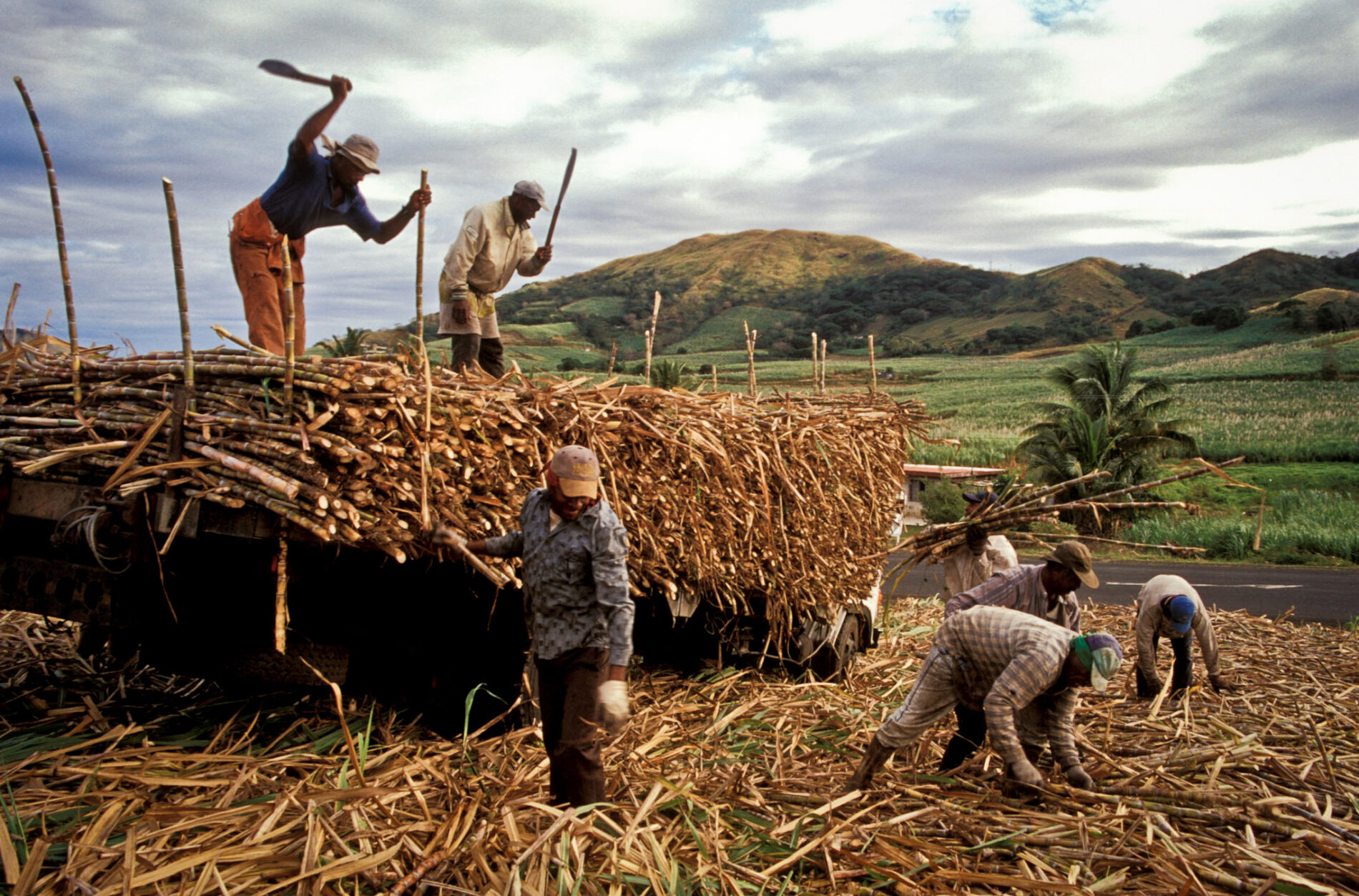
Sugar is one of the few crops on which African governments have built entire rural economies by design. Cane estates anchor towns in western Kenya, KwaZulu-Natal, Eswatini's lowveld and Tanzania's Kilombero valley; outgrower schemes tie hundreds of thousands of smallholders to a mill; and the refined product sits in every kitchen and every soft-drink bottle. Yet 2026 has exposed how fragile that model is. A world market awash with subsidised Brazilian, Indian and Thai sugar has pushed prices to multi-year lows, while the continent's main producers are pulling in opposite directions: South Africa is drowning in imports, Kenya is celebrating a production rebound that has not lowered shop prices, Nigeria is relaunching a self-sufficiency plan after fifteen years of disappointment, and Tanzania is still importing to fill a stubborn gap.
The common thread is what might be called the import-parity trap. When world prices are low, African mills that are smaller, older and less integrated with ethanol and power production struggle to compete; governments respond with tariffs, quotas and licences; and those protections then become the main determinant of whether rural incomes rise or fall. This article examines how that trap is playing out across East, Southern and West Africa, and what a more durable sugar strategy would require.
A global market tilted against small producers
The backdrop is a world market that has swung from tightness to surplus. The International Sugar Organization (ISO) estimated a 2025/26 global surplus of about 1.6 million tonnes in November 2025, raised it to 2.2 million tonnes in May 2026 on expectations of a record crop, and has since trimmed it again to roughly 1.1 million tonnes, flagging El Niño as the main risk to the outlook. Other analysts, such as Czarnikow, have projected far larger surpluses. Prices followed the supply story: the New York raw-sugar contract fell to about 13.42 US cents per pound in spring 2026, a five-and-a-half-year low, before recovering to an ISO daily average of about 17.4 cents in August.
For African producers, the price level matters less than who sets it. Brazil's mills can switch cane between sugar and ethanol depending on relative returns, and India and Thailand support growers through state pricing and export arrangements. Surplus sugar from these systems arrives at African ports at prices that frequently sit below local production costs. That is the core complaint of South Africa's cane growers, and it shapes policy debates from Nairobi to Abuja.
South Africa: an industry squeezed from two sides
South Africa's sugar industry, centred on KwaZulu-Natal and Mpumalanga, has become the clearest case of the trap. According to South African Revenue Service data cited by SA Canegrowers, the country imported 94,984 tonnes of sugar between January and May 2026, compared with 55,213 tonnes in the same period of 2025 and just 1,491 tonnes in January to May 2022. The South African Sugar Association reported local sales of 255,015 tonnes for April to June 2026, more than 45,000 tonnes lower than a year earlier and well below a recent high of 428,422 tonnes for the same quarter. Growers estimate that nearly 175,000 tonnes of local sales have been lost within a few seasons, and the projected recoverable value price fell more than 10% to roughly R6,600 per tonne.
The government's answer arrived on 28 August 2026, when the International Trade Administration Commission (ITAC) raised the dollar-based reference price that drives the variable import duty from US$680 to US$785 per tonne. The duty consequently rose about 44%, from 483.72 cents to 697.92 cents per kilogram, implemented through SARS notice R.7864. The mechanism will be recalculated when the 20-day average world price moves by more than US$20 a tonne for 20 consecutive trading days, and it is capped by South Africa's WTO-bound rate of 105%. Industry groups welcomed the change but argued it came after an application that had been pending for more than 18 months, with losses for the 2026/27 season already cited at around R560 million.
Protection alone cannot fix the industry's internal crisis. Tongaat Hulett, one of the country's largest millers, has been in business rescue since October 2022 after accounting irregularities. A rescue deal with Vision Investments collapsed in February 2026 when sale agreements lapsed, and the business rescue practitioners applied for provisional liquidation, before an Industrial Development Corporation intervention allowed the company to remain in rescue. The episode underlined a wider point: tariff relief buys time, but a sugar sector with distressed mills, ageing equipment and shrinking local sales needs restructuring and diversification into products such as ethanol and co-generated electricity.
Eswatini: the price of dependence on a single market
South Africa's import problem spills directly into its neighbours. Eswatini, where sugar is the largest agricultural export, sells most of its output within the Southern African Customs Union. According to the US Department of Agriculture's May 2026 Sugar Annual, SACU absorbed 63% of Eswatini's raw sugar exports and 85% of its refined sugar exports in 2024/25, mostly to South Africa. When cheap imports depress prices inside SACU, Eswatini's producers feel it immediately.
The Royal Eswatini Sugar Corporation reported a comprehensive loss attributable to shareholders of E73.6 million for the year to 31 March 2026, compared with E414.3 million of income the previous year, citing lower prices and an influx of imported sugar into the customs union. Eswatini has tried to diversify: it fully used its 17,213-tonne US tariff-rate quota for fiscal 2026, and trade data showed exports jumping in spring 2026 on stronger European orders. But Middle East shipping disruptions forced the industry to look for alternative routes, highlighting how logistics costs can erase the gains from new markets. For a small, landlocked economy, the lesson is that regional protection mechanisms set in Pretoria have as much influence on rural livelihoods as decisions taken in Mbabane.
Kenya: more cane, but not cheaper sugar
Kenya offers the most dramatic swings. The Economic Survey 2026 recorded that sugarcane production fell 24.7% in 2025 to about 7.05 million tonnes and sugar output fell 24.8% to 613,200 tonnes, largely because of a shortage of mature cane. In response, the government leaned on the Sugar Act 2024, cane catchment zoning and the leasing of state-owned mills, including Sony, Muhoroni, Chemilil and Nzoia, to private operators under 30-year agreements.
In 2026 production rebounded strongly. Kenya National Bureau of Statistics data reported by Business Daily showed first-half output up 35.2% to 437,852 tonnes, the highest on record for that period. The US Department of Agriculture's Nairobi office has projected 2026/27 output of about 850,000 tonnes, a 40.5% jump, and expects imports to fall from 510,000 to 370,000 tonnes. In August 2026, the Kenya Sugar Directorate halted new import licences on the grounds that domestic output could meet demand, and Kenya has retained licensing controls even after ending the COMESA safeguard regime that had protected the industry for over two decades.
Consumers, however, have not yet seen the benefit. Average retail prices rose for a fourth consecutive month in July 2026, from KSh164.35 per kilogram in April to KSh167.41. Farmers protested cuts to cane prices in April, workers' groups point to legacy wage arrears at the leased mills, and competition analysts have warned that leasing could replace state inefficiency with private market power unless pricing and access to cane are regulated carefully. The sector also carries heavy political weight in western Kenya ahead of the 2027 election, raising the risk that short-term politics will override reforms.
Tanzania: closing a gap without overshooting
Tanzania illustrates the opposite challenge: building capacity fast enough to replace imports without creating a new glut. The Sugar Board of Tanzania has cited figures ranging from about 550,000 to over 730,000 tonnes of annual demand against domestic output of roughly 306,000 to 411,000 tonnes, depending on the period and whether industrial sugar is included. The 2026 season started late because of heavy rains and factory maintenance, and the Board approved about 110,000 tonnes of imports to bridge the shortfall. Kilombero Sugar's expanded factory resumed production on 7 July, and the new Mkulazi plant began producing industrial white sugar on a trial basis earlier in the year.
Officials target self-sufficiency between 2026/27 and 2027/28 and even surplus exports later in the decade. Given regional and global conditions, that ambition needs a realistic export plan: a Tanzanian surplus would land in an East African market where Kenya is also expanding and where world prices are set by much larger producers.
Nigeria: fifteen years of backward integration, and a reset
Nigeria has one of Africa's largest sugar supply gaps. The National Sugar Development Council (NSDC) estimates annual consumption at about 1.8 million tonnes and says roughly US$1 billion flows abroad each year to pay for imports. The original Nigeria Sugar Master Plan, launched in 2012, required importers and refiners to invest in local cane estates under a Backward Integration Programme in exchange for import quotas. Critics argue it produced far less local sugar than promised, and the USDA has judged that policy efforts have not materially raised output because of implementation problems.
The second master plan, NSMP 2.0, is explicitly an attempt to fix execution. In August 2026 the NSDC set out a target of about two million tonnes of local production, a US$1 billion engineering, procurement, construction and finance partnership with China's SINOMACH, and a ₦10 billion Sugar Project Acceleration Fund with the Bank of Industry to finance feasibility studies for greenfield estates. Quota holders must now prove backward-integration progress through a "qualify, reward, verify, enforce" framework, with satellite imagery supplementing field inspections. Estates must reserve land for outgrowers and invest in host communities. Dangote Sugar has been tasked with reaching 600,000 tonnes by 2030, and Flour Mills of Nigeria's Sunti estate is being promoted as a flagship private investment. The NSDC's own diagnosis is telling: "We don't lack policy. What we have struggled with is world-class execution."
What a durable sugar strategy would look like
Across these cases, four lessons stand out.
Sugar will not disappear from Africa's rural economy, but its role is changing. The continent's producers cannot win a price war against Brazil. They can, however, compete on proximity to fast-growing consumer markets, on integrated energy and food production, and on institutions that make investment predictable. Whether 2026 becomes a turning point or another episode in a long cycle of bailouts depends on which of those strategies governments choose.