Joko Widodo's son quits two years into his term after court rulings voided a school-equivalency document used for his candidacy, leaving the world's third-largest democracy with an empty vice presidency, a record-low rupiah and a widening rift between its current and former presidents.
Introduction
Indonesia's Vice President Gibran Rakabuming Raka resigned on Thursday, November 12, 2026, ending a two-year tenure that began with controversy and ended in one. The 39-year-old eldest son of former President Joko Widodo delivered his resignation letter to the People's Consultative Assembly (MPR), the country's highest legislative body, after weeks of mounting pressure over whether the educational credentials he used to qualify for the 2024 election were valid.
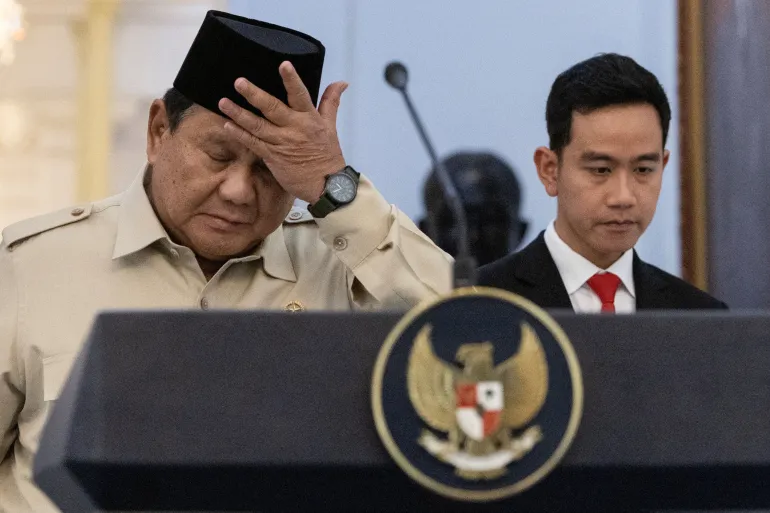
President Prabowo Subianto, standing beside Gibran at a press conference at the Presidential Palace, said he accepted the letter "with a heavy heart" and that he "respected and supported" the decision, according to Al Jazeera and Arab News. The departure does not trigger a new election, but it opens a 60-day constitutional process to choose a successor and lays bare what analysts now describe as a fractured partnership between Prabowo and Widodo, the two men whose alliance shaped Indonesian politics for the past three years.

Background: An Unusual Path to the Vice Presidency
Gibran's rise was controversial from the start. A former mayor of Solo, the Central Java city where his father also began his political career, he became eligible to run for vice president in 2024 only after the Constitutional Court issued a contested ruling that relaxed the minimum age requirement for candidates. At the time, the court was headed by Anwar Usman, Widodo's brother-in-law, a fact that drew accusations of dynastic engineering. Gibran nonetheless ran on Prabowo's ticket, and the pair won decisively, making him the youngest vice president in Indonesia's history.
The alliance itself was remarkable. Prabowo, a former special forces commander, had lost to Widodo in both the 2014 and 2019 presidential contests before joining his cabinet as defence minister. When Widodo reached his two-term limit, he effectively threw his popularity behind his former rival, and his son's place on the ticket was widely seen as the guarantee of that bargain.
Questions about Gibran's schooling surfaced in 2025. He attended Orchid Park Secondary School in Singapore and UTS Insearch, a pathway college in Sydney, before studying at the Management Development Institute of Singapore (MDIS), which has said he graduated in 2010 with an advanced diploma. Indonesia's election law requires candidates to have completed senior high school or a recognised equivalent. In September 2025 a citizen filed a civil suit in the Central Jakarta District Court alleging Gibran had not met that requirement, and critics, including the former minister Roy Suryo, publicly questioned whether he had ever completed the Australian program. Widodo initially brushed the controversy aside, saying his son would cooperate with the legal process.
Key Developments: Two Courts, One Verdict on the Paperwork
The crisis came to a head in October through two separate rulings that, read together, left Gibran politically exposed even though neither court removed him from office. Reporting on them differs in emphasis, and the distinction matters.
On October 6, the nine judges of the Constitutional Court dismissed a petition seeking to annul his election. According to Reuters, as carried by The Star, the court found there was no convincing evidence that Gibran held a foreign diploma equivalent to completing senior high school, and noted that no graduation certificate had been presented. But it said it could not annul or disqualify him because he had already been sworn in, and that questions about his eligibility fell to other institutions. The petitioners' lawyer, Bambang Widjojanto, argued that the reasoning gave parliament grounds for impeachment. Bloomberg's headline at the time captured the ambiguity: the vice president stayed in office, but the court had not vindicated him.
Then, on October 30, the Supreme Court, in a cassation ruling reported by Indonesia Business Post as Decision No. 742 K/TUN/2026, overturned lower administrative courts and declared the foreign high-school equivalency certificate used for his candidacy legally invalid, null and void, and ordered it withdrawn. Opposition figures, including Democratic Party deputy secretary-general Jansen Sitindaon, argued the ruling was more explicit than the Constitutional Court's and undermined Gibran's legal standing under Article 7A of the constitution, which sets out the grounds for removing a president or vice president. Some outlets, including Al Jazeera, summarise both courts as having ruled that his documents failed election requirements; readers should note that the Constitutional Court's formal decision was a dismissal, with the finding on the missing evidence contained in its reasoning.
Pressure in parliament followed quickly. On Wednesday, November 11, 120 lawmakers from eight parties in the House of Representatives submitted a petition to House leaders, the first formal step toward impeachment. Under the procedure, House leaders would have had to form a special committee and, if it found sufficient basis, ask the Constitutional Court to rule on whether a constitutional violation had occurred. According to Al Jazeera, Gibran had already offered to resign on Tuesday in a private meeting with Prabowo, saying he wanted to avoid a prolonged political controversy; a cabinet minister said Prabowo initially urged him to defend himself. By Thursday, the letter was with the MPR. It is not yet clear whether the impeachment process will formally lapse.
The Wider Crisis: Wiretaps, Troops and a Falling Currency
Officials and analysts quoted by Al Jazeera said the credentials case appears legally separate from a second scandal that has gripped Jakarta this month, but the two have become politically intertwined. In early November, police detained three senior police generals, including Gen. Listyo Sigit Prabowo, who served as national police chief from January 2021 and had recently been appointed the president's chief of staff. According to the Associated Press, police allege that unauthorised wiretapping took place in 2025 and 2026 while Listyo led the force, targeting the president as well as cabinet officials, politicians, journalists, civil-society leaders and business executives, and that the suspects ordered intercepted files deleted in late October. The presidential palace said the alleged surveillance of the president could amount to conduct "leading toward treason." Prabowo dismissed Listyo, who is widely regarded as close to Widodo. The suspects have not publicly responded.
In the same week, the military began deploying more than 20,000 troops and personnel to Jakarta. Navy officer Vice Adm. Yayan Sofiyan put the figure at 20,980, with another 13,140 on standby. The armed forces described the deployment as routine, and authorities have not confirmed a link to the wiretapping probe, but it added to a sense of political siege in the capital.
The backdrop is a government losing public confidence. Thousands of protesters have marched in recent weeks over economic hardship, corruption, perceived authoritarianism and the failure to contain months of wildfires that have shrouded parts of Kalimantan, Sumatra and Papua in toxic haze. A Saiful Mujani Research and Consulting survey cited by Arab News put Prabowo's approval at 44.5 percent in October, down from 81.2 percent a year earlier. On the day Gibran resigned, the rupiah fell to an all-time low of as much as 18,253 to the US dollar, breaking the previous record set in early June, and the 10 Things global briefing described Indonesia's stock market as the world's worst performer this year.
Reactions
Widodo, speaking from his home in Solo, responded with studied calm. He said political positions are temporary and that political dynamics in public office are normal, and he pledged continued support for Prabowo's government, especially programs that serve the broader public. The statement avoided any criticism of the president, but analysts read the moment differently.
Ujang Komarudin, a political scientist at Al-Azhar University Indonesia, said in comments reported by Arab News that the Prabowo-Widodo relationship was "fractured" and that the alliance was "effectively broken." Titi Anggraini, a constitutional law lecturer at the University of Indonesia, called the resignation a "logical consequence" of the constitutional problem surrounding his candidacy, while noting that the vice presidency had been largely without real influence under Prabowo's leadership style, so a replacement was unlikely to change much on its own. Opposition politicians who had pressed the impeachment petition framed the outcome as overdue accountability for what they see as the dynastic manoeuvres of the Widodo era.

What's Next
Under the constitution, the office now stays vacant until the MPR elects a replacement from two candidates nominated by the president, a process that must be completed within 60 days. MPR Speaker Ahmad Muzani confirmed the timeline and said the successor will serve out the term, which ends in 2029. Prabowo has reportedly discussed next steps with his senior law minister, and Indonesian media are already speculating about which coalition partners will be rewarded with the nomination. Because Prabowo commands a large majority in parliament, analysts broadly expect him to control the choice, and the 10 Things briefing noted expectations that his coalition will hold together.
The more consequential question is what the choice signals. Picking a figure aligned with Widodo's camp would suggest an attempt to repair the alliance; choosing a loyalist or a party leader from outside it would confirm that Prabowo is consolidating power on his own terms. Either way, the vice president's constitutional role is limited mainly to representing the president and stepping in if he is incapacitated, so the selection matters less for day-to-day governance than for succession politics ahead of 2029.
For Gibran, the resignation may not be the end of his political career, but it removes him from the line of succession and casts a long shadow over any future run unless he resolves the credentials question. For Widodo, whose family once seemed poised to remain at the centre of Indonesian power, it marks a sharp reversal. And for Prabowo, already contending with street protests, a currency under pressure and a wiretapping scandal that reaches into his own office, the coming weeks will test whether he can turn a constitutional vacancy into a moment of stability rather than another sign of a political order coming apart.
Published By | News Editor