DESIGN
Low, wide and unapologetically performance-focused, the Swedish brand's new show car is the first designed under Philipp Römers, and its most interesting idea may be bringing back the physical button.
GOTHENBURG, Sweden
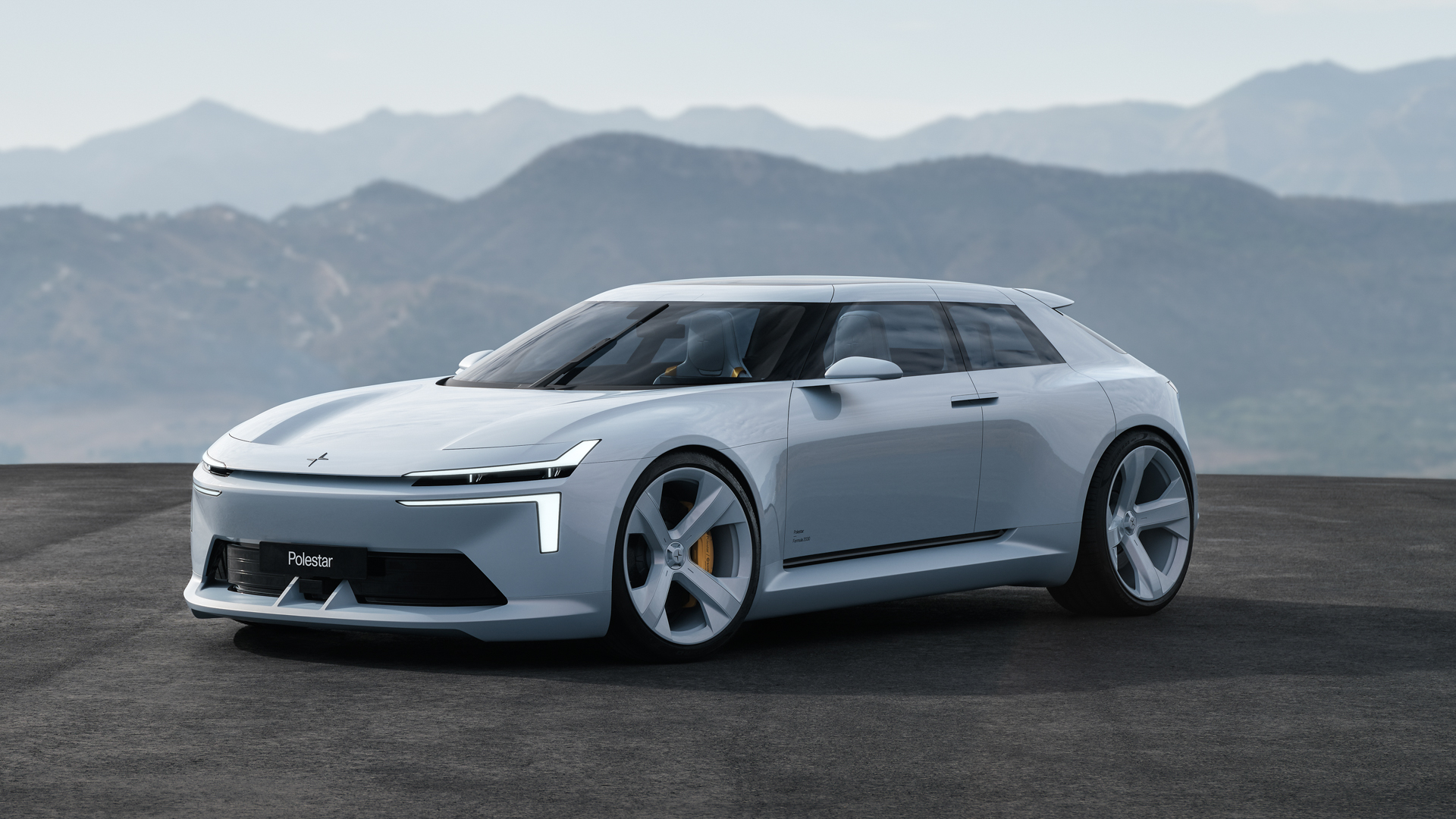
Concept cars are supposed to be fantasies. Polestar's newest one is a fantasy with a very practical message. Unveiled this week and featured by Dezeen on November 13 under the headline that it "screams performance," the Formula 2030 is a low-slung, four-door electric sports car that previews the design direction of two production models: the next-generation Polestar 2, due in 2027, and the Polestar 7 compact SUV, slated for the following year.
It is also a statement of intent from a design team under new leadership. The Formula 2030 is the first show car created under Polestar head of design Philipp Römers, who took the role after joining from Audi. Polestar's own description sums up the ambition: the concept is "a physical embodiment of how we apply Polestar's core values of design, performance and sustainability."

A shape built around speed
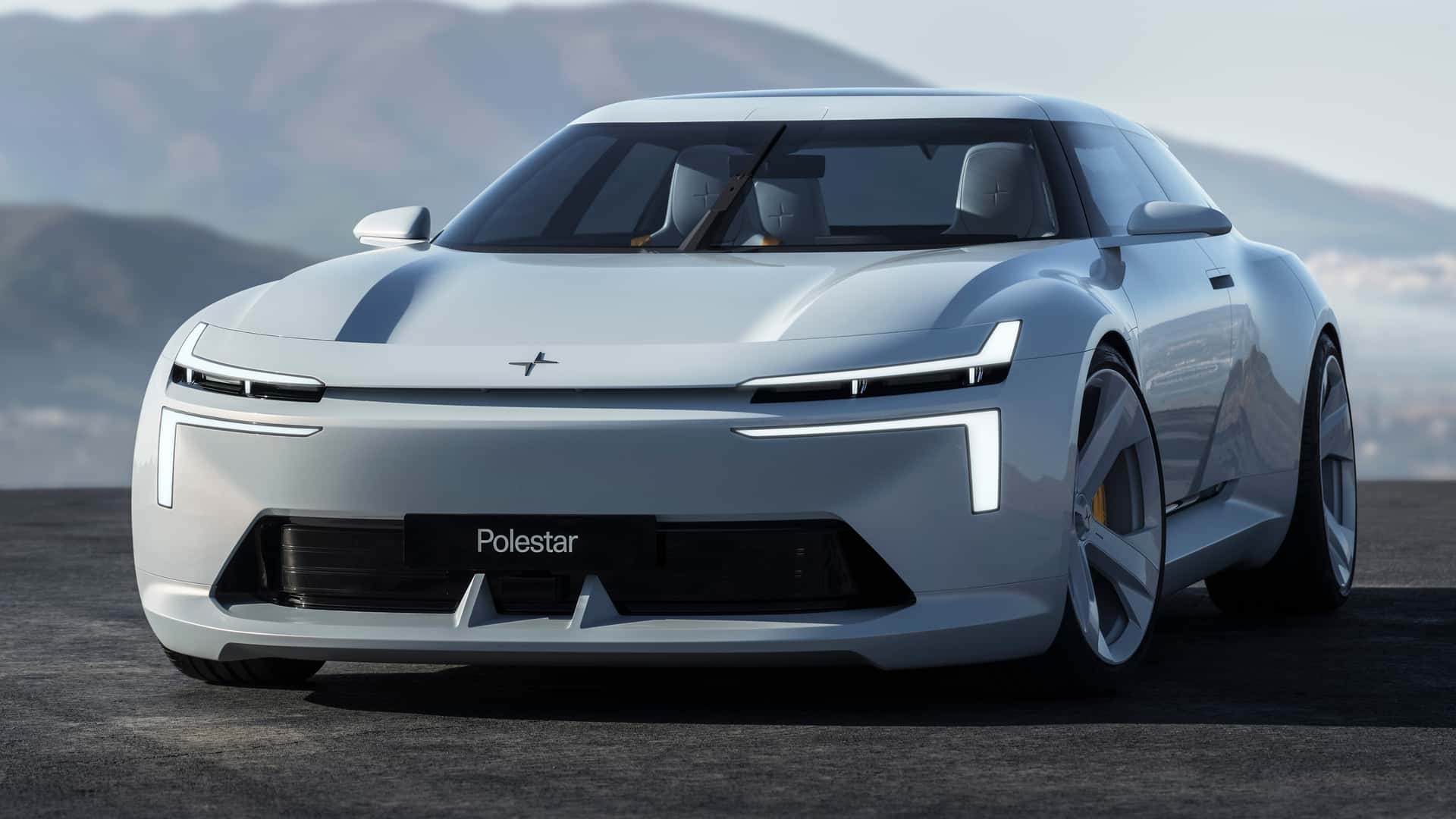
The headline figure is the height. At just 1,350 millimeters (about 53 inches) tall, the Formula 2030 sits lower than the brand's Polestar 5 grand tourer. It measures 4,680 millimeters long and a broad 2,021 millimeters wide, on a 2,780-millimeter wheelbase. Polestar describes it as a "compact practical four-door sports car," and says it sits somewhere between the coming Polestar 2 and Polestar 7 in size.
The details lean hard into motorsport. The car rides on 22-inch center-lock wheels, with gold Brembo brake calipers and Öhlins dampers. Up front, "Dual Blade" headlights are integrated into an aerodynamic wing, and a single vertical wiper replaces the usual pair. At the rear, Polestar has swapped the full-width light bar that has become an EV cliché for separate "Single Blade" lights. According to InsideEVs, the wheels, splitter and diffuser share an exterior color the brand calls "Nitrogen." Even the autonomous-driving hardware is choreographed: a LiDAR unit appears only when the car is in autonomous mode.
The rear doors are rear-hinged and pillarless, opening the cabin wide. Practicality gets a playful twist as well. The trunk has a transparent floor, and the front trunk is sized to hold two racing helmets and a fire extinguisher.
A cabin that changes shape
The most interesting design thinking is inside. The Formula 2030 has three drive modes, Performance, Normal and Autonomous, and the cabin physically reconfigures for each. In Performance mode, InsideEVs reports, the 12.2-inch center screen lowers and the steering wheel, with its curved 20-inch "HyperDIM" driver display mounted on the column, moves closer to the driver. In Autonomous mode the seat and wheel move apart, turning the cockpit into a lounge.
Below the center screen sits a panel of eight physical controls that can be configured as rocker switches or rotary dials. That small detail is a big deal. After a decade in which car interiors raced toward ever-larger touchscreens, drivers and safety regulators have pushed back, and Polestar is now explicitly "committing to rebalance the mix of physical and digital," according to Electrek.
Juan Pablo Bernal, Polestar's head of interior design, put it simply: "As a performance brand, we see a renewed focus on the driver, and so we re-balance the digital and physical." Google's Gemini assistant is built in, so voice control remains central, but the hands-on controls are back.

Sustainability, made visible
Polestar has long tried to make sustainable materials a visible part of its design language rather than a hidden spec. The Formula 2030 continues that approach. Its four individual seats use inflatable cushions and bolsters, and the seat backs are made from a flax-based composite. Exposed structural components are left visible inside the cabin, an honest, almost architectural move that celebrates how the car is made rather than covering it up.
The business behind the beauty
The concept arrives at a difficult moment for the company. Electrek reports that Polestar lost $842 million in the first half of the year with a negative gross margin. InsideEVs notes that the brand sold 44,790 cars through September 2026, up just 0.6 percent year over year, while deliveries outside America fell 8 percent in the third quarter. Under the US connected-vehicle rule, Polestar cannot sell model-year 2027 and newer vehicles in the United States, making Europe its priority market.
That context gives the Formula 2030 a clear job. It is not a production car, and Polestar has disclosed no powertrain, battery, range or price. Instead it is a design manifesto meant to build excitement for the next Polestar 2, which replaces a model that sold about 200,000 units, and for the Polestar 7, which InsideEVs reports will be built at Volvo's Košice plant in Slovakia. They are two of four new models the brand plans to launch in three years.
What this means for you
If you are shopping for an EV in the next few years, the Formula 2030 is a preview of features that could reach real showrooms: lower, sportier proportions, distinctive lighting signatures and, most importantly, the return of buttons and dials you can use without taking your eyes off the road. Polestar says "various design attributes" will carry over to the Polestar 2 and 7.
For design watchers, it is a sign of where car interiors are heading more broadly. The touchscreen-everything era is giving way to something more balanced, where digital displays and tactile controls each do what they do best. American readers should note the caveat: under current rules, these future models are not expected to be sold in the US.
The last word
Electrek's verdict was blunt: a beautiful concept does not fix a balance sheet. That is true. But great design has always been a carmaker's most persuasive argument, and the Formula 2030 makes a compelling one. In a market full of anonymous electric crossovers, Polestar is betting that drivers still want to feel like drivers.
Published By | News Editor