Written By | International News Agencies
The IEC's final results, as reported by The Citizen, give the ANC 3,246 council seats and the DA 1,695.
South Africa
South Africa's ruling African National Congress won the most votes in last week's local government elections but with the lowest share it has ever recorded, leaving a majority of the country's councils without a governing party and starting a two-week race to build coalitions. The Electoral Commission of South Africa (IEC) declared the Nov. 4 vote free and fair on Nov. 8, putting the ANC at 30.76 percent of the national vote, the Democratic Alliance (DA) at 24.64 percent and former president Jacob Zuma's uMkhonto weSizwe (MK) Party at 9.76 percent. For a party that won roughly 46 percent in 2021, the decline is steep, and it lands as unconfirmed reports about President Cyril Ramaphosa's future have added to the turbulence.
The numbers
The IEC's final results, as reported by The Citizen, give the ANC 3,246 council seats and the DA 1,695. The MK Party took 785 seats, the Economic Freedom Fighters (EFF) 588 and ActionSA 313. The ANC won outright control in 53 municipalities and led in 128; the DA won outright control in 12 and led in 32. MK won three outright and led in 19. The Inkatha Freedom Party (IFP) won outright control in five councils and leads in 19. Other parties together took 22.97 percent.
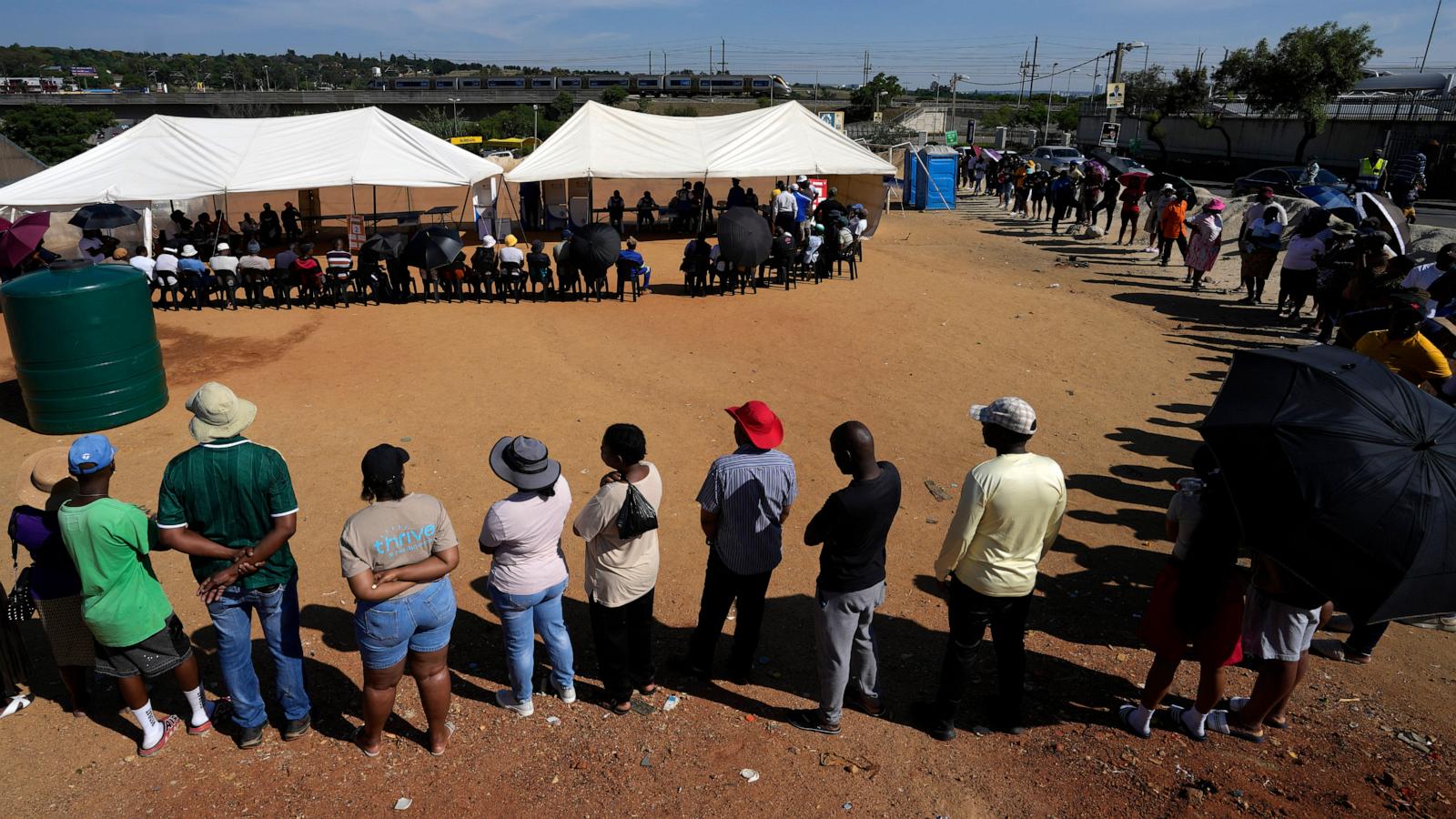
Turnout was about 52 percent, or roughly 14.9 million of 29.2 million registered voters, up from 45.9 percent in 2021. The contest was crowded: 520 parties and 626 independents competed for 10,526 seats. Results in Douglas, in the Northern Cape, will be re-run after ballot papers were destroyed before counting.
Sources differ on how many councils lack a majority. AllAfrica and The Rio Times Online put the number of hung councils at 127 of 213. The Citizen's tally of outright winners, 74, would imply a larger number. The discrepancy likely reflects differences in how councils with unresolved allocations are counted, and it should be treated as unsettled until the IEC publishes a council-by-council table.
Metros: no one has a majority
According to Al Jazeera, the ANC failed to win an outright majority in any of the eight metropolitan municipalities, including Johannesburg and Pretoria. In Johannesburg, preliminary figures showed the DA ahead with about 35 percent against roughly 20 percent for the ANC. Helen Zille, the veteran DA politician, campaigned on repairing potholes and leaking water pipes and is considered by the outlet to have a good chance at the mayoralty, though that depends entirely on coalition arithmetic. The DA retained Cape Town, per AllAfrica.
Al Jazeera attributed the ANC's slide to voter frustration over corruption, unemployment above 34 percent, and failures in basic services such as water and electricity. Those are long-running grievances, but the scale of this result suggests they are now translating into sustained abandonment, not only protest abstention. Turnout rose, which means the ANC's loss was not simply a stay-at-home vote.
Reaction: "catastrophic"
ANC Secretary-General Fikile Mbalula called the outcome "catastrophic," Al Jazeera reported. He said the party would not go begging for positions in coalition talks and that the honest answer was to "go home and put our house in order." The DA said it would open discussions with "political parties that share a commitment to clean and accountable government."
Ramaphosa, in remarks reported by The Citizen, said voters made their choices freely and will hold those they elected to account. He said hung councils should not be regarded as a failure of democracy but warned that coalition talks must not become power struggles over positions and privileges. "People did not cast their vote so that their representatives could spend the next five years fighting amongst themselves," he said, urging parties to negotiate in good faith so councils can elect office-bearers and pass budgets on time. He had earlier said parties "will need to find common ground" where no one has a majority.
The resignation reports
The Rio Times Online reported that on Nov. 7 unnamed ANC executives told a newspaper that Ramaphosa had floated resigning as party leader. ANC spokesperson Mahlengi Bhengu said she was unaware of any such discussion, and Mbalula said on Nov. 8 that the claims were untrue. The report is unconfirmed and rests on anonymous sourcing, and the denial is on the record. It nevertheless fits a wider pattern. The IOL news site reported in May that rival ANC factions had demanded Ramaphosa's resignation after a ruling related to the Phala Phala matter. Whatever the truth of the latest claim, an ANC leader weakened by a record-low result is more exposed to internal challenge than one with a strong mandate.
KwaZulu-Natal and the smaller parties
The result also reshapes the provincial picture. The IFP, led by Velenkosini Hlabisa, won outright control of the councils of uMsinga, Nongoma, Ulundi, Mthonjaneni and Nkandla, according to The Rio Times Online, and its executive was due to meet on Nov. 9 to set up a negotiating team. In a fragmented field, parties holding single-digit shares, including ActionSA with 5.67 percent and the EFF with 6.22 percent, gain leverage out of proportion to their size, because their seats can decide which of the two big parties controls a hung council.
How coalitions work, and why the timing matters
The Rio Times Online reported that parties have a legal 14-day window to elect mayors and speakers. The Citizen did not set out formal rules, and the precise deadline for each council depends on when results are formally certified, which readers should confirm with the IEC. The practical point is that local coalition-building in South Africa has a reputation for instability. Councils that fail to elect office-bearers or pass budgets risk intervention by provincial governments, and Ramaphosa's explicit reference to budgets suggests the presidency has that history in mind.
The central strategic question is whether the ANC and DA will work together in the cities where neither has a majority. The two parties have shared national executive power since 2024, as general background, but their municipal interests collide: both want Johannesburg, Tshwane and other metros. Mbalula's refusal to "beg" and the DA's emphasis on "clean and accountable government" read as opening positions, not a settled alignment. The alternative combinations are less comfortable. A DA partnership with MK or the EFF would require the DA to ally with parties whose positions it has historically opposed; an ANC partnership with MK or the EFF would carry its own political costs. ActionSA, under Herman Mashaba, is positioned as a kingmaker on the right of the field and a rival to Zille in Johannesburg.
Analysis: a verdict, not yet a government
Three points stand out. First, the ANC remains the largest party, with more seats than the DA by nearly two to one, which is why its leaders can still claim to be indispensable to any coalition. But its share has fallen by about 14 percentage points since 2021, and it no longer governs outright in any of the eight metros. Dominance has given way to plurality.
Second, the DA's 24.64 percent is a consolidation, not a breakthrough. It holds Cape Town and leads in Johannesburg, yet it controls just 12 municipalities outright. Its ability to convert pluralities into governing coalitions will determine whether it presents itself as the alternative to the ANC or as its partner.
Third, the elections are a test of the fragility of South Africa's national political settlement. This report does not draw on current reporting about the national coalition government, so claims about how municipal deals will affect national arrangements are inference, not fact. But it is reasonable to expect that local bargains will be read nationally, particularly if the ANC and DA find themselves on opposite sides in Johannesburg.
What to watch
In the coming days, watch for the mayoral votes in Johannesburg, Tshwane, Ekurhuleni and the other metros; for whether the IFP's negotiating team in KwaZulu-Natal aligns with the ANC, the DA or MK; for any ANC National Executive Committee meeting that tests Ramaphosa's authority; and for the IEC's re-run date in Douglas. The two-week window will show whether the parties heed Ramaphosa's appeal to put residents ahead of positions, or whether the country is headed for the kind of unstable municipal governments that have marked previous cycles.