Written By | Staff Writer
Who owns those towers, how many operators share each one, and how they are powered determine the cost of coverage, the speed of 4G and 5G rollout, and ultimately the price of data for consumers.
Technological Transformation
The steel beneath the smartphone
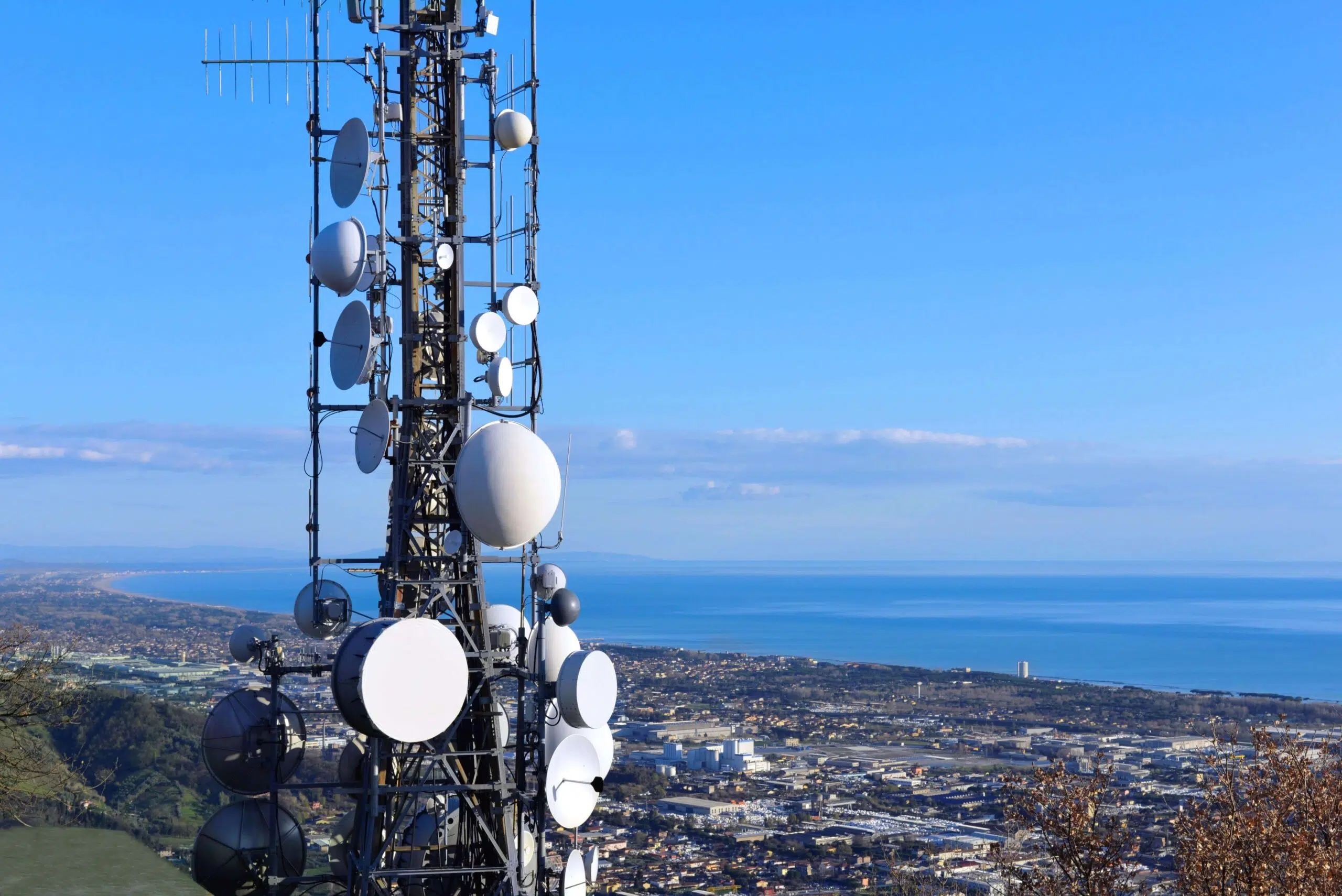
Discussions of Africa's digital economy usually start with apps, fintech unicorns or data centres. All of them depend on something less glamorous: the roughly 500,000 telecom towers that carry the continent's mobile signal. Who owns those towers, how many operators share each one, and how they are powered determine the cost of coverage, the speed of 4G and 5G rollout, and ultimately the price of data for consumers. In 2026 that infrastructure layer is going through its biggest strategic shake-up in a decade.
Two stories define the year. The first is MTN Group's agreement in February 2026 to buy out IHS Towers, Africa's largest independent tower company, reversing a decade of operator sell-offs. The second is the continued rise of Helios Towers, which is posting record tenancy growth and returning cash to shareholders as an independent, multi-tenant landlord. Underneath both runs a third story: the diesel shock from the Iran war and the Strait of Hormuz disruption, which has made tower power the industry's most urgent operating problem.
MTN buys back what it sold
On 17 February 2026, MTN agreed to acquire the roughly three-quarters of IHS Holding it did not already own for US$8.50 per share in cash, valuing the tower company at about US$6.2 billion including debt. MTN already held about 24.7%, so the transaction costs the group around US$2.2 billion, about half from cash and the rest from liquidity and debt. IHS operates around 29,000 towers across Africa, much of that estate originally bought from MTN itself, including the 5,701 South African towers acquired under a 2022 sale-and-leaseback worth R6.4 billion.
The deal has moved steadily through approvals. IHS shareholders approved it, and IHS sold its Brazil and Colombia operations as a precondition. In August 2026 Nigeria's Federal Competition and Consumer Protection Commission granted conditional approval, requiring MTN to sell down up to 30% of the Nigerian portion of the IHS business at market price, with proceeds used to reduce IHS debt. MTN Group CEO Ralph Mupita said South Africa's Competition Tribunal and the Independent Communications Authority of South Africa still had to rule, and that the group was on track to close in the second half of 2026. On completion, IHS will leave the New York Stock Exchange.
Why reintegrate? Part of the answer lies in IHS's own numbers. In the first quarter of 2026 IHS lost a net 2,491 tenants in Nigeria, largely because 2,576 tenancies linked to T2 (formerly 9mobile) exited, while 1,050 sites vacated by MTN Nigeria under its 2024 lease renewal also weighed on growth. Group-wide, tenants fell by 4,752 year on year to 54,854 and the tower count by 1,571 to 37,641, leaving a colocation ratio of 1.46x. A towerco whose biggest customer is also its biggest shareholder, in a market where smaller operators are failing, is a business whose independence is increasingly theoretical. For MTN, owning the towers outright secures control over the network layer as it pushes into data centres, fibre and lending.
Helios Towers: the case for independence
Helios Towers offers the counter-argument. Its results for the six months to 30 June 2026 showed 15,270 sites and 34,455 tenancies, up 13% year on year, with a record 2,511 tenancy additions in the half. The tenancy ratio, the average number of operators per tower and the key driver of tower economics, rose to 2.26x from 2.11x a year earlier. Revenue grew 11% to US$466.3 million, adjusted EBITDA rose 14% to US$257.0 million, and the adjusted EBITDA margin reached 55%. Net leverage fell to 3.4x from 3.8x. The company raised its 2026 guidance to 3,500-4,000 tenancy additions, declared its first interim dividend and targeted more than US$75 million of buybacks and dividends.
Its footprint spans Tanzania (about 4,300 sites, its largest African market), the Democratic Republic of Congo (about 2,950), Congo-Brazzaville, Ghana, South Africa, Senegal, Madagascar and Malawi, alongside Oman. That mix matters. In markets with several competing operators and fast data growth, a neutral landlord can add second and third tenants to existing steel at very low marginal cost, which is precisely what lifts the tenancy ratio and margins. Helios's contracts also carry inflation (CPI) escalators and power-price protections, which shift some macro risk back onto operators.
Currency risk remains the sector's Achilles heel. Helios reported US$21.8 million of non-cash foreign-exchange losses in the half, driven by movements in the Tanzanian shilling and Ghanaian cedi. Towercos earn much of their revenue locally while carrying dollar debt, so the stability of African currencies, discussed so often in macroeconomic terms, has direct consequences for how much private capital is willing to fund rural coverage.
Diesel, solar and the cost of keeping the lights on
If ownership is the strategic question, power is the operational one. Industry estimates suggest nearly 70% of Africa's towers still run on diesel, and energy can account for up to 60% of tower operating costs in remote areas. The 2026 fuel shock made that dependency painful. Diesel prices in Nigeria have been reported between N2,400 and N2,900 per litre, and fuel shortages have caused network outages in northern Nigeria and Congo, disrupting mobile money and emergency calls. Vodacom's Africa operations reported energy costs up 5% to about US$300 million in 2025.
The response is a rapid shift to solar-plus-battery hybrids. Atlas Tower Kenya is investing US$52.5 million to build 300 new solar-powered towers, adding to an estate where 82% of sites already run on solar. MTN South Sudan has cut fuel spending by around 30% after adopting solar, Airtel Africa has roughly halved diesel use at sites in Zambia and Congo, and Safaricom has raised more than US$150 million in green bonds to fund its transition. Specialist financiers are entering too: Mirova committed US$15 million to iSAT Africa for off-grid solar towers. Nigeria's Communications Commission has gone further, encouraging operators to integrate towers into solar mini-grids that could also supply nearby homes and businesses, turning a cost centre into a potential rural energy anchor.
For tower companies this is both risk and opportunity. Those that own the power systems on their sites and contract to deliver uptime can capture efficiency gains as margin. Those that pass fuel costs straight through to operators simply relocate the problem. The winners of the next decade will likely be the firms that treat each tower as a small power plant as much as a piece of steel.
What it means for connectivity
Three implications follow. First, consolidation among mobile operators is the biggest threat to independent towercos. The 9mobile collapse in Nigeria showed how quickly a tenant base can shrink; regulators who allow weak operators to fail without spectrum and customer transition plans also undermine shared infrastructure. Second, reintegration under MTN need not be bad for competition, but regulators are right to attach conditions. Nigeria's requirement that MTN sell down part of the Nigerian business, and South Africa's review against the 2022 sale-and-leaseback precedent, are attempts to keep towers accessible to rival operators on fair terms.
Third, the rural coverage gap will be closed only where the economics of shared, solar-powered sites work. A single-tenant tower in a sparsely populated area rarely pays for itself; a neutral-host tower with two or three tenants, solar power and inflation-linked contracts often does. Universal service funds, which many African regulators collect but under-deploy, could be used to make that second tenancy viable rather than funding stand-alone, operator-specific sites.
Conclusion
Africa's tower industry is splitting into two models. MTN is betting that vertical integration gives it control and lower long-run costs across its markets; Helios is proving that a neutral landlord can grow tenancies, margins and dividends simultaneously in markets such as Tanzania, the DRC and Senegal. Both models now face the same energy arithmetic, and both depend on currency stability and healthy operator competition. The outcome will not be visible to most smartphone users, but it will shape how quickly the next 100 million Africans are connected, and at what price.