Written By | Joshua Nahamya
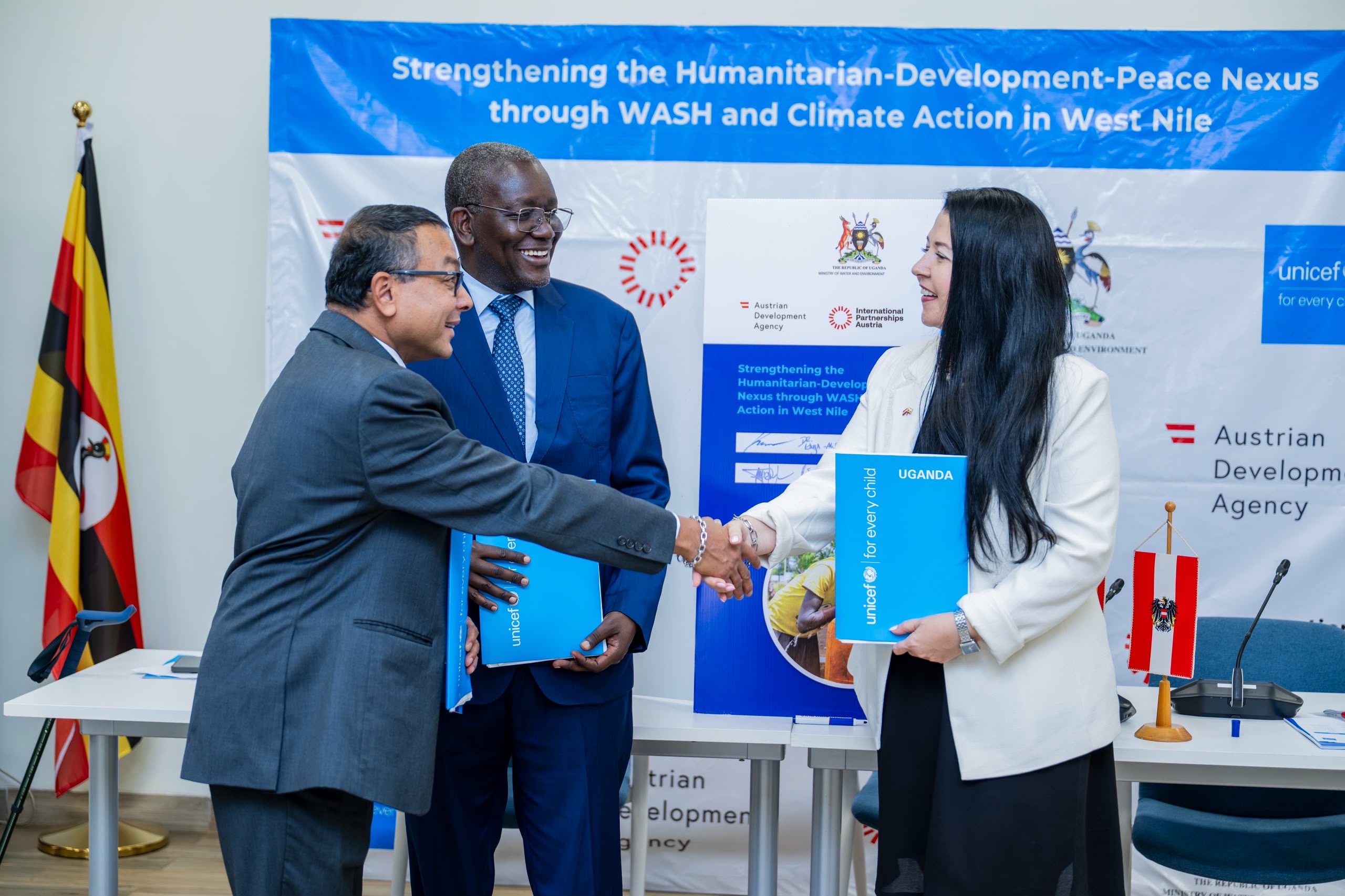
Mission to strengthen the humanitarian-development in West Nile
Kampala
The Austrian Government, through the Austrian Development Agency (ADA), has committed EUR 3.5 million (approximately Shs 14.96 billion) in grant funding to UNICEF Uganda to expand safe, climate-resilient water, sanitation, and hygiene (WASH) services for over 72,000 people across the refugee-hosting districts of Yumbe and Madi-Okollo in the West Nile sub-region.
Combined with UNICEF’s direct co-funding contribution of EUR 390,000, the comprehensive three-year initiative is valued at EUR 3.89 million. Titled “Strengthening the Humanitarian-Development-Peace Nexus through WASH and Climate Action in West Nile,” the joint intervention will run from October 1, 2026, to September 30, 2029, directly targeting more than 72,000 beneficiaries, including approximately 14,925 primary and secondary school learners.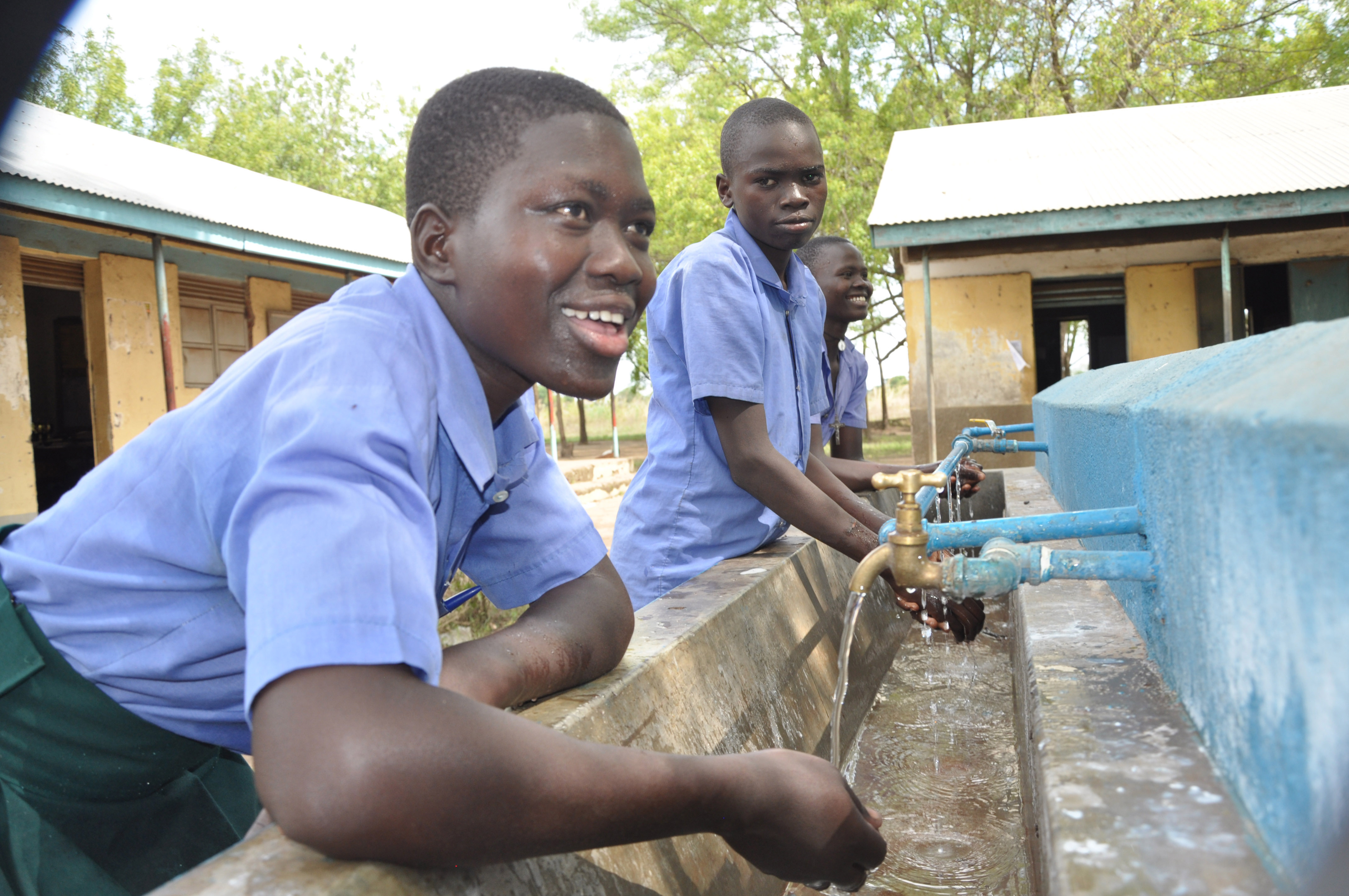
Anastanzia Keriku, 41 a cleaner at Arinya Health Centre III, in Adjumani district filling her bucket with tapped water from the hospital compound
Under the implementation framework, the project will construct two climate-resilient community water systems to supply 8,000 residents, upgrade WASH infrastructure across five health centers serving 50,000 patients, and reach over 1.3 million host community members and 400,000 refugees through hygiene promotion and community behavior change campaigns. Executed alongside the Ministry of Water and Environment and district local governments, key interventions include solar-powered water schemes, biogas systems, managed aquifer recharge, catchment restoration, tree planting, and local water source protection bylaws.
“Safe water and sanitation are not privileges; they are fundamental human rights,” stated Dr. Katja Kerschbaumer, Head of the Austrian Embassy and Development Cooperation in Uganda. “When children have clean water, they are healthier, attend school more regularly, and have a better chance to reach their full potential. Through this collaboration, Austria will ensure that these rights are met by investing in climate-resilient water and sanitation systems in both refugee and host communities in West Nile. Together with local communities, we will build a healthier, stronger and more resilient generation.”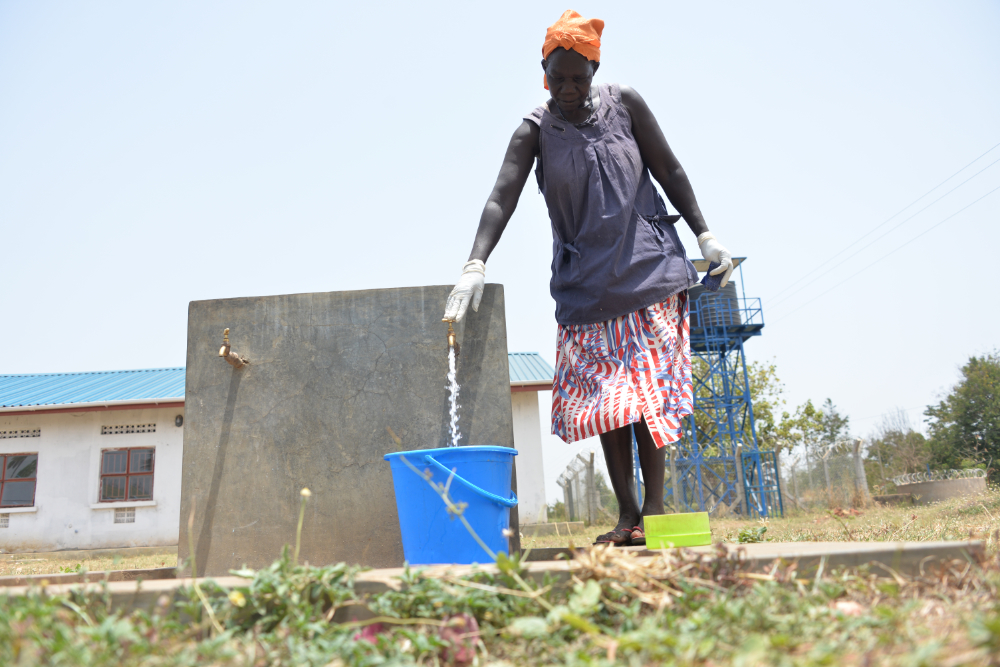
Anastanzia Keriku, 41 a cleaner at Arinya Health Centre III, in Adjumani district filling her bucket with tapped water from the hospital compound
“Safe water and sanitation are essential for children’s health, learning and dignity,” added Dr. Robin Nandy, UNICEF Representative in Uganda. “Through this partnership with Austria, UNICEF will support climate-resilient water systems in schools, health centres and communities where children need them most, while helping local systems keep these services running. By reaching both refugee and host communities, this programme will also help strengthen social cohesion and give every child a better chance to thrive.”
Yumbe and Madi-Okollo districts, home to the Bidibidi and Rhino Camp refugee settlements, face severe water stress caused by prolonged dry spells, dropping groundwater tables, and heavy infrastructural pressure. District data indicates that an average of 71 pupils share a single latrine stance against the national standard of 40, while one in three healthcare facilities lacks reliable water access. Aligned with Uganda’s National Development Plan IV (NDP IV), the National Climate Change Policy, and the Comprehensive Refugee Response Framework, the initiative shifts focus from emergency relief to long-term, government-led climate adaptation for vulnerable communities.